
[ad_1]
Washington, DC – A few months ago, it would have been unthinkable for a mainstream politician in the United States — let alone a Republican senator — to acknowledge Iran’s right to self-defence.
But on Wednesday, that’s exactly what Senator Roger Marshall did. “I think that they have to be able to defend themselves,” he told the news channel CNN.
Recommended Stories
list of 3 itemsend of list
Analysts say such statements are a sign of shifting attitudes in the US. This week, in the wake of President Donald Trump agreeing to a memorandum of understanding (MoU) with Iran, some Republicans appear to have dulled their hawkishness.
Still, many pro-Israel groups and politicians are starting to mobilise against the deal, setting up a potential clash with the White House and those seeking a speedy end to the US-Israel war with Iran.
“Donald Trump can sell pretty much anything to his hardcore base,” said Matthew Duss, the executive vice president at the Center for International Policy, a research and advocacy nonprofit.
“If he says the Iran war is going great one day and then reverses himself completely and says we’re signing a deal to end the war the next day, there’s a big part of his base that will just go along with it, and they will get angry at anyone who publicly disagrees.”
Even so, Duss stressed that pro-Israel groups and politicians are still “very upset” with the memorandum.
An unpopular war
The terms of the deal have trickled out slowly since last Thursday, when Trump first teased that the “final points” of a ceasefire agreement had been “approved by all parties”.
Only on Wednesday did the memorandum’s 14 points become public.
But the gradual rollout has only partly shielded the memo from hawkish criticism. Another factor is that Republicans are largely reluctant to cross Trump, who has a track record of confronting and defeating dissidents within the party.
Even some of the most vocal pro-Israel hawks have refrained from taking on Trump since the terms were announced.
Senator Lindsey Graham, an ardent cheerleader for the war, said the memorandum “will be beneficial” for the US.
“Whether or not the United States can reach an acceptable, verifiable deal with Iran regarding its nuclear program and other issues is yet to be determined, but I see little downside to trying,” Graham said in a social media post on Wednesday.
Overall, the Republicans have been far more tolerant of the initial agreement than of the 2015 nuclear deal signed by then-US President Barack Obama, a Democrat.
Unlike that agreement, known as the Joint Comprehensive Plan of Action (JCPOA), the current memorandum aims to resolve an active war. The US and Israel started bombing Iran on February 28 without direct provocation.
Public opinion polls have underscored widespread US disapproval towards the conflict, which has also boosted the case for diplomacy in some conservative sectors.
The fighting saw Iran close down the Strait of Hormuz, sending global oil prices soaring. In the US, that has fuelled inflation and economic uncertainty, factors that could weigh on Republican prospects in the upcoming midterm elections.
“We’ve seen the cost of war. We’ve seen that war is not an easy solution. We’ve seen that it has major economic impacts on Americans, and that Americans are opposed to it,” said Ryan Costello, the policy director at the National Iranian American Council (NIAC), a nonprofit lobbying organisation.
Inside the memorandum
The memo, signed on Wednesday, dictates a regional ceasefire to end the war, mandating that fighting stop not only in Iran but in Lebanon as well.
The deal will see Iran reopen the Strait of Hormuz and the US lift its siege against the country. Tehran also reiterated its long-standing position that it will not pursue nuclear weapons.
In exchange for that assurance, Iran will receive some economic relief. The US is set to lift sanctions against Iran’s energy exports, which will increase global supply and help bring down oil prices.
Iran will also see the release of billions of dollars of its own assets that have been frozen by sanctions, though the memorandum does not provide a specific timeline or mechanism for freeing the funds.
It does, however, promise a $300bn investment and reconstruction fund for Iran.
The preliminary deal does not resolve the thorny issue of whether Iran’s uranium enrichment programme will be allowed to continue. That is slated for future talks, set to take place over the next 60 days.
It also does not mention a single word about Tehran’s missile programme, one of the stated reasons for the US-Israel war against the country.
Limiting Iran’s missile capacity has been a key goal for Israel for years, but Tehran has ruled out any concessions.
On Wednesday, Trump said “missiles aren’t the problem” and suggested that the issue could be addressed as part of regional security talks.
“What am I going to do? Am I going to let Saudi Arabia have missiles, but they [Iran] can’t have them? It doesn’t work that way,” he told reporters.
But previously, Trump had advocated for limiting Iran’s arsenal. Costello said Trump’s sudden shift is disorienting.
“President Trump last week was sounding more like John Bolton,” he said, referring to the former US official who is known for promoting military interventions.
“Then, this week, he is sounding more like John Mearsheimer“, Costello added, pointing to the realist political scientist.
Ted Cruz slams deal
Costello explained that, while some Republicans are falling in line with Trump’s pivot, others are testing whether they might oppose the president’s diplomacy with Iran.
“There’s a crowd that’s trying to see how open they can be in opposition to this, not just the memorandum of understanding, but everything that’s envisioned from it, which is a pretty significant resolution of tensions with Iran,” he told Al Jazeera.
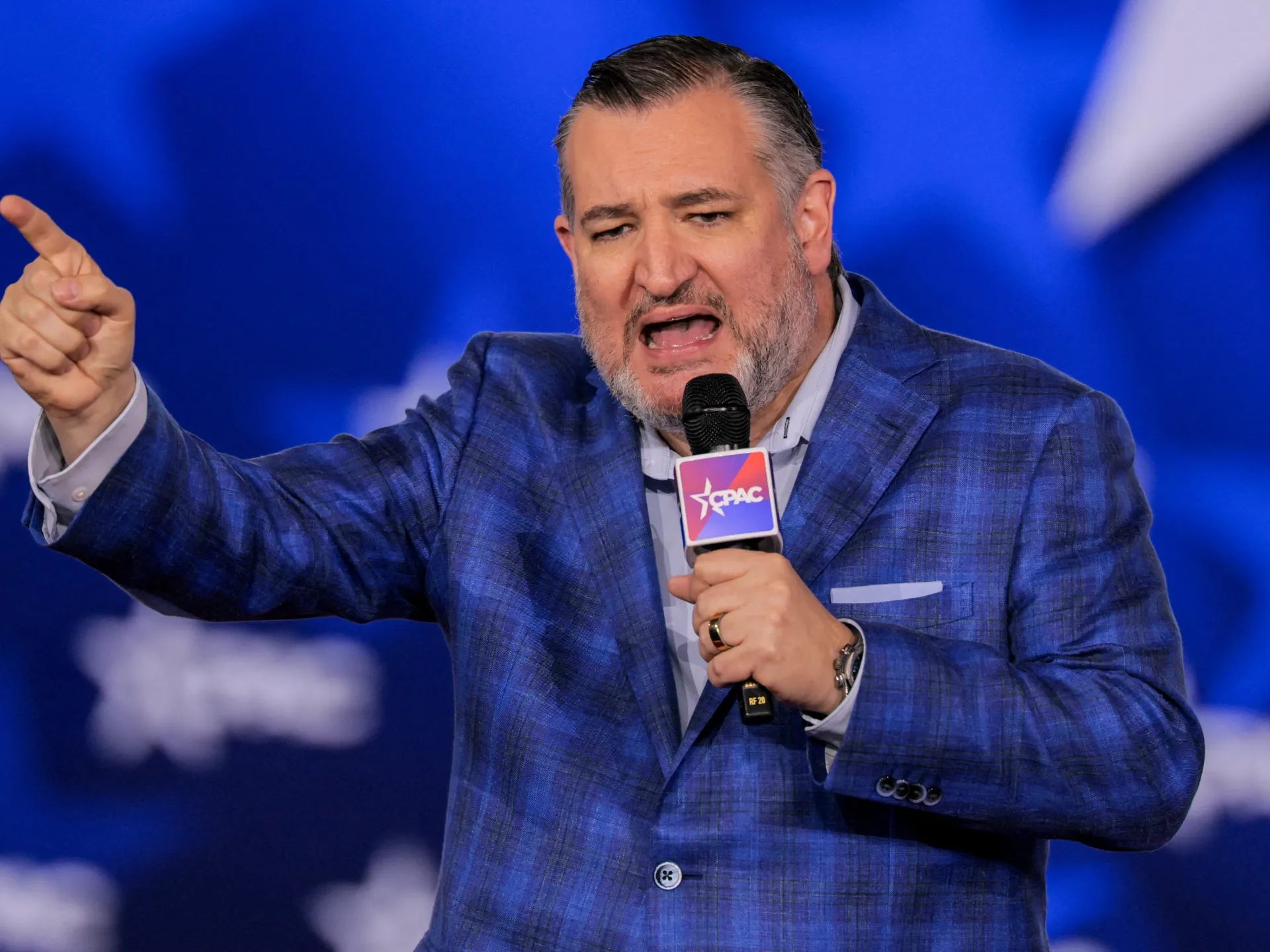
Senator Ted Cruz, who called the deal “ill-advised”, falls into that camp.
“History teaches that giving billions of dollars to theocratic lunatics who want to murder us is not a good idea. I think the president is receiving some very poor advice on this deal,” Cruz told the publication The Hill earlier this week.
Pro-Israel commentators, like Fox News’s Mark Levin, also described the memorandum as a “capitulation to Iran and Hezbollah”.
Levin, who had heaped praise on Trump in recent months for launching the war, implicitly criticised the US president over his comments on Iran’s missiles.
“Iran’s ballistic missiles have always been a major issue, and in fact, the administration talked about the regime building a circle of protection around its nuclear facilities with ballistic missiles,” Levin wrote in a post on the social media platform X.
“And, no, if other countries have ballistic missiles, Iran should not. Iran is a terrorist regime that has killed our people, how many more times do we need to be reminded of this.”
He later pointedly denounced US Vice President JD Vance, who has been the key US negotiator with Iran.
The Foundation for Defense of Democracies (FDD), a think tank that has been promoting military action against Iran, rejected the deal as well, saying that the memorandum guarantees the survival of the governing system in Iran and allows it to rebuild itself after the US-Israeli strikes.
“The Memorandum of Understanding between the United States and Iran hands the terrorist regime the one victory it could never have achieved on the battlefield. Financial reprieve,” two FDD representatives wrote in a New York Post column.
The American Israel Public Affairs Committee (AIPAC) also released a lengthy statement with detailed explanations of what it sees as failures in the memorandum, including the sanctions relief and a lack of restrictions on Iran’s missiles and its support for regional groups like Hezbollah and Hamas.
The pro-Israel lobby group’s statement still lauded Trump for bombing Iran.
“At President Trump’s strong direction, America, working together with Israel, has decimated Iran’s leadership, nuclear program, and military assets, and created the opportunity for a diplomatic agreement,” AIPAC said.
“The initial Memorandum of Understanding that has been reached with Iran raises significant questions.”
‘Formidable’ forces
Duss said some pro-Israel hawks are being careful with their criticism of the deal and have pointed the finger at Vance instead of Trump, but they are still unhappy about ending the war.
“They wanted the war to continue. They have a theory of military power that basically, if military force isn’t working, all you need to do is use military force,” Duss said. “It’s a ridiculous view of the world, but that’s their ideology.”
So, can pro-Israel voices in Washington scuttle diplomacy with Iran?
Duss said that although the pro-war position is not popular, the influence of pro-Israel groups cannot be dismissed.
“The pro-Israel hawks, obviously, they’re very well-established in Washington,” he told Al Jazeera.
“They have an enormous amount of funding for their think tanks and their advocacy organisations. Despite the fact that they have a very small and, I would say, diminishing support among the broader public, their ability to advance their ideas in the Washington policy conversation is still formidable.”
For his part, Costello warned that Israel’s supporters may work to thwart diplomacy with Iran through a long-term strategy, even if they immediately fail to reignite the war.
“There is going to be a lot of opposition to this deal, even if they fail at destroying the deal at the outset,” he told Al Jazeera.
Costello highlighted how pro-Israel groups attacked the JCPOA, saying that the agreement suffered “death by 1,000 cuts”. Trump ultimately nixed that deal in 2018.
“The FDD, neoconservatives, the Republican foreign policy apparatus made the Obama deal toxic,” he said. “And then eventually, they were able to find a president willing to unravel it.”
[ad_2]
Source link