

[ad_1]
NEW DELHI: The fate of CBSE’s controversial on-screen marking (OSM) system hangs in the balance. The board will decide whether to continue with it for Class XII exams in 2027 and possibly extend it to Class X only after consulting key stakeholders, including students, teachers, and parents. Sources said wider consultations are planned before the board finalises the future of digital answer-script evaluation.OSM was introduced for Class XII this year, replacing physical evaluation with computer-based evaluation of scanned answer books.
Review will test whether CBSE can plug gaps exposed during 2026 exams
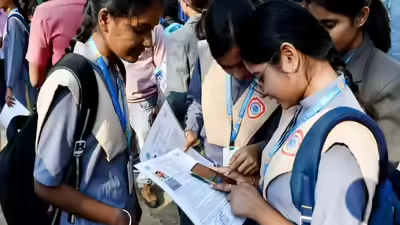
While experts will also review the system, education ministry officials said feedback from those directly affected by its rollout will carry significant weight.“The final call is ultimately likely to rest with students, teachers and parents,” a source said.The board said the system was meant to improve accuracy, transparency and monitoring. Its debut, however, drew complaints from students about blurred or cropped scans, missing pages and supplementary sheets, and answers left unevaluated.The consultations will weigh what students experienced while accessing their scanned scripts and seeking corrections, how teachers found on-screen evaluation, the adequacy of training, and the implementation hurdles that surfaced. Views will also be sought on whether OSM should continue in the present form, be modified, or be expanded gradually.Scanning will sit at the centre of that review, because the quality and completeness of the digital copy determine what an examiner can assess. Technical experts are expected to scrutinise scanning protocols, quality checks, data storage, platform capacity and the safeguards needed before any move to include Class X examinations — a shift that would sharply increase the volume of answer books handled digitally each year.Cybersecurity will constitute another critical element of the process. CBSE’s post-result portal faced what govt sources described as an “unprecedented and malicious” cyberattack, including a sudden surge of traffic from many IP addresses in India and abroad, and attempts to access files. The board maintained that its services stayed functional and that the evaluation portal itself was not compromised.CBSE now claims to have secured the portal and says it will keep working with IITs — Kanpur and Madras among them — Digital India Corporation, CERT-In and Indian Cyber Crime Coordination Centre (I4C) to strengthen its digital infrastructure. The stakes are anything but ordinary: More than 1.6 lakh Class XII candidates sought verification or re-evaluation this year, involving over 3.8 lakh answer books, with physics drawing the most requests.The review is therefore expected to go beyond the question of whether digital marking should stay. It will test whether CBSE can plug the gaps exposed during 2026 examinations and rebuild stakeholder confidence before OSM is extended to a far larger examination system.
[ad_2]
Source link