


[ad_1]
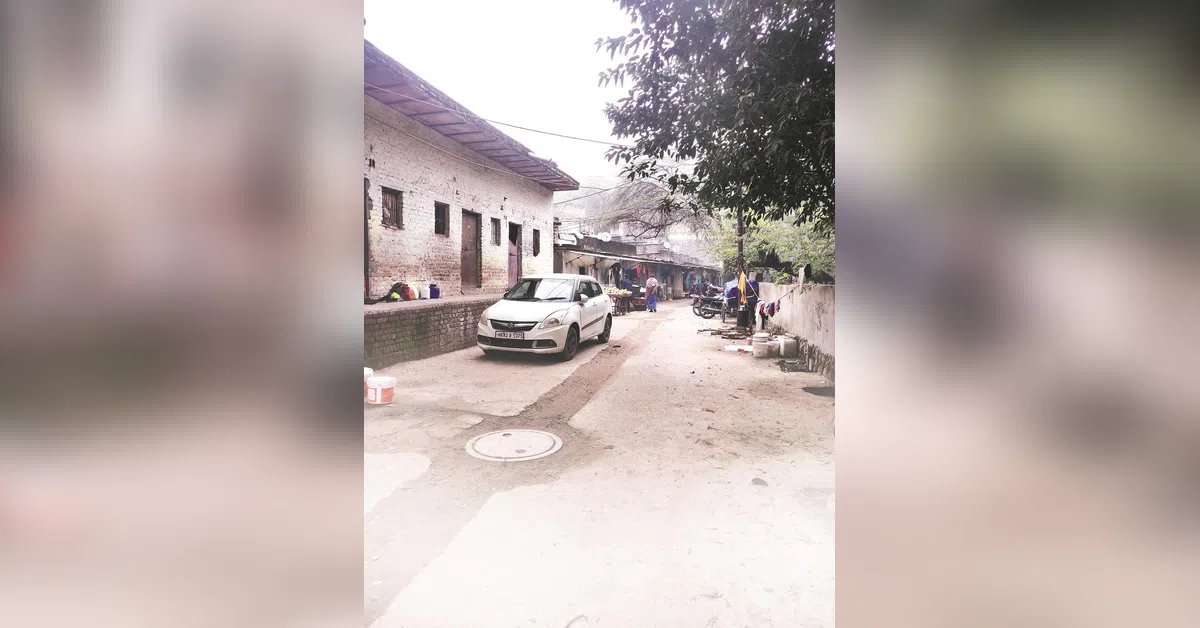
Amid the glistening, posh neighbourhoods of South Delhi lies a parallel city of narrow lanes, densely packed houses and informal construction. These are the capital’s Lal Dora villages—settlements that predate modern Delhi and continue to operate under a land framework first introduced during British rule more than a century ago.
Today, hundreds of villages across the National Capital Territory fall under the Lal Dora system, a colonial-era arrangement that was originally designed to distinguish village habitation from agricultural land. As Delhi expanded, many of these villages were absorbed into the urban landscape, creating a unique mix of rural land rights and metropolitan growth.
What is Lal Dora land?
The term “Lal Dora” literally means “red thread” or “red line”. In 1908, the British demarcated the residential portions of villages by drawing a red boundary on revenue maps. Land within this boundary was exempted from several municipal regulations and taxes that applied elsewhere.
The objective was to allow villagers to build homes and expand settlements without having to seek repeated approvals from authorities.
Over time, the red line became a distinct legal category. Properties within these village habitation areas came to be known as Lal Dora properties, while agricultural land remained outside the boundary. A Lal Dora certificate issued by the Delhi government continues to serve as proof that a property falls within a village’s abadi area.
How many Lal Dora villages does Delhi have?
Delhi has hundreds of revenue villages, many of which contain Lal Dora land. According to studies on Delhi’s village development, the capital has more than 300 Lal Dora villages. Several of them have effectively transformed into urban villages as the city expanded around them.
The Revenue Department’s records list villages across districts, including Najafgarh, Burari, Dwarka, Bijwasan, Badli, Adarsh Nagar, Kalkaji and Badarpur, among others.
Some of Delhi’s best-known urban villages originated as Lal Dora settlements, including areas such as Shahpur Jat, Hauz Khas Village, Munirka, Yusuf Sarai, Khirki, Naraina, Chattarpur, Aya Nagar, Najafgarh and Narela. Many have become major residential and commercial hubs while retaining their original village layouts.
What is the condition of Lal Dora areas today?
Many Lal Dora villages have undergone rapid urbanisation but remain outside the framework of fully planned urban development, creating challenges around infrastructure, regulation and land use, according to a report by The Print.
Over the past three decades, former village homes and cattle enclosures have been converted into multi-storey rental buildings, paying guest accommodation, small hotels and commercial establishments catering to students, migrant workers and young professionals.
Most of these villages reflect a contradiction at the heart of Delhi’s development. While nearby neighbourhoods enjoy all basic amenities, residents in these areas lack basic infrastructure and urban facilities.
Narrow lanes, often just four to five feet wide, restrict the movement of emergency vehicles, while overhead electrical wires, inadequate drainage, patchy water supply and unregulated construction have become common features.
Recent fires and building collapses in areas such as Hauz Rani and Saidulajab have exposed the safety risks that come with dense development and weak enforcement. The villages provide some of the last affordable housing pockets in South Delhi, but decades of planning ambiguity have left them struggling with overcrowding, civic neglect and uncertain property rights.
The overlapping jurisdiction of agencies such as the MCD, DDA and Revenue Department has often complicated redevelopment and enforcement efforts.
The way ahead
What began as a simple administrative boundary has evolved into a complex urban challenge. As Delhi continues to grow, the future of its Lal Dora villages will depend on balancing heritage, property rights and the demands of a rapidly modernising metropolis.
[ad_2]
Source link