

[ad_1]
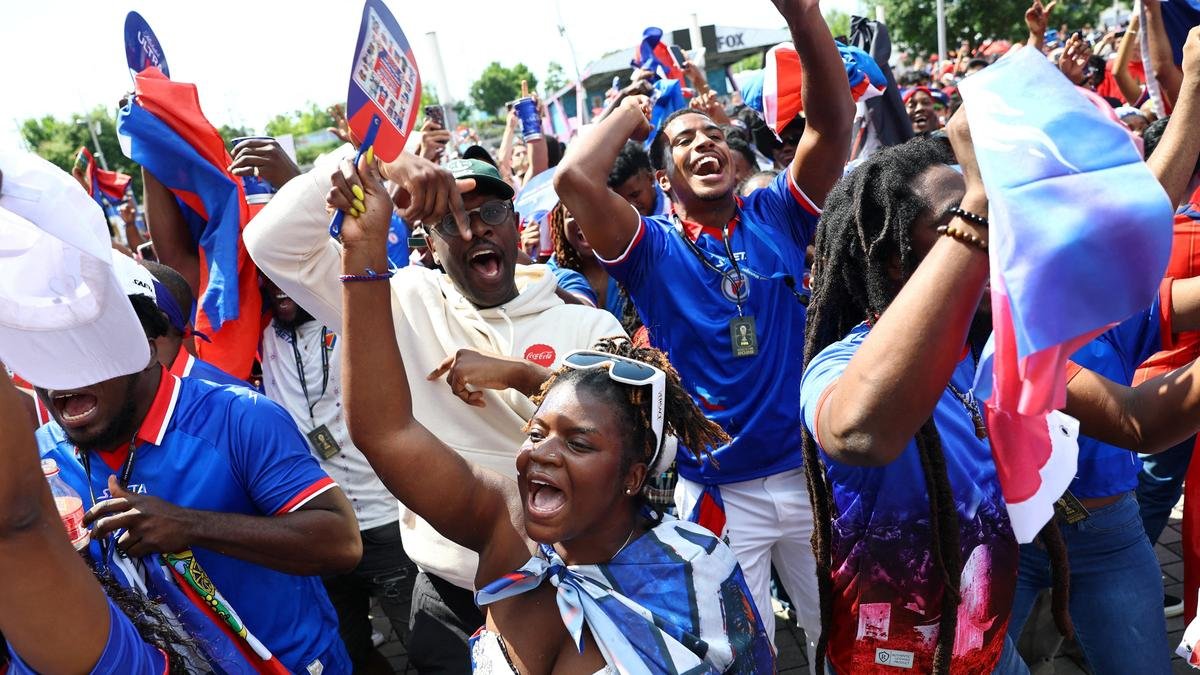
For 90 minutes in Philadelphia, Haitians were home again.
Outside Lincoln Financial Field, vendors sold griot and patties from food trucks while Creole floated through the humid afternoon air. Families arrived wrapped in blue and red flags. Children who had never lived in Haiti knew every word of ‘La Dessalinienne’, the national anthem.
The team eventually lost to Brazil, but the result almost felt beside the point.
For a country that has endured political violence, earthquakes and humanitarian crises, simply returning to the World Cup had become a celebration of survival. Many of those in the stands had travelled not from Port-au-Prince but from Brooklyn, Miami, Boston and Montreal. They carried two homes with them: one they had left behind and one they had built in the United States of America.
The expanded 48-team World Cup has not just introduced new footballing nations, but also reunited immigrant communities scattered across North America. Every match has become a family reunion of sorts, with flags stored away for years reappearing.
Dallas, home to one of the largest and most active West African populations in the United States, welcomed the Ivory Coast team with the Abidjan Farot Welcome Party on the eve of its round-of-16 clash. “My son has never been to Abidjan or anywhere in Ivory Coast. So, I brough him here so that he could feel to be part of the nation. We are incredibly proud of our team who has connected us in this World Cup,” said N’Guessan, who had travelled from Atlanta with his four-year-old son and was frantically waving a ‘Welcome to Dallas’ sign as the likes of Amad Diallo and Yan Diamonde happily posed for selfies and signed autographs.
Tanya Marie surprised her mother, Chilemb Munung, with World Cup tickets to watch the Democratic Republic of Congo play Portugal at Houston Stadium. “To go to that and represent my country to be seen. It was just… I can’t even express to myself what I was feeling there, but it was like oh my God,” Chilemb said after the match.
For 90 minutes, football dissolved the distance between where these communities came from and where they live now.
But some supporters never reached the stadiums.
Many fans were denied visas, while teams and officials from countries such as Iran and Iraq faced entry complications. Iran spent much of the tournament preparing across the border in Tijuana before hopping over on matchdays because of complications in entering and staying in the United States. Omar Artan, a referee from Somalia, was sent home from Miami Airport even before the World Cup began, while Iraq player Aymen Hussein was detained and questioned for nearly seven hours by U.S. Customs and Border Protection at Chicago O’Hare International Airport.
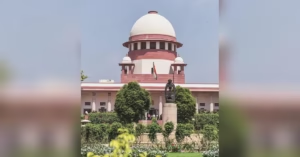
On June 25, the U.S. Supreme Court allowed the Trump administration to move ahead with ending Temporary Protected Status for Haiti and Syria, opening the door to the loss of legal protection for thousands of people. The programme, introduced by Congress in 1990, has allowed people from countries facing war, political instability or natural disasters to remain in the United States.
For many Haitian supporters, the timing could hardly have been worse.
Days after their country had stood shoulder to shoulder with Brazil, families who had lived in the United States for many years were confronted with fresh uncertainty.
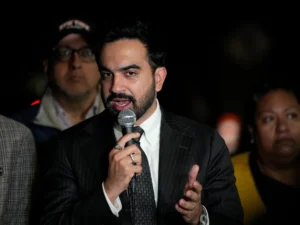
“The injustice of the justice system impacts over 375,000 Haitians and 6,000 Syrians who have been living in the United States for the past 3, 5, 10, 15 years. They are the people who came here in search of safety and protection due to extreme conditions that have plagued Haiti for a very long time since after the earthquake that happened in 2010, killing over 250,000 people and leaving the country in complete chaos,” said Guerline Jozef, executive director of the Haitian Bridge Alliance.
While the U.S. Supreme Court’s June 30 order blocking President Donald Trump’s attempt to end birthright citizenship for children born to people in the United States illegally or temporarily offered reassurance to U.S.-born children, it did nothing to ease the uncertainty facing Haitian parents confronting the possible loss of Temporary Protected Status.
This World Cup has given the diaspora a rare public stage to celebrate where it comes from. Now, many within those same communities are being forced to defend their place in the country where they have built new lives.
Published on Jul 02, 2026
[ad_2]
Source link