
[ad_1]
The Centre is working on a plan to create freight interchange hubs around the National Capital Region (NCR) where cargo arriving on long-haul diesel trucks would be transferred to electric trucks before entering Delhi. The proposal, according to an Indian Express report, seeks to reduce freight emissions while allowing the movement of goods to continue during the winter pollution season.
Proposed logistics hubs in Delhi. (AI-generated)
As per the plan, diesel trucks would stop at these hubs, where their cargo or trailers would be shifted to electric trucks for the final journey into the capital.
How will the freight interchange system work?
Instead of diesel trucks entering Delhi, they would unload cargo or exchange trailers at logistics hubs located outside the capital, The Indian Express reported. Electric trucks would then transport the goods to warehouses, distribution centres or customers within Delhi.
“The long-term objective is for diesel trucks to stop at the city’s edge, with only zero-emission freight vehicles entering Delhi,” Abhijeet Sinha, Project Director, National Highways for EV (NHEV), told The Indian Express.
In a LinkedIn post later, Sinha said: “Gravity of problem decide the pace on which we seek solution. NHEV – National Highways for EV is committed to extend Ease of Doing Business with a faith in the intent that seek right solution to bring Delhi from worst air quality city with effective and assured solution.”
Why is such a system being considered?
The proposal comes as Delhi moves towards a permanent winter pollution management framework.
Last month, the Delhi government notified a Winter Pollution Action Plan that will automatically come into force every year from November 1 to February 28 unless stricter measures under Grap are invoked. The notification consolidates several seasonal pollution-control directions into a single framework.
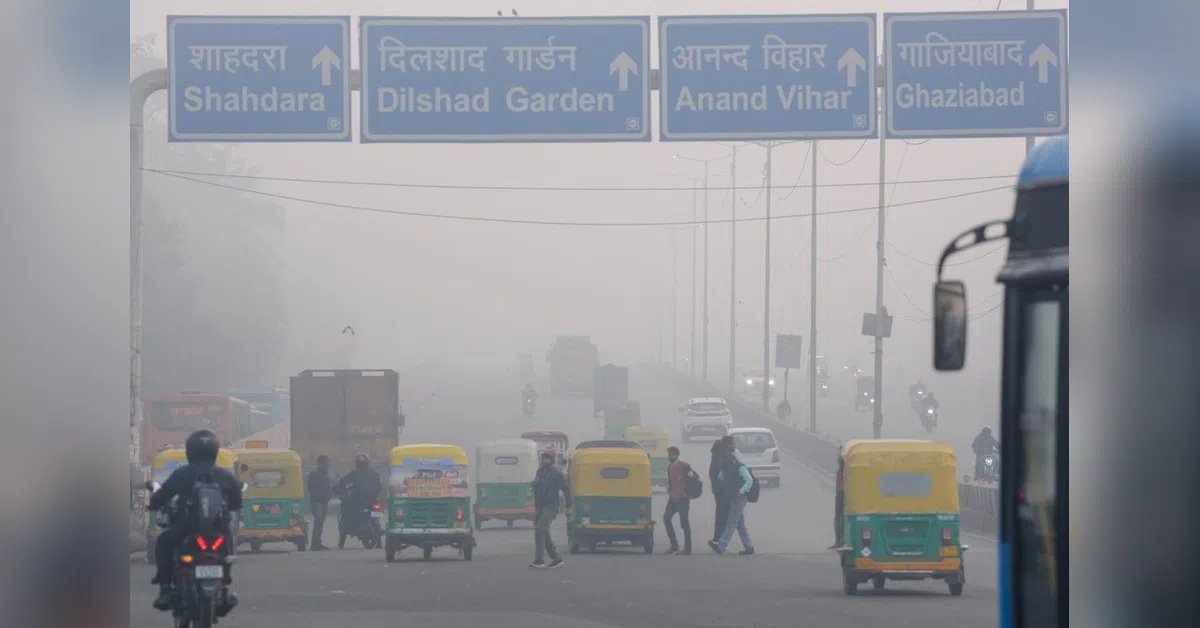
The government said its review of air quality over the past three years found that pollution levels consistently worsen between November and mid-February. During this period, median Air Quality Index (AQI) values ranged between 312 and 342, while peak AQI values were between 461 and 494.
What happens during Grap restrictions?
Under Stage IV of Grap, entry of diesel medium and heavy goods vehicles into Delhi is restricted, except for vehicles carrying essential commodities and other exempted categories.
These restrictions often leave trucks waiting outside Delhi until curbs are lifted, delaying deliveries and disrupting supply chains.
Although heavy trucks make up a relatively small share of vehicles on Delhi’s roads, they contribute around 23 per cent of transport-sector PM2.5 emissions. Their impact increases during the night, when freight movement is usually highest, according to officials cited by The Indian Express.
The freight interchange model seeks to address this by allowing diesel trucks to stop outside Delhi while cleaner vehicles complete the last-mile journey.
How does it fit into Delhi’s pollution strategy?
The Winter Pollution Action Plan already includes several measures aimed at reducing emissions during the high-pollution season.
These include year-round enforcement of Pollution Under Control Certificates (PUCCs) at fuel stations, restrictions on non-BS VI vehicles registered outside Delhi during the winter period, staggered office timings, work-from-home requirements for many offices, seasonal construction restrictions, mandatory anti-smog guns or mist systems for large buildings, and measures to prevent open burning.
The proposed logistics hubs would add another layer to this strategy by targeting emissions from freight transport without completely halting the movement of goods during pollution episodes.
[ad_2]
Source link