

[ad_1]
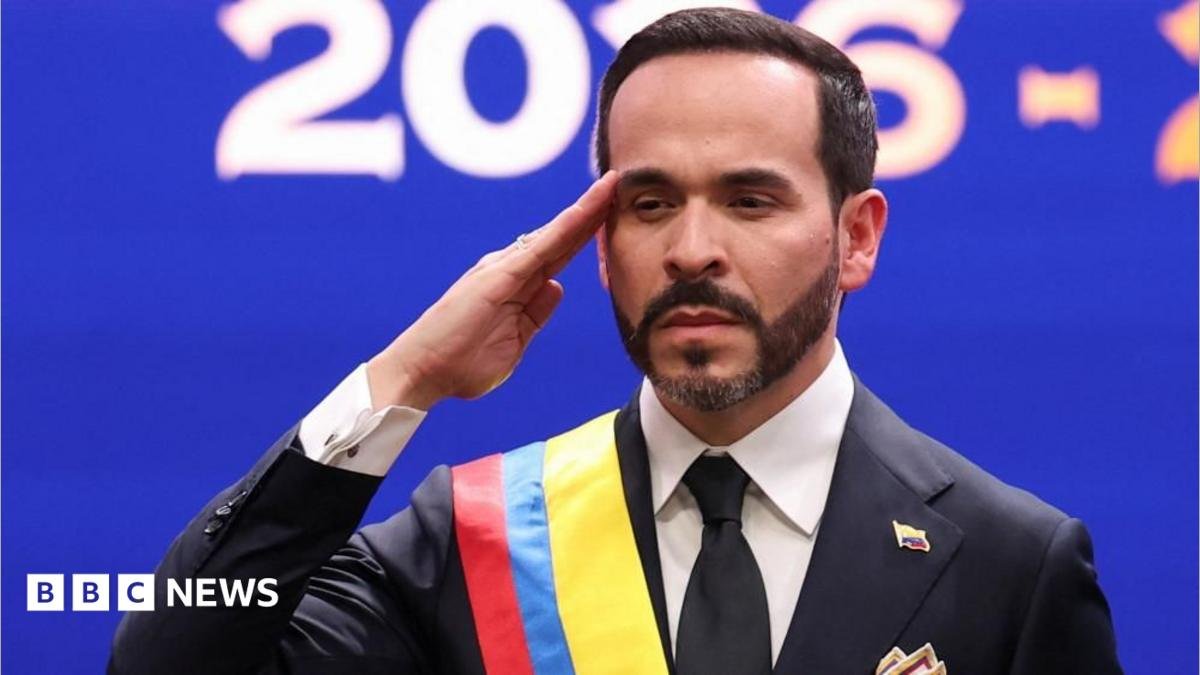
The US has pledged $1bn (£740m) to Colombia hours after the country’s new right-wing populist president was sworn in.
Abelardo de la Espriella, an admirer of Donald Trump who echoed many of the US president’s policies on the campaign trail, used his maiden speech to promise an “all-out war” on drug cartels.
The US state department said the “security package” would help him achieve “our shared goals”, which include fighting organised crime and illegal immigration. Trump repeatedly criticised de la Espriella’s left-wing predecessor over his approach to both.
The inauguration is the latest in a wider trend of Latin American nations shifting rightwards on a backdrop of economic hardship and concerns about gang violence.
Trump has taken a greater interest in Latin America during his second term, courting politically aligned leaders and spurning those with whom he disagrees.
Before the election, Trump said de la Espriella had the “total support and strength of the United States behind him”, predicting a “much better relationship” with Colombia after he was elected in June.
A lawyer and businessman by trade, de la Espriella has cast himself as maverick outsider, vowing to combat crime with an “iron fist”.
In a fiery first official speech – addressing troops at a nearby military base – de la Espriella pledged to crush armed insurgents, rebuild Colombia and defend democracy “by reason or by force”.
He said in “the age of the Tiger” – a reference to his self-styled nickname – the state would be forceful and decisive against crime, adding: “There will not be a single place in our territory where criminals can feel safe.”
Comparisons have been drawn between de la Espriella’s plans and similar crackdowns by similar right-wing populists Nayib Bukele and Daniel Noboa in El Salvador and Ecuador, respectively.
This is in stark contrast to his predecessor, Gustavo Petro, who pursued what he called a “total peace” strategy to the country’s internal armed conflict between guerrilla groups, the state and cartels, which prioritised negotiation and incentivising farmers to stop planting coca.
Critics say the method failed. Membership of armed groups has expanded in recent years, and a brutal conflict between rival rebel groups along the Colombia-Venezuela border displaced tens of thousands of people last year.
Colombia – and Petro’s policies – have been among targets Trump has repeatedly blamed for the flow of drugs and illegal migrants into the US.
[ad_2]
Source link