


‘What do you do?’Sounds like a simple question. But in India, the answer to this question determines your social status.Is there any scope?How much will you earn?What will people say?Some careers in India instantly earn respect. Others invite questions.So when a young person chooses a career, are they really choosing what they want or are they going for what society considers worth choosing?What are the top careers in India?A 2018 Global Education Census by Cambridge International, based on responses from nearly 20,000 teachers and students across the world, including 4,400 teachers and 3,800 students in India, found that medicine and engineering continued to dominate career ambitions.The survey found that 23% of Indian students wanted to become doctors or dentists, while an equal 23% aspired to become engineers. Another 16% wanted to become software engineers, the highest proportion for this career among all countries surveyed. The findings also showed India’s strong interest in scientific careers, with 8% of students saying they wanted to become scientists.Now, let’s figure out why that is so. What role do parents & society play?While some students choose these careers out of genuine interest, others pursue them under pressure from parents and society.Another 2020 study published in the Int J of Indian Culture and Business Management found that parents, peers and societal expectations significantly influence career choices among Indian youth.TOI also conducted a survey to understand how society perceives different professions and whether certain careers continue to command greater respect than others.
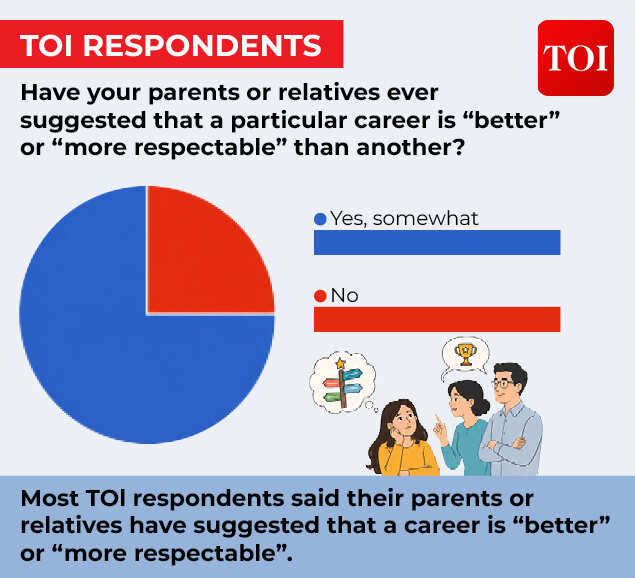
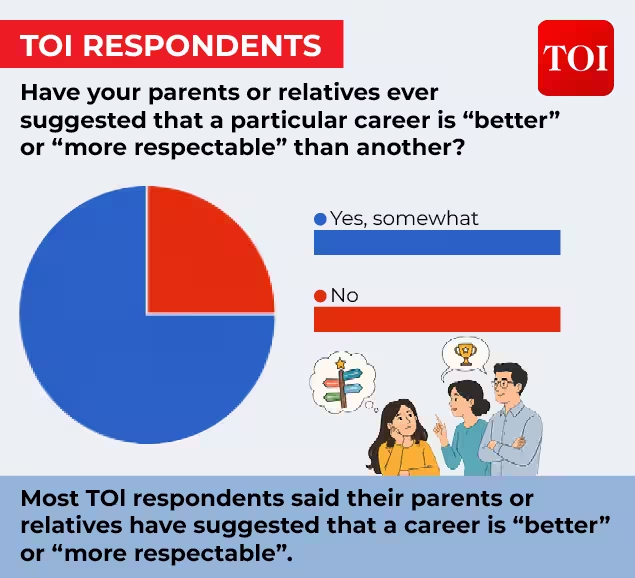
75 % of respondents selected yes when asked if their relatives ever suggested them a ‘better’ career
Among respondents from sectors including journalism, medicine and PR, we received 100% response in ‘yes’, agreeing that society accords greater respect to certain professions, with over 80 % respondents selecting both doctors, and IAS/IPS officers emerging as the most prestigious career choices, in second position was engineering.Around 74 % of them agreed that often-overlooked professions like nurse, police constable, mechanic, cab driver do not receive the same respect as traditionally prestigious careers in medicine and engineering.Somdeb Dhar Choudhury, one of the respondents and a PR consultant, said, “I grew up in an environment where engineering was considered the more conventional professional route. Many people in my extended family came from engineering backgrounds, and after Class 12, there was an expectation that I would follow a similar path.”
When asked why he thinks PR receives less social recognition, he said, “In India, professions such as medicine, engineering and civil services have had a clearly understood social identity for generations. Families know what those careers involve, there is a visible educational path leading to them, and society has established benchmarks of success around them. PR operates very differently. Much of the work happens behind the scenes.”Is it affecting mental health?When asked if the respondents ever felt pressured to choose a career mainly because of its title or status, half of them responded with yes. More than half chose yes when asked if their relatives ever suggested they choose a particular career.Rashmi N, former Army public school counselor, while speaking to TOI, says, “Peer comparisons lead to self doubt and career indecisions. Falling behind in academics and comparing grades with peers may also trigger withdrawal from friends, low self esteem and or lack of interest to improve.”
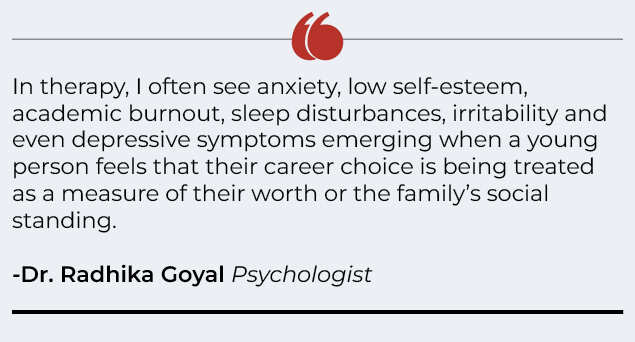
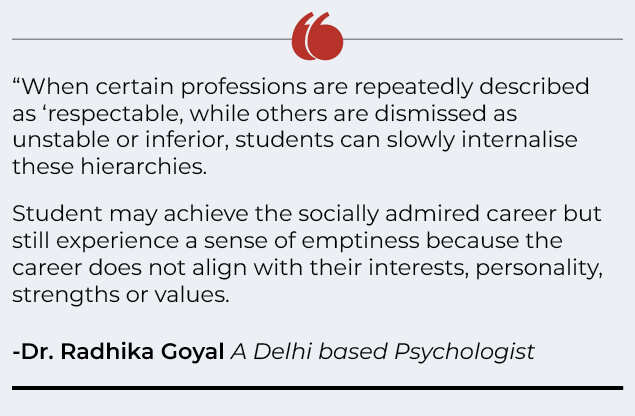
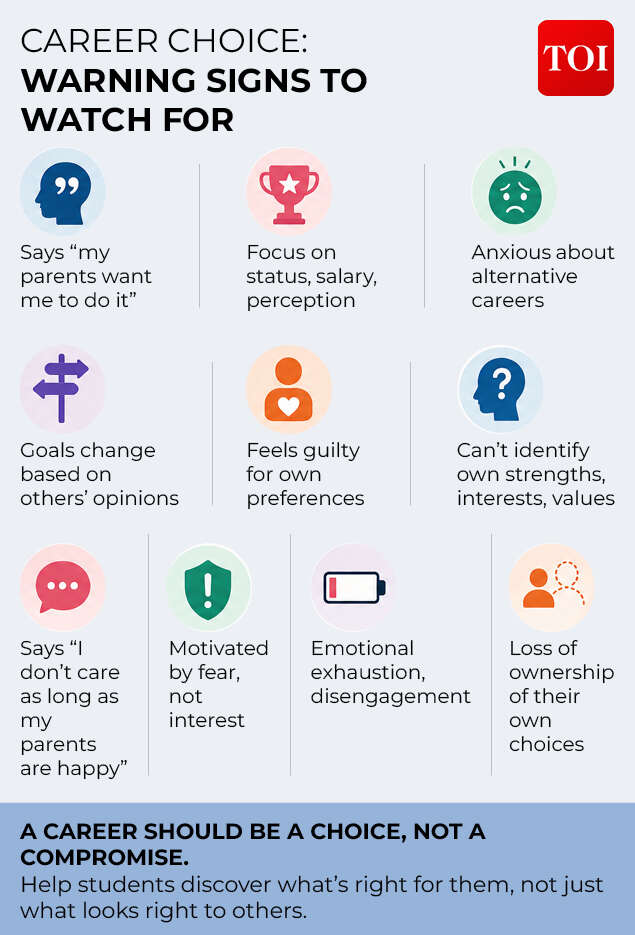
On the other hand psychologists say the pressure to choose a socially accepted career may not always be obvious.Explaining the same, a Delhi-based psychologist Radhika Goyal said, “when motivation is driven mainly by fear, fear of failure, criticism, comparison or disappointing the family, rather than genuine enthusiasm. A student may perform well but still experience burnout, frustration or disengagement.”
Factors influencing parents’ decisions While parents may want the best for their children, it’s important to discuss what drives them to push certain careers over others.1. Job securityFor many Indian parents, a “good” career is still closely associated with stability, authority, financial security and social respect.Rashmi said that this may be because of job stability and authority.“Authority, financial stability & fame are the major factors influencing the perception of any career paths.”
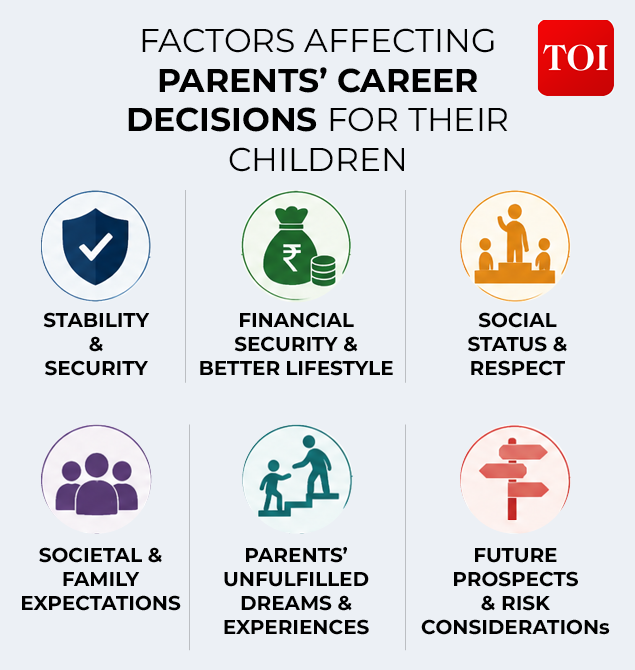
“For more affluent families, social status, community approval and family reputation can weigh heavily on career choices, while for families with fewer financial resources, immediate income and financial security may take precedence,” she said.2. Unfinished ambitions leading to societal comparisonsGoyal pointed to an often-overlooked factor: parents projecting their own unfinished ambitions or past experiences onto their children.“Parents may sometimes project their own unfinished ambitions, disappointments or experiences onto their children’s career choices, often with good intentions. A parent who could not pursue a particular career may believe they are protecting their child from the difficulties they experienced.”However, this dynamic appears to be changing among a newer generation of parents.Savita S, a parent of a 24-year-old daughter working in an HR firm, said, “I believe my children are satisfied with my support.”When asked about the typical ‘Sharma ji ka beta’ comparison, she said that parents are becoming more mindful of how their children respond to such pressure.“This kind of comparison is reducing day by day.”Now, if you’ve had your parents’ support, overcome societal pressure and chosen a career based on your own dreams, are you truly happy with that choice?What happens when youth passion meets reality?1. PaycheckFor some young professionals, the pressure around career choices continues even after entering the workforce, with questions of money, job security and growth becoming important factors in deciding whether to stay or change paths.Aayushi, a journalist, while sharing her experience said, “I was satisfied with choosing a career outside the conventional mainstream, but was disappointed by the financial returns. I am satisfied in terms of doing something different from the generic league. But in terms of money, way too underwhelmed.”
Share your thoughts in the comments
Be respectful · TOI community guidelines
She also sometimes considered changing her career.
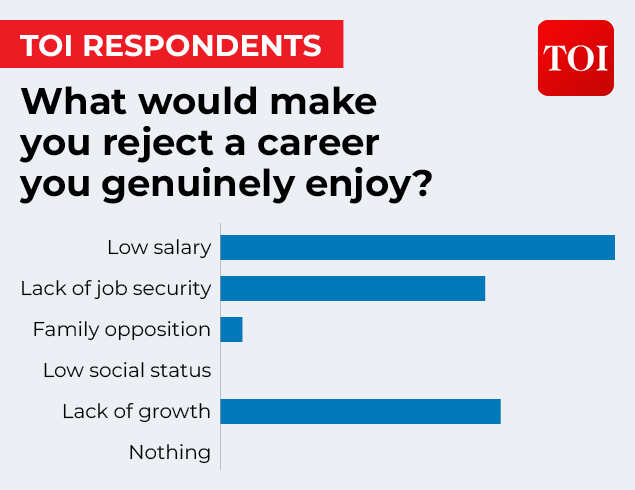
Around 56% of respondents selected Low salary, lack of job security and growth as their main reasons to reject a career.
2. Women face another layer of pressureA 2025 study published in the International Journal of Trends and Innovations in Business & Social Sciences found that women were more likely to change careers because of social expectations, especially after marriage, while men more often cited personal interests and changes in the job market.The gendered perception of careers can also influence how professions are valued.3. When your profession needs an explanationFor some professionals, however, the pressure is less about being forced to leave a career and more about constantly having to explain its worth.Somdeb recalled that this became apparent after he entered the industry. “If someone says they are a doctor, engineer or lawyer, people immediately understand the profession. In PR, you often have to explain what the job involves before people can understand its value. That lack of familiarity created more pressure for me than any direct opposition to my career choice.”Perhaps the real measure of progress is that there has been a shift, but still there is a long way to go.