

The Mumbai Police on Tuesday began the process to conduct an “in absentia” trial against six Pakistani terrorists accused of involvement in the 2008 Mumbai terror attacks.
Responding to questions about the proceedings at the MEA’s biweekly media briefing, spokesperson Randhir Jaiswal said India wanted the international community to recognise the gravity of terrorism and strengthen collective efforts to combat the threat.
“India has been hit hard by terrorism,” Jaiswal said, adding that New Delhi would continue to take “whatever action is required” to defeat terrorism.
The police have sought proceedings under Section 356 of the Bharatiya Nagarik Suraksha Sanhita (BNSS), 2023, which provides for trial of certain proclaimed offenders in their absence.
Nikam confirmed to NDTV that the trial court has already issued proclamations against all six accused. Once the report confirming the issuance of the proclamations is submitted to the court, the formal proceedings can begin.
The provision is intended to prevent absconding accused from indefinitely delaying judicial proceedings, Nikam told NDTV.
The move is significant as it marks the use of the BNSS provisions for an in absentia trial in a major terror case of this nature.
The 26/11 attacks began on November 26, 2008, when 10 Pakistan-based LeT terrorists arrived in Mumbai by sea and launched coordinated attacks at several locations. The four-day assault killed 166 people and left around 300 injured.
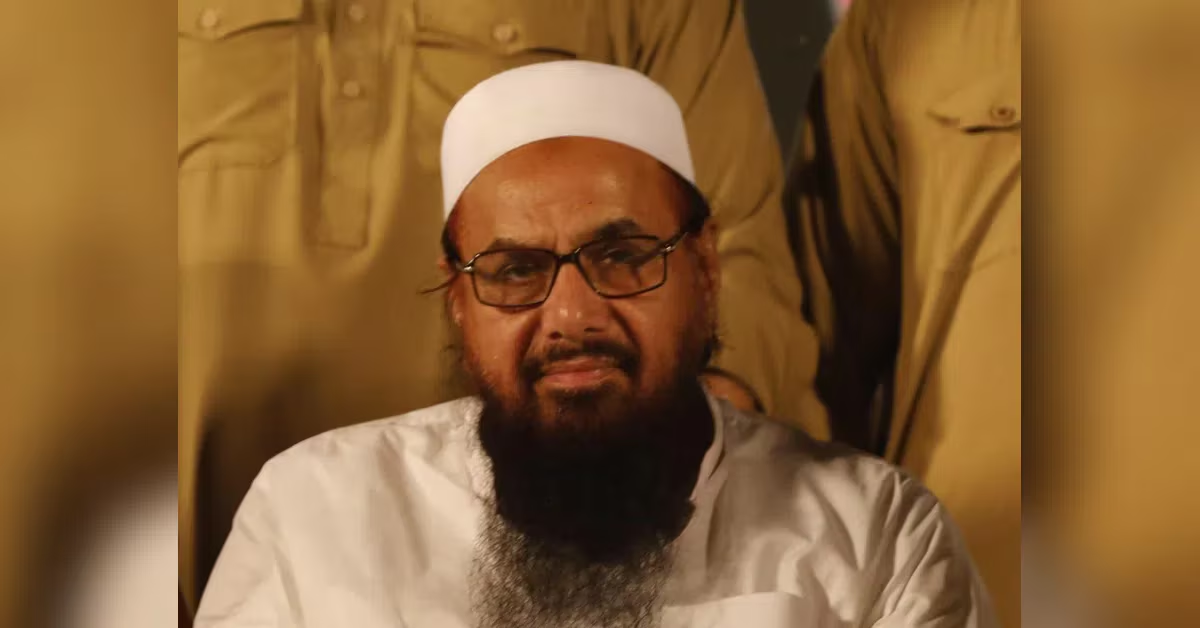
Saeed, identified by Indian authorities as a key planner of the Mumbai attacks, is the founder of Lashkar-e-Taiba. The United Nations designated the group as a terrorist organisation in 2005 over its links to Al-Qaeda and the Taliban, while the United States designated Saeed as a global terrorist in 2008.
The latest proceedings come amid renewed efforts by India to pursue individuals accused of terrorism who remain beyond India’s jurisdiction.
In July, a Jammu court issued a non-bailable warrant against Saeed in connection with the Pahalgam terror attack case after the National Investigation Agency (NIA) named him as a mastermind in a supplementary chargesheet. Twenty-six people, mostly civilians, were killed in the April 2025 attack in Jammu and Kashmir’s Pahalgam.
During Wednesday’s briefing, Jaiswal also responded to Pakistan’s rejection of Indian allegations linking the Shahzad Bhatti terror network to the country’s Inter-Services Intelligence (ISI). He said the Indian government stood by its position.
His remarks followed coordinated operations by Indian security agencies across 14 states on Monday against what authorities described as an ISI-backed, Pakistan-based Shahzad Bhatti network. Agencies said 253 people were detained, more than 80 FIRs were registered, and over 200 operatives were arrested.