

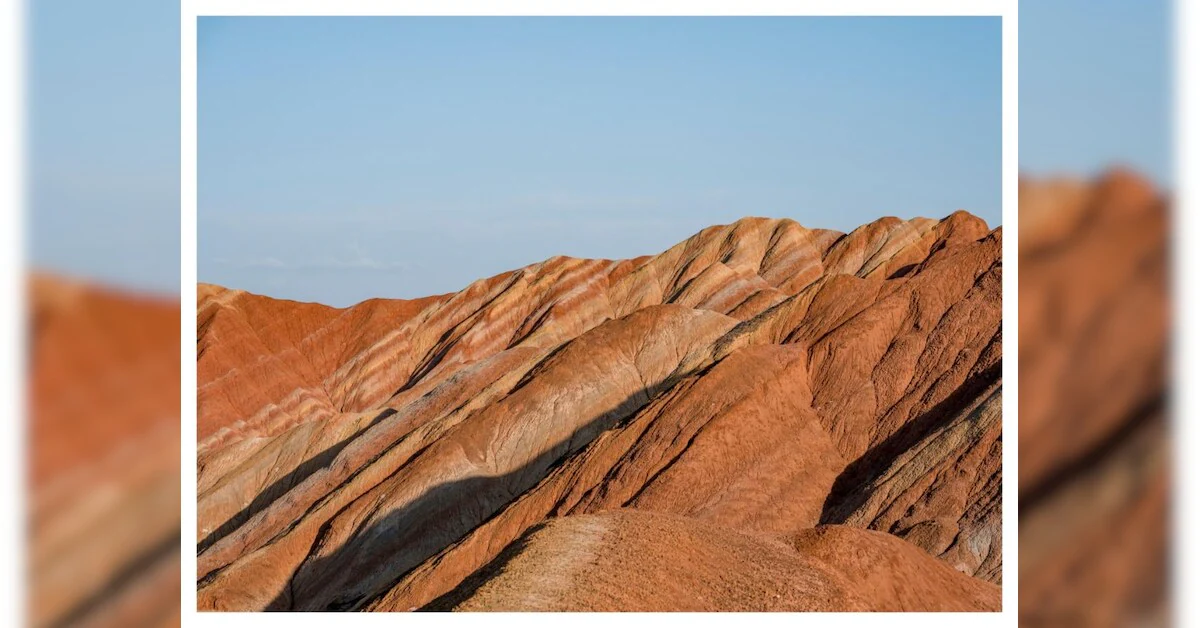
Researchers have identified a 3.5-billion-year-old layered rock formation in eastern India that could contain some of the earliest chemical evidence of life on the planet, according to a study published in the Proceedings of the National Academy of Sciences.
The formation shows alternating thin layers of silica and carbon-based material that researchers say resemble the fossilised remains of ancient microbial mats—multilayered sheets built by primitive bacteria and archaea.
What did researchers find?
The researchers believe these layers represent the remains of microbial mats, which are carpet-like communities of microscopic organisms, mainly bacteria and archaea, that can accumulate in layers.
To determine whether the carbon was biological or the result of later geological processes, the team analysed its carbon isotope composition and molecular structure. The carbon showed a relative enrichment of carbon-12 compared with carbon-13, a pattern associated with biological carbon fixation.
The researchers concluded that the carbonaceous material had a biogenic origin, meaning living organisms produced it, reports Phys.org. The study says the evidence points to biological carbon fixation as far back as 3.5 billion years ago.
“The chemical signatures preserved in this rock suggest that by 3.5 billion years ago, life forms were already using sophisticated ways of turning carbon dioxide into organic matter,” Trisrota Chaudhury, part of the team behind the discovery and a scientist at the Geological Survey of India (GSI) in Kolkata, told The Telegraph.
Why is dating important?
Evidence of life this old has been reported before, including from rocks in Greenland, Quebec, South Africa and Western Australia. However, several of those findings remain disputed, as scientists cannot always rule out the possibility that geological processes—rather than living organisms—produced the biomarker-like signatures.
The significance of the Indian discovery is that the researchers were able to directly date the rock containing the suspected biosignature. They obtained an age of 3.497 billion years for the chert using uranium-lead dating of zircon crystals associated with the rock. Earlier examples in Western Australia and South Africa have contained ancient organic residues, but their ages have often been inferred from nearby rocks rather than directly dated material.
What does it tell us about early Earth?
Earth formed about 4.6 billion years ago, meaning the evidence places microbial activity roughly 1.1 billion years after the planet formed.
The Singhbhum region also preserves evidence of ancient underwater volcanic activity. Such environments are of particular interest to scientists studying the origin of life because volcanic systems can provide heat, minerals and chemical energy that may support early microbial ecosystems.
The findings also suggest that microorganisms capable of fixing carbon were already present by the Paleoarchaean era. That would mean relatively sophisticated biological processes had evolved very early in Earth’s history.
“Ancient marine systems, rich in iron and silica and closely linked to volcanic and hydrothermal activity, were fully viable environments capable of providing the nutrients and chemicals necessary to sustain the first microbial ecosystems on our planet,” The Times of India quoted the authors, affiliated with centres in India, France, the Netherlands, the United States, and Oman, as saying.
Is this definitely the oldest evidence of life?
The researchers describe their sample as the oldest directly dated rock with a confirmed biosignature to their knowledge, but acknowledge that further research is needed, according to Pys.org. Independent studies will need to test whether the zircon dates accurately represent the deposition of the chert and whether the carbon signatures can be conclusively attributed to biological activity.
That distinction is important because scientists have previously proposed evidence of life dating back 3.7 billion years or more, including in Greenland and Quebec. Those claims remain the subject of scientific debate.