

“I always say this: you play for the badge. When you wear that crest on your chest, the level of cricket doesn’t matter. If you play for the badge, that hunger will naturally show. Your willingness to fight only grows when you play with that pride. My mindset is simple: whichever level I get an opportunity to play, I want to make it count and fulfill my responsibility towards the team.”
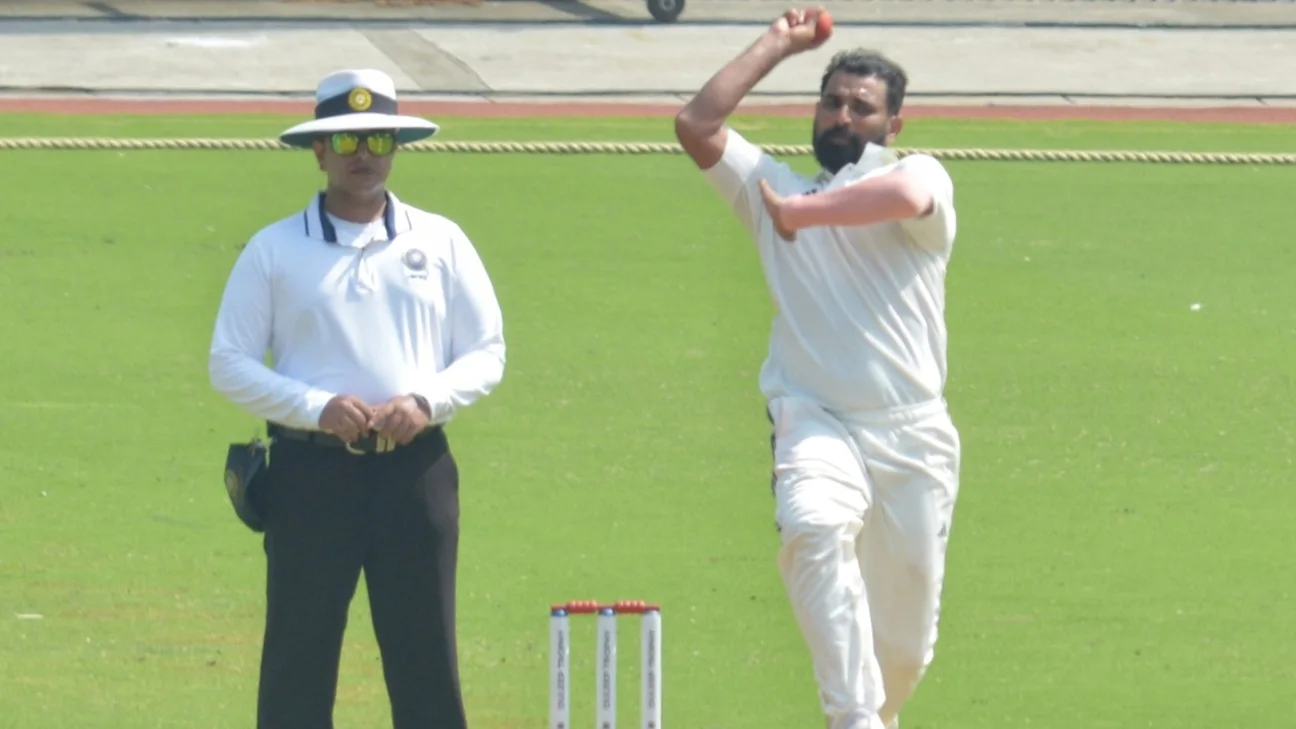
“I’m always learning and I look to keep learning,” Shami said. “In conditions like these, you can’t expect much conventional swing, and the bounce was quite low. I trust my line and length completely, and that’s where I try to create wickets from. And honestly, if you can’t exploit reverse-swing in this kind of heat, what’s the point (laughs)?
“If top-order batters are set, you cannot get them out without a plan. Wickets don’t just happen out of nowhere, especially on pitches like this. The plan was to keep taking the ball away from him [Shaik Rasheed], build that expectation, and then [reverse] one back in sharply to trap him.”
Vaibhav Sooryavanshi, who captained Shami when Ishan Kishan was off the field at one point on day four, was so thrilled with the set-up of Rasheed’s wicket that he jumped onto the bowler and rode piggyback on Shami.
“He loves pulling my leg! I usually tease him back by saying he isn’t even as old as my cricket career,” Shami said of the 15-year-old. “But he constantly banters with me, and that’s great to see. Being able to open up, mingle freely, and build camaraderie will serve him well going forward. I always encourage players to speak openly with everyone [in the team].
“Most of these youngsters are already quite mature. With the level of cricket they play today, in the IPL and other high-pressure tournaments, maturity comes early, so you don’t need to over-coach them. But yes, when the game gets tight and challenging, that’s when you step in with tactical inputs and remind them to keep fighting.”