

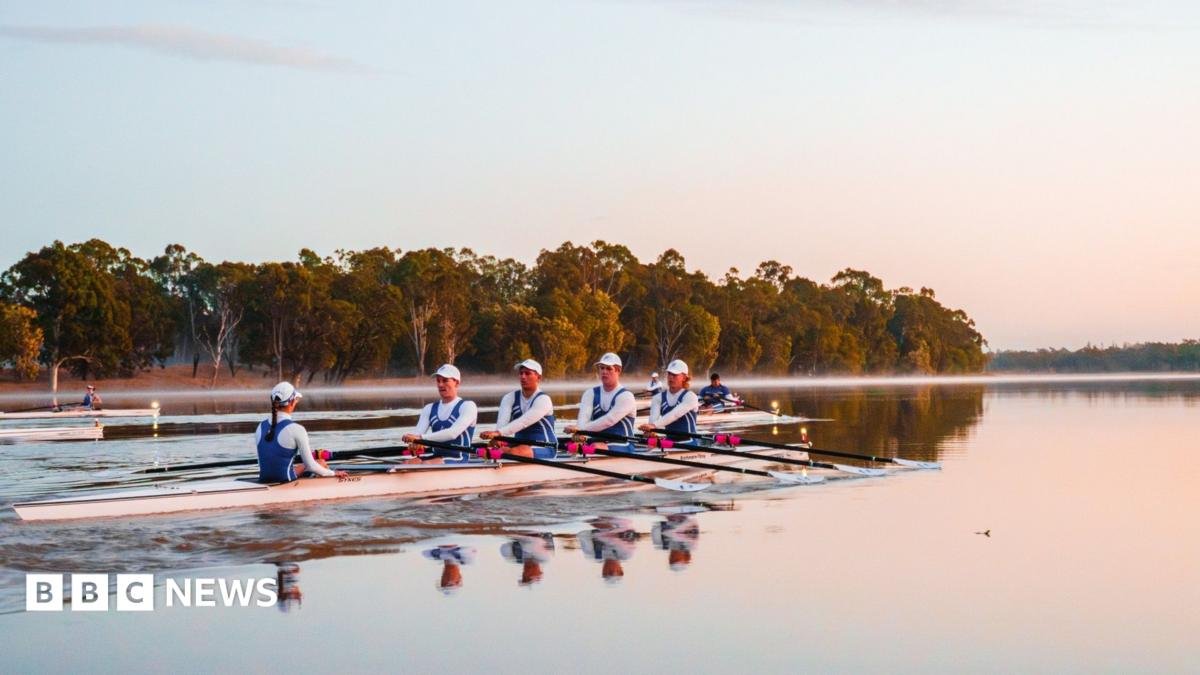
“Fairness” is what’s been raised with British Rowing’s chief executive Tom Solesbury – a reference to the tidal river’s natural bends and currents, which many in the rowing community say make it unsuitable for elite competition.
Drew Ginn, who has won three Olympic gold medals for Australia in rowing, told BBC Radio he had concerns over potential flooding and “fairness and integrity” at the venue.
“Personally, I’m not fearful of the Australian animals but I’ve never had a crocodile near me,” he said.
“I’m sure I’d row faster, I’m sure all the athletes would row faster. That’s on the list of concerns, I don’t think it’s the highest priority in concerns but it was certainly cited very early on.”
The German rowing body’s president Moritz Petri said athletes had also questioned the sustainability of holding the event some 600km (373 miles) from Brisbane.
But the “so-called impediments” got short shrift from the most senior politician in Queensland, state premier David Crisafulli, who reached for less diplomatic language.
“Let’s be honest, let’s scratch beneath the surface and call it for what it is,” he said days after the Amsterdam meeting.
“It is a group of interstate and overseas elites who are trying to bully their way because they don’t want to go to regional Queensland and that’s not right.”
Rowing chiefs contacted by the BBC before Thursday’s decision declined to comment directly on Crisafulli’s “elites” remarks.
But both Petri and Simon Wickham, chief executive of Rowing New Zealand, said their concerns had nothing to do with regional or urban preference but with competitors getting fair racing.
Petri added it was about what’s best for their athletes who will train four years for the event, “dreaming night [after] night of becoming an Olympic champion”.