

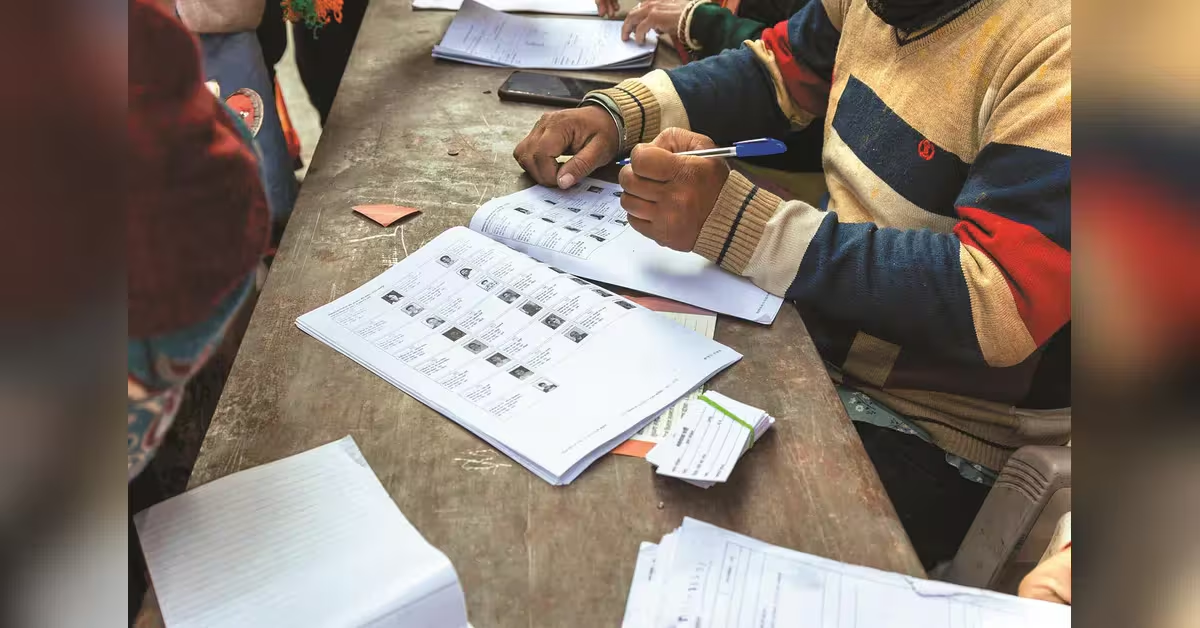
The Delhi Chief Electoral Officer (CEO) has published booth-wise data on electors issued notices during the Special Intensive Revision (SIR) of electoral rolls, detailing the discrepancies flagged against individual voters.
The disclosure comes days before the Supreme Court is scheduled to hear on September 22 a plea challenging aspects of the Delhi SIR. The petitioners have sought greater transparency over the basis on which electors were flagged for notices, including the specific reason for each notice and the criteria used to classify “Logical Discrepancies”.
What the new data shows
The newly published notice list contains elector-level details including polling part, serial number, EPIC number, name, age, gender and the reason for discrepancy.
People can check the details here.
Why the disclosure matters
The Election Commission published Delhi’s draft electoral roll on August 31 following the SIR. Of the 9,753,577 electors in the draft roll, 3,312,919 were identified for notices, according to the petition before the Supreme Court. Of these, 1,379,785 were classified under “No Mapping” and 1,933,134 under “Logical Discrepancies”.
The earlier figures provided an aggregate count of electors in the two categories but did not, by themselves, show the underlying nature of individual discrepancies. The newly published data provides greater detail in at least some cases, with entries identifying specific mismatches involving the elector or their parent.
The distinction is relevant to the legal challenge because petitioners have questioned the basis and definition of “Logical Discrepancies”. They have sought details of the grounds for individual notices as well as the criteria, algorithmic parameters and operational instructions used to identify such cases.
Other SIR data
The CEO’s website has also made available the draft electoral roll and the ASDD list, which contains names excluded from the draft roll along with the stated reasons. Electors can search the draft roll using their EPIC number, name or mobile number.
The claims and objections period for the draft roll runs from August 31 to September 30. Eligible electors whose names are missing from the draft roll can seek inclusion through Form 6, while Form 7 can be used to raise objections or seek deletion of an existing entry and Form 8 for corrections and changes in electoral-roll particulars.
The extent to which the newly published notice database accounts for the 3.31 million electors flagged for notices, and whether it provides the methodology used to identify “Logical Discrepancies”, could be relevant to the Supreme Court hearing on September 22.