


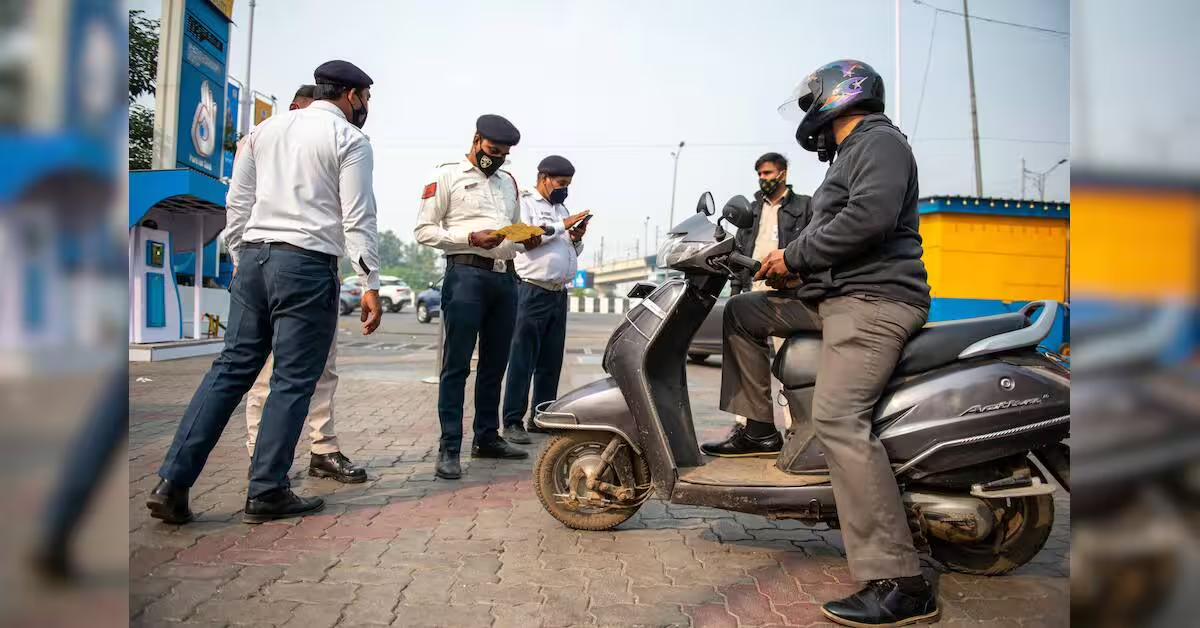
Delhi is set to operationalise the amended traffic challan system, nearly seven months after the revised provisions came into effect. Under the new system, motorists will be required to deposit at least 50 per cent of the penalty before approaching a court if their grievance against a challan is rejected.
The designated officers include section officers from various government departments, food and supplies officers, tehsildars, and district transport and enforcement officers. Sub-divisional magistrates (SDMs) and additional district magistrates (ADMs) will act as supervisory authorities, overseeing coordination and monitoring of the grievance-redressal process.
The new mechanism will become operational from the date of its publication in the official gazette.
How the new challan system will work
Under the revised framework, motorists will have 45 days from the issuance of a challan to either pay the penalty or contest it online before a designated grievance redressal officer.
If the motorist does not take any action within the 45-day period, the challan will be deemed accepted. The penalty will then have to be paid within the subsequent 30 days.
Where a grievance is rejected, the motorist can approach a court but will first have to deposit 50 per cent of the challan amount.
The system effectively introduces a formal pre-litigation grievance stage for traffic challans, with the aim of resolving disputes before they reach the courts.
Digital tracking of challans
The revamped platform will create a digital workflow covering the full life cycle of a challan—from issuance and payment to grievance filing, disposal and, where necessary, referral to a court.
Challans generated through Delhi’s automated enforcement network, including CCTV cameras, will also be integrated into the system.
TOI cited officials saying that e-challans would be sent within three days when the mobile number of the vehicle owner or violator is available in government records. If no mobile number is available, a physical notice will be issued within 15 days.
The platform will maintain a digital record of each case, including the issuance of the challan, grievance proceedings, payments and final disposal.
Traffic enforcement technology upgrade
The technology upgrade will include improved image quality and a more accurate number plate recognition system. Authorities are also working to improve the detection of traffic violations involving two-wheelers, which have presented challenges for camera-based enforcement.