

The gap is particularly significant in unauthorised colonies and slum clusters, where the absence of formal sewage infrastructure can leave wastewater dependent on septic tanks, drains, or other disposal systems.
Delhi aims to connect all households by 2028
The DJB has set a target of providing sewer connections to all four million households by 2028. At present, around 2.35 million households are connected to the network, while work is continuing across several unauthorised colonies.
Hindustan Times reported that Delhi has 1,799 unplanned settlements. Sewer network work has been completed in 1,317 of these colonies, while work is under way in around 100 more. However, expanding the network remains difficult in areas where permissions are required from other agencies.
The DJB has also identified several colonies where work cannot currently proceed because they are located in the Yamuna’s O-Zone or forest areas.
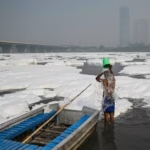
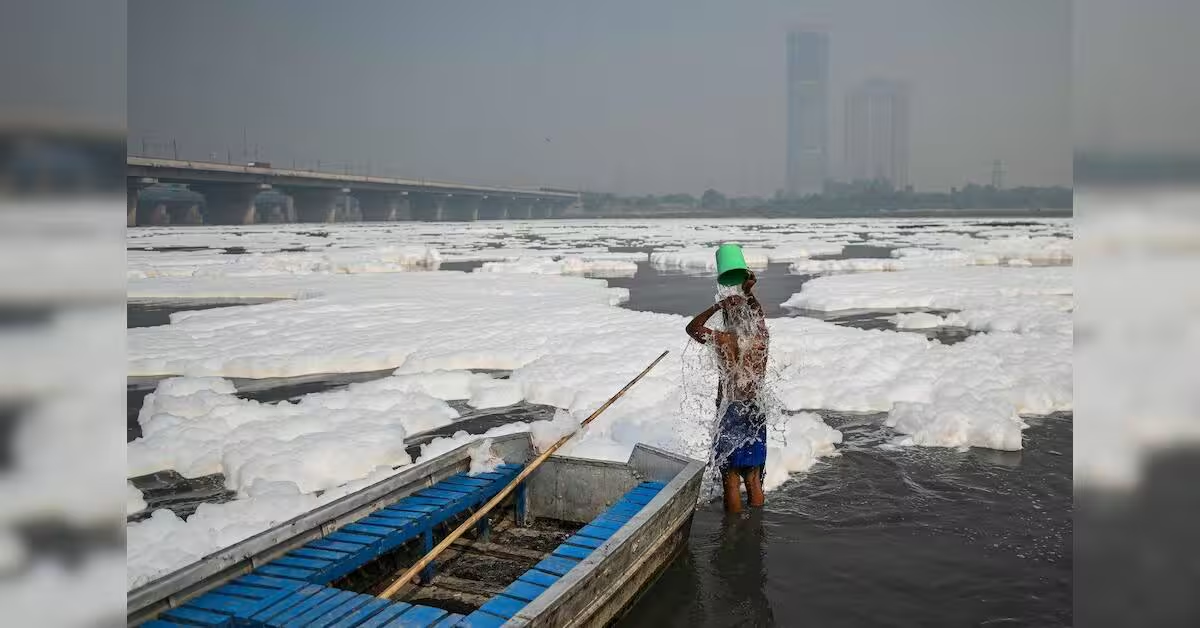
How sewage affects the Yamuna
Times of India reported that 249 MLD of sewage remains outside the treatment system and that 12 of Delhi’s 22 sewage drains remain untapped. The report also said that only 3,387 MLD of the city’s 3,702 MLD installed STP capacity was being utilised.
The report noted that seven STPs were non-compliant with Delhi Pollution Control Committee standards, while untreated sewage was also entering water bodies through untapped sewage and stormwater drains.
Steps to expand sewage treatment
The Delhi government is pursuing several infrastructure projects alongside household connections.
According to ThePrint, citing PTI:
- Work has begun on 28 decentralised sewage treatment plants under projects worth around ₹2,990 crore
- Work orders worth around ₹1,090 crore have been issued to upgrade existing STPs
- Sewer network work has been completed in 114 unauthorised colonies
- Around 128,633 households in these colonies have received sewer connections
- Network work is under way in 276 colonies, while connections are being provided to around 544,680 households across 647 unauthorised colonies
For areas without adequate sewer networks, the DJB is also deploying septage-cleaning machines to collect waste from septic tanks and transport it to treatment facilities. The board has authorised 137 private vendors to collect and dispose of septage at STPs and sewage pumping stations.