

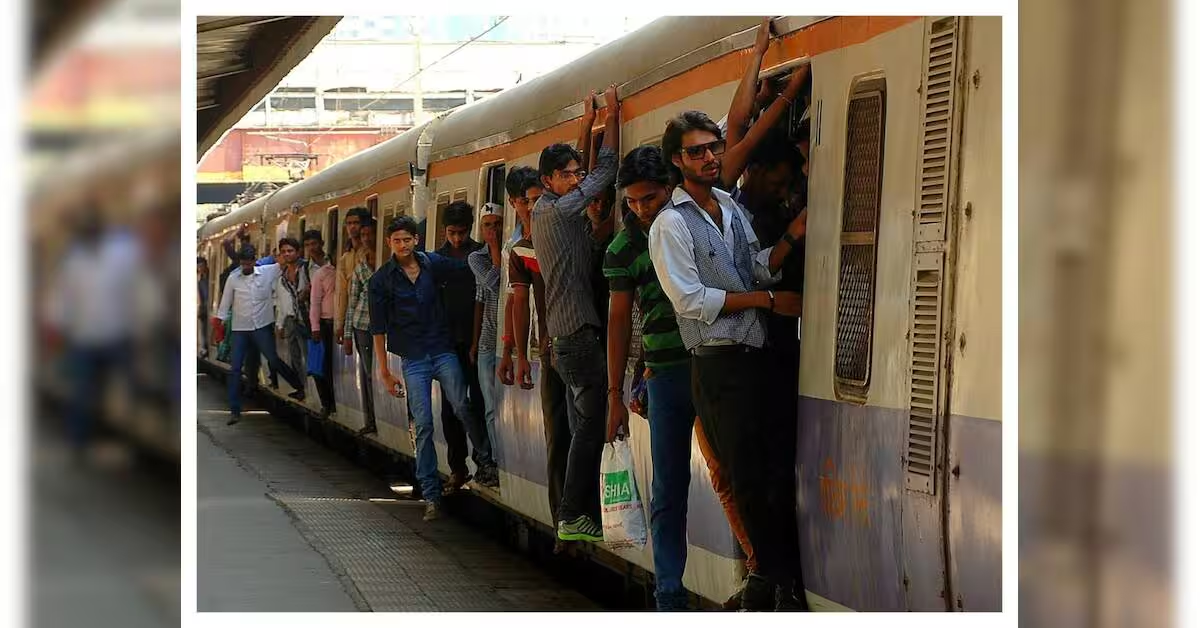
Passengers travelling by train will face stricter ticket checks starting October 1, as Central Railway launches a month-long special drive to verify ticket authenticity and passenger eligibility.
No original ID could put entire group at risk
For passengers travelling on a ticket booked for multiple people, at least one passenger named on the ticket must carry the prescribed original identity proof.
If no passenger on the booking can produce the required original ID, the group may be treated as travelling without a valid ticket under railway rules, Central Railway Chief Public Relations Officer Swapnil Nila was quoted as saying by The Indian Express.
This is particularly relevant for passengers relying on e-tickets. The existing guidelines state that one passenger booked on an e-ticket can establish identity for the other passengers travelling on the same booking by producing an accepted photo ID in original. If none of the passengers carries the required ID, all passengers can be treated as travelling without a ticket.
Which ID documents are accepted?
The railways lists the following documents as being valid for travelling on train:
Voter Photo ID issued by Election Commission of India.
Passport
PAN Card
Driving Licence
Photo identity card having serial number issued by Central/State Government
Student Identity Card
Nationalised Bank Passbook with photograph
Credit Cards issued by Banks with laminated photograph
Aadhaar card
E-Pass and PTO holders face additional checks
Passengers travelling using an E-Pass or Privilege Ticket Order (PTO) must carry the prescribed original identity proof. They must also ensure that the E-Pass or PTO has been properly exchanged for the required authority to travel before beginning the journey.
Railway officials will also check the genuineness of unreserved tickets. The TTE App may be used by ticket-checking staff to authenticate and verify tickets during the drive.
Ticketless travel penalty now ₹500
The intensified checks come after Indian Railways raised the minimum penalty for travelling without a valid ticket from ₹250 to ₹500, effective June 20, 2026, under provisions of the Jan Vishwas Act, 2026. The applicable fare and excess charge can also be recovered depending on the nature of the irregularity.
The drive is aimed at curbing misuse of reservation facilities and concessions, detecting fraudulent or invalid tickets and reducing revenue leakage, according to Central Railway.