


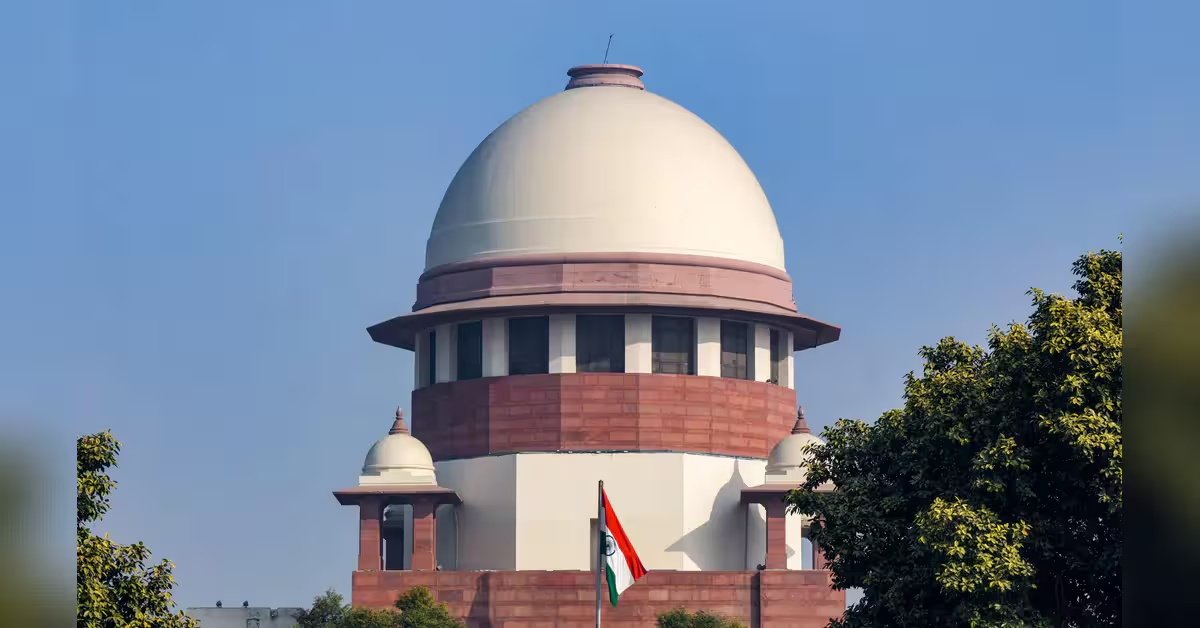
The Supreme Court on Sunday directed authorities to ensure the normal functioning of Metro and railway services, restore internet connectivity and permit free movement across Delhi, subject to traffic regulations and lawful restrictions necessary to maintain public order.
It also cautioned against detaining individuals except in accordance with the procedure established by law, including those participating in peaceful, unarmed assemblies outside areas covered by prohibitory orders.
A Bench of Justice Joymalya Bagchi and Justice V Mohana issued the directions while hearing petitions alleging police excesses, mass detentions and restrictions on public transport during the protests held on October 10 demanding the resignation of Chief Election Commissioner Gyanesh Kumar.
The court directed authorities to review barricades immediately and remove any board announcing the imposition of prohibitory orders under Section 163 of the Bharatiya Nagarik Suraksha Sanhita (BNSS) around the Supreme Court, if it had not already been removed. It said access to courts, including entry and exit, must not be impeded.
The Bench also directed that internet services remain uninterrupted and that no advocate be prevented from discharging professional duties.
Delhi Metro and rail operations may be regulated where necessary to maintain public order, but should not be suspended entirely, the top court said.
The directions followed allegations by several senior advocates that police personnel had detained peaceful protesters, used excessive force and obstructed lawyers, journalists, and ordinary citizens.
The court issued notices to the alleged contemnors, directing them to file responses to the contempt petition and submit a compliance report by October 13. Other petitions mentioned during the hearing will be tagged with the contempt proceedings.
The contempt petition filed by advocate Shailendra Mani Tripathi alleged that the authorities failed to comply with those directions. Separate petitions, including one filed by RJD Rajya Sabha MP Manoj Jha, have alleged unlawful detention, excessive use of force, mistreatment of women protesters and restrictions on transport and internet services.
Solicitor General Tushar Mehta told the court that all Metro stations had been open since 10 pm on Saturday and services were operating normally. He disputed the allegation that Metro operations had been curtailed, saying the full complement of 4,750 train services had run according to schedule on October 10. Of Delhi Metro’s 303 stations, 47 had been closed or subjected to restrictions, he said.
Additionally, senior advocate Menaka Guruswamy, appearing in person, sought interim relief in her habeas corpus petition challenging the detention of political leaders. She said restrictions on public transport had deprived citizens of their ability to move freely and alleged that thousands had been detained, with no official figures provided by the authorities. She also raised concerns about reports of detention centres being set up across Delhi and opposition leaders being confined to their residences.
Guruswamy argued that the restrictions raised fundamental questions about the right to protest peacefully and sought the presence of senior officials, including the Union Home Secretary and a senior Metro official, before the court.
Mehta argued that the habeas corpus petition concerning detained political leaders might no longer survive as those detained had been released.
The Bench, however, directed authorities to file their responses and comply with the court’s earlier order. Justice Bagchi asked whether the restrictions had been imposed on the basis of railway authorities’ advisories and said Metro services must continue according to the normal schedule, subject to legitimate public-order requirements under Article 19(2) of the Constitution.
Senior advocate Kapil Sibal alleged that police personnel were picking up people from trains and detaining individuals found beyond a four-kilometre radius of Jantar Mantar. He also alleged that internet services had been suspended in parts of the city and several Metro stations remained closed despite the court’s earlier directions.
Senior advocate Shadan Farasat told the Bench that he had himself been manhandled during the protests and placed in a moving bus after being picked up by police. He said the restrictions had severely curtailed citizens’ ability to demonstrate peacefully.
Senior advocate Gopal Sankaranarayanan referred to videos purportedly showing police personnel using force against unarmed protesters. He sought the restoration of unrestricted movement, removal of barricades and accountability for officers involved in the alleged incidents. He also flagged the presence of police personnel without visible identification badges.
Senior advocate Sanjay Hegde said preventing lawyers from reaching their clients and assisting them at police stations affected access to justice and the dignity of the Supreme Court. He alleged that lawyers had been assaulted and threatened with registration of criminal cases.
Responding to the submissions, Justice Bagchi said the constitutional guarantee of freedom of expression under Article 19 was not an absolute bar on regulation, but restrictions had to meet the applicable constitutional standards. The court said it would hear further arguments on whether the police action was consistent with the protection afforded to peaceful expression.
Advocate Jai Anant Dehadrai, appearing for some police officers who were allegedly assaulted during the protests, also addressed the Bench. Justice Bagchi said the rights to life and liberty applied equally to police personnel and citizens, adding that all intervention applications would be considered together.
The special sitting followed the court’s October 9 order in MA Baby v Union of India, in which it directed authorities to not completely suspend train services to Delhi or shut down Metro operations ahead of the protests announced for October 10. The court had said services could be regulated where necessary but should not be prohibited outright, and asked authorities to reconsider their decision to close 57 Metro stations.