


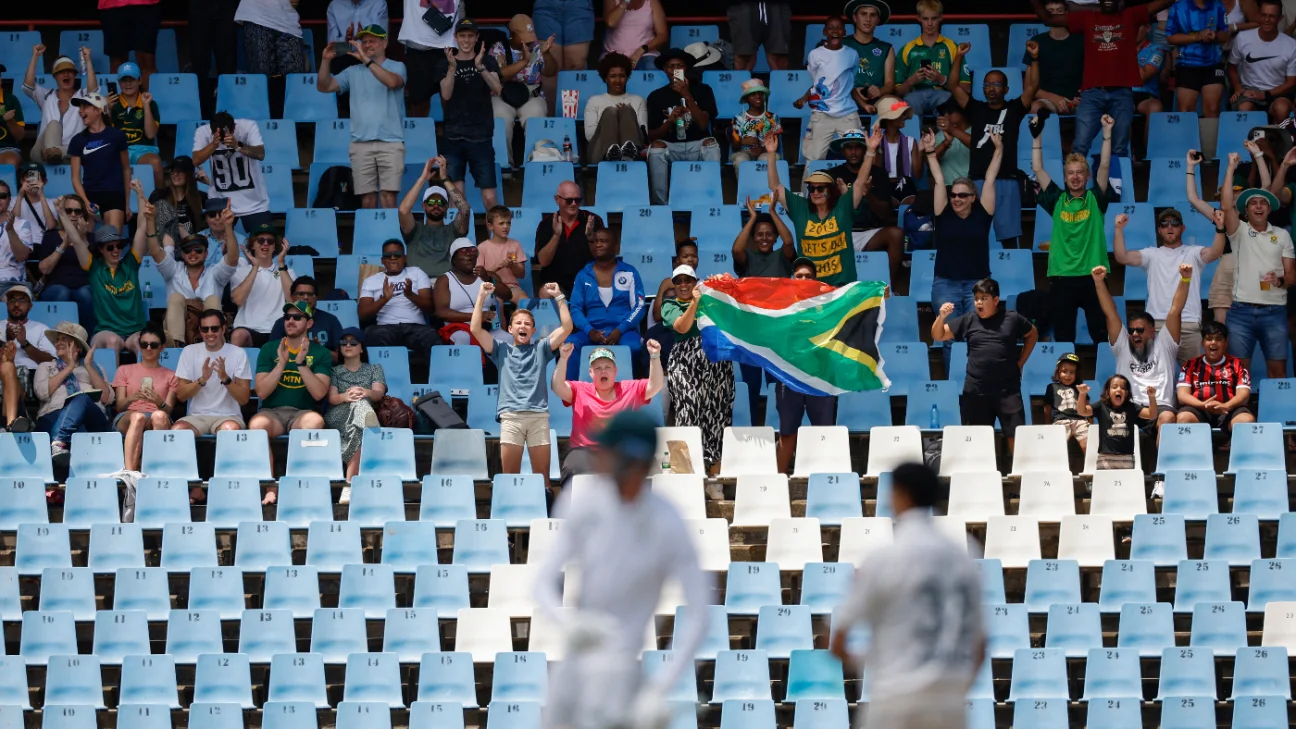
The end result is that South Africans, starved of red-ball cricket last summer with no home fixtures, who hoped to watch their World Test Champions under the gaze of Table Mountain in early 2027 are likely to be in the minority, as CSA seek to monetise their most popular match.
Newlands Ticket Allocation
- 39% – International and domestic travel packages
- 19% – Complimentary tickets allocated to CSA and member sponsors, stakeholders, match officials, visiting and home teams, media, marketing, and service allocations
- 21% – General hospitality and member complimentary tickets
- 13% – Released to the public and unreserved seating
- 2% – Season ticket holders
- 3% – Restricted areas
- 1% – Wheelchair users and assistants
- 1% – Sight screen restricted seating
- 1% – Reserved backup allocations
Test tickets are usually readily available in South Africa and audience numbers remain middling except for the festive matches at SuperSport Park in Centurion and Newlands in Cape Town. Both venues have historically recorded strong attendance, boosted when the visiting team has a large contingent of touring supporters. England fit that bill better than most with the Barmy Army and others ever-present at away games. The December-January season is also popular for English tourists in South Africa, especially in Cape Town, and with the Rand at 22 to the Pound, it can only be concluded that CSA sought to maximise the earning potential of this tour.
For the Newlands Test, a total of 12% of the stadium’s capacity of 17,544 (reduced from over 20,000 because of new building development on site) was allocated to international travel packages and 27% to local ones. The latter are mostly sold through a newly created company, SA Cricket Travel, which is a partnership between CSA and TourVest. A report in the Daily Mail in England said touring fans were unhappy with the prices they were asked to pay as tickets were bundled with hotels and transfers and totalled several hundred pounds
Meanwhile, in South Africa, there was also unhappiness over local fans’ inability to purchase tickets, which disappeared about 10 minutes after sales opened on Monday. Ticket prices are set individually by each venue and signed off by CSA. They are typically between R400 and R250 (US$25 and US$15) for general access tickets, and the cost is not seen as a massive barrier to entry for ordinary South Africans while being affordable to those with hard currency.
Local radio stations including CapeTalk aired segments lamenting the difficulties South Africans faced in buying tickets. On-air, they interviewed sports business researcher Nqobile Ndlovu who said that CSA’s decision to have such a significant percentage of tickets allocated to travel packages means the organisation has “essentially locked out your domestic fans,” but, “from a commercial point of view, I can see why they did it.”
CSA is currently in a strong financial position and reported a profit of R238 million (approx US$13.7 million) last year but this year’s statements could see a drop after they hosted only one incoming series in the 2025-26 summer, three T20Is against West Indies. The 2026-27 season is an opportunity to turn that around, with incoming tours from Australia and England, both of whom are profitable for CSA, especially England.
While tickets remain available for the first and second Tests in Johannesburg and Centurion respectively, CSA have declared Newlands sold out for the first four days but strictly speaking that is not the case. Of the 13% of tickets reserved for the public, 9% were released on Monday and the remaining 4% along with any unused tickets from the allocations listed above will be put back on sale at a later stage. This will include any changes to the sight-screen seating which will only be decided once the pitch allocation is completed and match officials have signed off on the sight-screen requirement. Typically this happens in the days leading up to the game.
Firdose Moonda is ESPNcricinfo’s senior correspondent for Africa and women’s cricket