


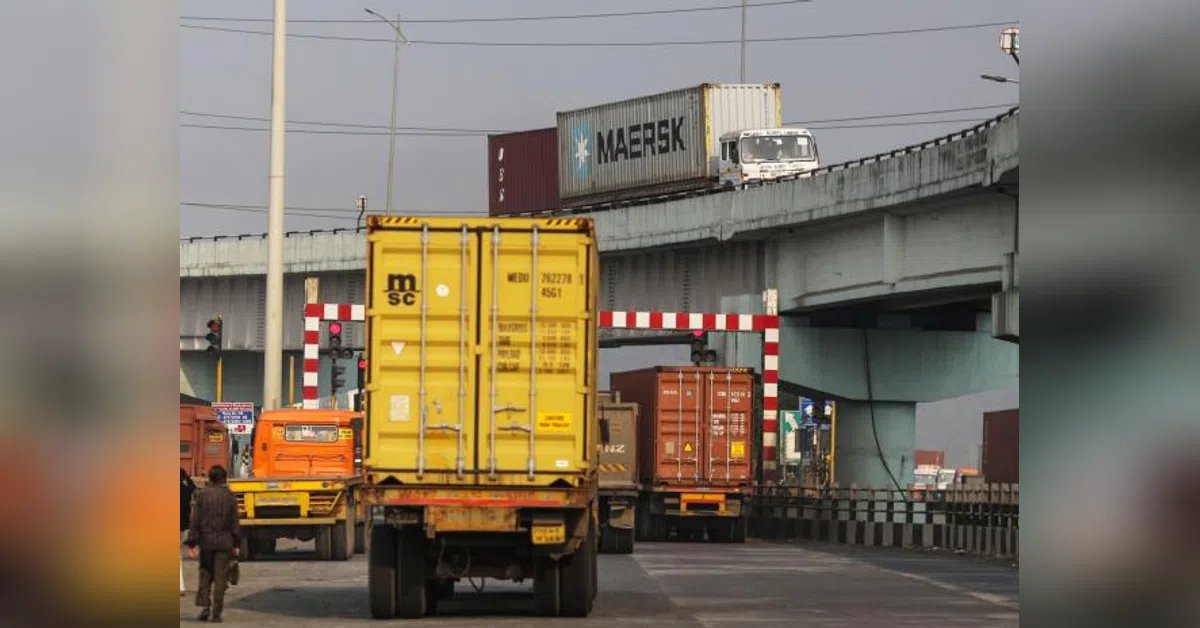
Delhi-NCR may face supply disruptions and slower goods movement this week after transport unions announced a three-day strike, starting Thursday. The protest centers on the sharp hike in the Environment Compensation Charge (ECC) imposed on commercial vehicles entering Delhi, although transporters say the issue reflects a much wider financial strain on the industry.
The All India Motor Transport Congress (AIMTC), which represents transporters and truck operators across the country, called the protest.
What is ECC and why has it been increased?
The Environment Compensation Charge (ECC) is a pollution-linked fee imposed on commercial vehicles entering Delhi-NCR, especially those using it as a transit route. It was introduced in 2015 to discourage polluting vehicles from passing through the capital and to reduce vehicular emissions that contribute heavily to poor air quality.
The Delhi government recently revised the ECC rates following recommendations by the Commission for Air Quality Management (CAQM) and approval from the Supreme Court in March. The revised rates came into effect from April, 2026.
Under the new structure:
-
Light-duty commercial vehicles and two-axle trucks now pay ₹2,000 instead of ₹1,400 -
Three-axle trucks and heavier vehicles now pay ₹4,000 instead of ₹2,600 -
The rates will also increase by 5 per cent every year from April onwards
Why are transporters opposing the move?
Transport unions argue that the revised ECC places an additional financial burden on an industry already facing rising costs. According to AIMTC, transporters are dealing with increasing fuel prices, toll charges, insurance costs and maintenance expenses, while freight rates have not risen proportionately. They also claim that transport businesses operate on thin profit margins and that repeated levies are making operations unsustainable.
One major concern is that many vehicles entering Delhi are carrying goods meant for the city itself, not merely transiting. Transporters argue that imposing a steep pollution charge on all commercial vehicles unfairly affects businesses and supply chains.
Other demands raised by transport unions
Apart from seeking a rollback of the higher ECC, transporters have also opposed the planned ban on the entry of non-Delhi registered BS-IV commercial goods vehicles from November 1, 2026. Under Delhi’s Air Pollution Mitigation Action Plan 2026, only BS-VI (Bharat Stage VI emission norms, which are stricter pollution standards for vehicles), CNG and electric goods vehicles will be allowed to enter the capital from November.
Transporters have also demanded exemption from the ECC levy for newer, lower-emission BS-VI trucks carrying essential commodities or entering Delhi-NCR empty.
Truck unions have warned that suspending commercial vehicle operations may disrupt the supply of vegetables, groceries and other essential goods in parts of the region. There are also concerns about delays in logistics and delivery services.
Why pollution remains central to the debate
Delhi continues to battle severe air pollution, especially during winter months, and vehicular emissions remain one of the biggest contributors. Heavy diesel trucks passing through the city have long been under scrutiny because they add significantly to particulate pollution.
The CAQM and the Supreme Court have argued that stricter charges and regulations are necessary to push transporters towards cleaner vehicles and alternative routes. However, transport unions argue that environmental reforms should not come entirely at the cost of drivers and operators who are already under economic stress.