

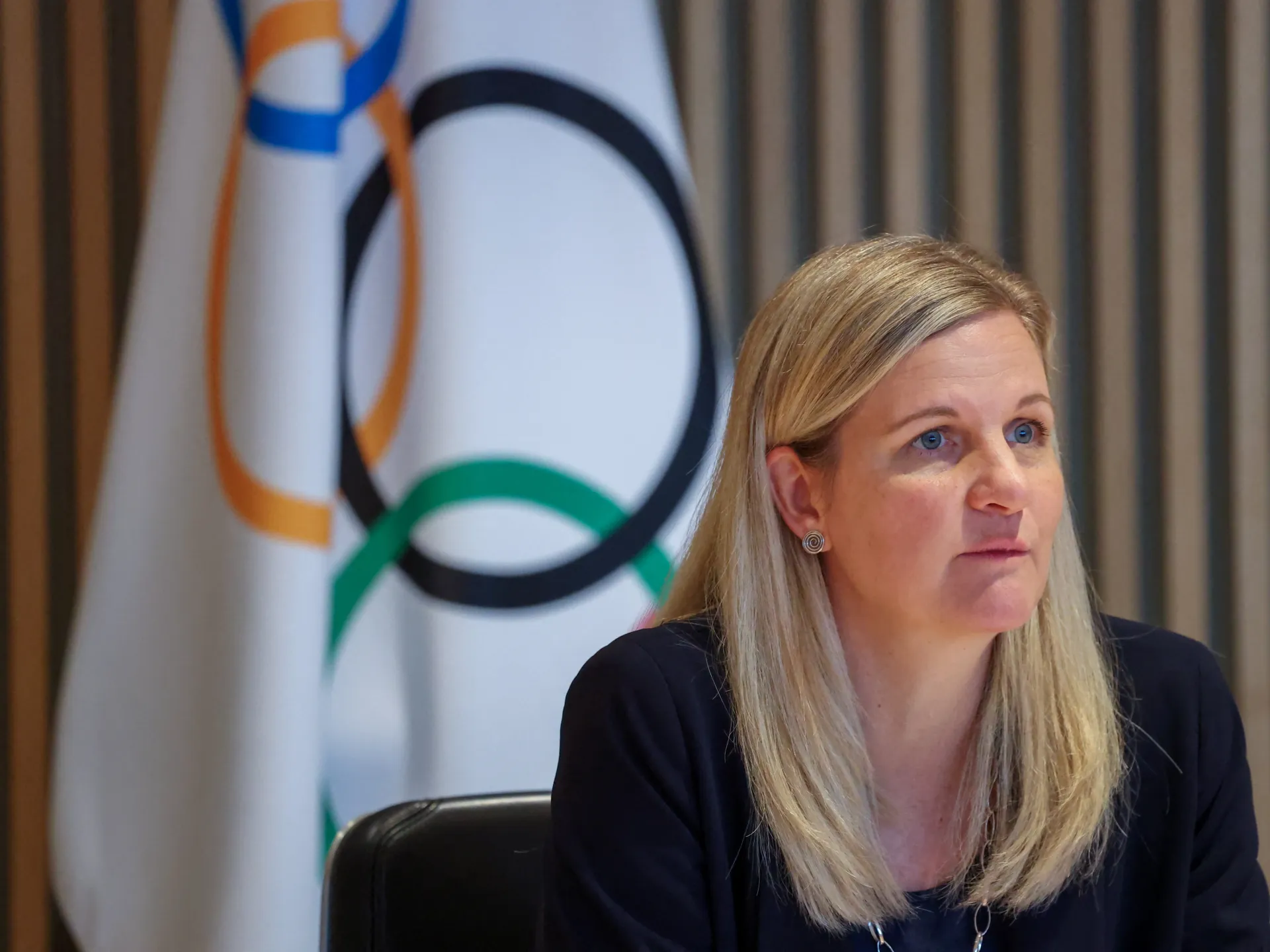
The President of the International Olympic Committee, Kirsty Coventry, has been censured by fellow Olympians over her recent comments saying athletes shouldn’t be paid prize money at the Games.
Coventry, who represented Zimbabwe at five Olympics and won seven medals, made the controversial comments last week while on her first visit to Oceania as IOC chief.
Recommended Stories
list of 4 itemsend of list
“I don’t believe in paying athletes,” Coventry told New Zealand based outlet Sport Nation.
“I come from a small country, I came from a sport that doesn’t necessarily pay athletes very well and I still don’t think we should be paying athletes at the Olympic Games.”
The IOC does not pay athletes a stipend or salary for competing at the Olympic Games.
Coventry emphasised in the same interview that the IOC needed “to find more ways to directly impact athletes, and find ways to help them on their journey to becoming Olympians and while they’re Olympians”.
She underlined the need for talent identification, and finding means to inspire athletes from smaller nations to make it to the largest sporting event in the world.
“That was very much my journey,” Coventry, 42, said. “I was an Olympic solidarity scholarship holder without that money. I’m not sure I would have been as successful, and so I’m so grateful for that.”
The multiple Olympic and World champion from Zimbabwe is considered the most decorated African Olympian. She returned to the global spotlight after becoming the first woman, and first African chief of the IOC, in 2025.
Under the current Olympic model, athletes are financed through national sporting federations, sponsorships, self-funding, or, in the case of Coventry, the Olympic Solidarity Scholarship.
Why was Coventry criticised?
Coventry’s remarks came just days after the ethically questionable Enhanced Games saw top athletes win $250,000 for every gold medal.
The Enhanced Games allow elite sprinters, swimmers and weightlifters to vie for world records, while taking banned performance-enhancing drugs.
Greek swimmer Kristian Gkolomeev earned a $1m bonus for “breaking” a world record in the men’s 50m freestyle, though it will not make the official record books since global sporting authorities do not recognise the competitors’ results as legitimate.
Coventry’s comments drew sharp criticism from Olympic athletes, who left comments on an Instagram post by swimming news outlet SwimSwam.
Reigning Olympic champion and 50m freestyle record holder Cameron McEvoy said Coventry’s comments “could not have been stated at a more inopportune time”, ostensibly referring to the Enhanced Games. The inaugural experimental competition, albeit heavily criticised, stands as a more lucrative option for athletes looking to make money while continuing their sport.
Former World and European champion Filippo Magnini criticised competitions “where the values of sports are trampled on for the sake of show.
“But let us remember that athletes sacrifice their lives to pursue a dream, and once they retire, 90 percent do not have a future,” the Italian freestyle sprint champion commented.
He emphasised how athletes who put on the show are the backbone of competitions such as the Olympics. “Without athletes, you wouldn’t even be here.”
Former Olympic champion and Australian distance swimming great Grant Hackett called the decision “backwards”, while retired South African swimmer Roland Schoeman said: “The IOC loves the idea of ‘Olympic values’ as long as athletes are the only ones expected to sacrifice financially.”
‘This won’t age well’
Canadian gymnast Felix Dolci and retired British athlete Greg Rutherford also backed the swimmers, with the long jumper saying: “This won’t age well.”
American rapper Flava Flav also commented on the post: “This is why I had to step up.” The television personality became an unlikely sponsor and a financial blessing for several athletes, most notably the US women’s water polo team, whom he supported at the 2024 Paris Olympics.
He also teamed up with Alexis Ohanian, Reddit cofounder and husband of tennis icon Serena Williams, to financially aid US discus thrower Veronica Fraley after she lamented being unable to pay her rent.
Retired Olympic hurdler Sally Pearson reacted to Coventry’s remarks in a video on her Instagram account.
“The Olympians, the athletes that are out there on the stage performing and competing for everyone’s entertainment don’t get paid. The volunteers and the Olympians don’t get paid at the biggest sporting event in the world,” the former world and Olympic champion from Australia said.
“Can you imagine telling a rockstar ‘you’re going to go on a tour and perform in front of thousands of people but we’re not going to pay you’; do you reckon they would go?”
Pearson, 39, further explained in a comment how stringent rules prevent athletes from earning money in the lead-up to the Olympics.
Calls for creating athletes’ union
The IOC can use athletes’ name, image and likeness (NIL) to promote or celebrate the Olympics, while athletes receive nothing in return.
In 2021, the National Collegiate Athletic Association changed NIL rules to allow student-athletes to financially benefit from NIL usage. When asked whether the IOC would adopt a similar stance, Coventry — who swam for Auburn University in Alabama in the US — denied moving to a similar model.
“Well, they get beautiful venues. They get beautiful villages. They get a beautiful experience. And all of that comes from the money that we raise,” Coventry went on to say in the same interview.
Famed Paralympic champion Hunter Woodhall called Coventry’s comments “embarrassing”, while retired British long jumper Rutherford said “the quicker an athlete union can be formed, the better”.
Rutherford detailed his own financial struggles in the sport, but acknowledged that he was from “one of the best sports in the Olympics” that allowed him to earn a decent wage compared to other sports.
“A lot of money I did make went back into the sport to try and win again,” he said, explaining the gamble athletes take with investing thousands of dollars in their training, nutrition and competitions.
World Athletics became the first governing body to award athletes $50,000 in prize money for an Olympic gold medal. Rutherford drew comparisons between World Athletics President Sebastian Coe — a former Olympic champion — drawing on his own experience as an athlete to change the financial system, while his counterpart Coventry stood firm on not paying athletes.
“I’m not saying every athlete should become a millionaire. I’m asking for an organisation that makes $12 billion, charges nations billions to host it, pays its executive millions, blocks athletes from earning, and owns footage of their greatest moments to have a long, hard look at itself,” Rutherford said.
The IOC generated $12.4b during the 2021-2024 cycle, mostly from global broadcast rights, according to its financial report. Nearly 74 percent of that was redistributed back into international sport.
While the IOC has not officially detailed what Coventry makes as president, it is speculated to be $350,000 annually, after it was disclosed last year that Coventry’s predecessor, Thomas Bach, was paid that amount for the final two years of his tenure.
Coventry’s past controversies
Coventry received backlash from athletes and human rights groups alike when the IOC reinstated gender verification tests for the 2028 Los Angeles Games. The global governing body said that only “biological females” will be allowed to compete in women’s events, preventing transgender women from competing.
South African runner and two-time Olympic 800m champion Caster Semenya expressed her disappointment that the IOC’s decision was made under newly-appointed Coventry.
“For me personally, for her being a woman coming from Africa, knowing how African women or women in the Global South are affected by that, of course it causes harm,” Semenya said in Cape Town on the sidelines of a sporting competition.
Coventry was also the centre of attention in Zimbabwe after the 2008 Beijing Olympics where she smashed the world record in the 200m backstroke to win gold. She accepted a cash prize of $100,000 from then President Robert Mugabe on live television, when many Zimbabweans were struggling with hyperinflation.
She’s also been at the centre of political controversy during her tenure as sports minister which began in 2018.