


Everyone has their own goal. For me, the goal at the Federation Cup was simple: get the qualification standard for the Commonwealth Games. I had scored 7900-something before (7947) at a competition in the USA, but there were multiple events there where the wind was more than the legal limit. This time I wanted to remove all doubt.
But there was a dilemma. If I played it safe, I’d probably get the qualification but miss the chance to put up a really big score. On the other hand, if I pushed too hard and something went wrong, I could lose my Commonwealth Games opportunity.
The flip side was this: if I was in great shape and had the chance to do something special, what guarantee was there that conditions would be as good later? What if I got injured? What if Glasgow was cold or rainy? I felt like I was in limbo between playing safe and chasing something big.
If the Commonwealth Games were four weeks away, I would have self-regulated more. But I had 10 weeks. That put me in a beautiful spot — I could really push and see where I stood. The thought of hitting 8000 points at home added to the excitement.
100m — 10.77 (PB)
All these thoughts were in my mind before the 100m. But once the gun goes off, you just run.
When I crossed the line and saw 10.7, I was shocked by how easy it felt. It was a wind-legal personal best by 0.3 seconds. My previous best was 11-something. Everything felt smooth, execution was great, and I still ran 10.7. That gave me confidence. I started thinking maybe my limit had moved higher than what I believed.
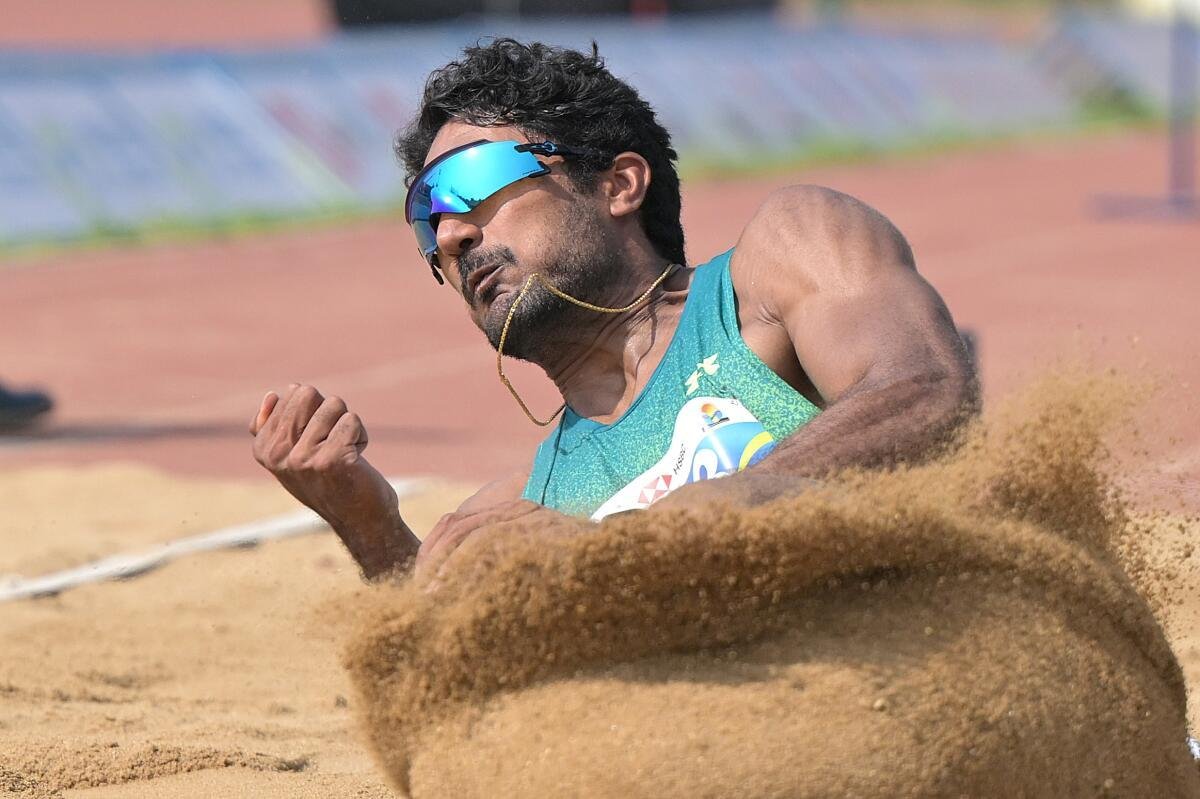
Long jump — 7.67m (PB)
My second jump in the long jump was 7.67m. Suddenly, I had two back-to-back personal bests. At that point, there’s no point in self-regulating. Whatever happens, happens. If I cramped up later or got hit by the heat, at least I’d know I had maximised the opportunity.
The long jump is still a delicate event for me. I’m not yet confident that I can walk into any meet and automatically jump 7.60m or 7.70m. What I’m trying to eliminate are those 7.20m or 7.30m jumps so that my worst effort becomes a 7.50m. My first jump in Ranchi was poor, and that adds pressure. If your second jump also goes wrong, suddenly the whole decathlon feels shaky. So, when I saw 7.67m, I knew I was safe.
Tejaswin Shankar in action during the long jump decathlon event.
| Photo Credit:
RITU RAJ KONWAR

Tejaswin Shankar in action during the long jump decathlon event.
| Photo Credit:
RITU RAJ KONWAR
Am I happy with that in a decathlon? Absolutely. But is that my limit? Not at all. I think there’s a 7.80m–7.90m jump in me if I can figure this event out.
Logically, I should be a better long jumper. I have the speed and I have a strong take-off leg because it’s also my high jump leg. The issue is technique. Someone like [Murali] Sreeshankar has a much more vertical take-off, which gives him more time in the air. Mine is flatter, so I land early.
But as a decathlete, I don’t have the luxury of obsessing over one event. Improvements have to come gradually because there are nine others to work on.
Shot put — 13.31m
I was actually excited for the shot put. I thought I could throw 14m, which is a solid benchmark for a decathlete who jumps 2.25m and runs 10.7 in the 100m. I ended up at 13.30m. Was it special? No. But it also wasn’t damaging. If I were a 15m thrower, I’d be losing major points. But for where I’m at, it was fine — just a ‘meh’ event.
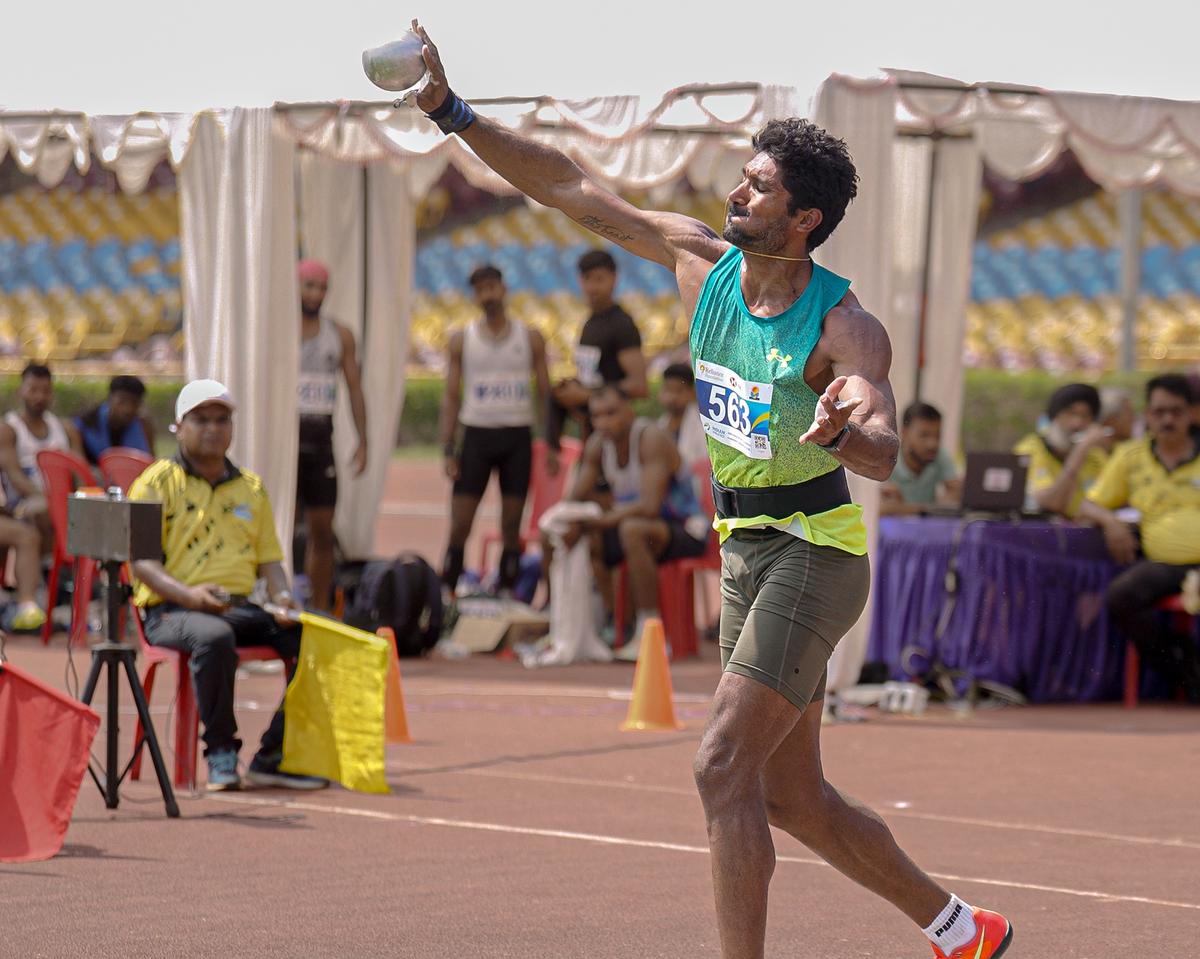
Shot put is an event where Tejaswin doesn’t stress too much.
| Photo Credit:
RITU RAJ KONWAR
Shot put is an event where Tejaswin doesn’t stress too much.
| Photo Credit:
RITU RAJ KONWAR
Shot put is also an event where I don’t stress too much. I know even on my worst day I’ll throw around 13m and on my best maybe 14m. You just stand there, chat and catch up with the other athletes, conserve energy and focus on one big effort.
Mid-day Break
After the shot put, there’s about a five-hour break. I went back to the hotel, cooled off and tried to reset. I had rice or pasta to replenish glycogen, watermelon juice and fresh lime soda for electrolytes, took a cold shower and lay in the AC with an eye mask and earplugs. You rarely sleep because you’re in the middle of competition mode, but for a couple of hours, I just tried to completely shut everything off and mentally reset for the evening session.
High jump — 2.25m (Decathlon PB)
High jump started at 5.30 p.m., but by the time I actually took my first jump, it was close to 8 p.m. The tricky part is that you aren’t allowed to warm up after the competition starts, so if you warm up too early, your body gets tired.
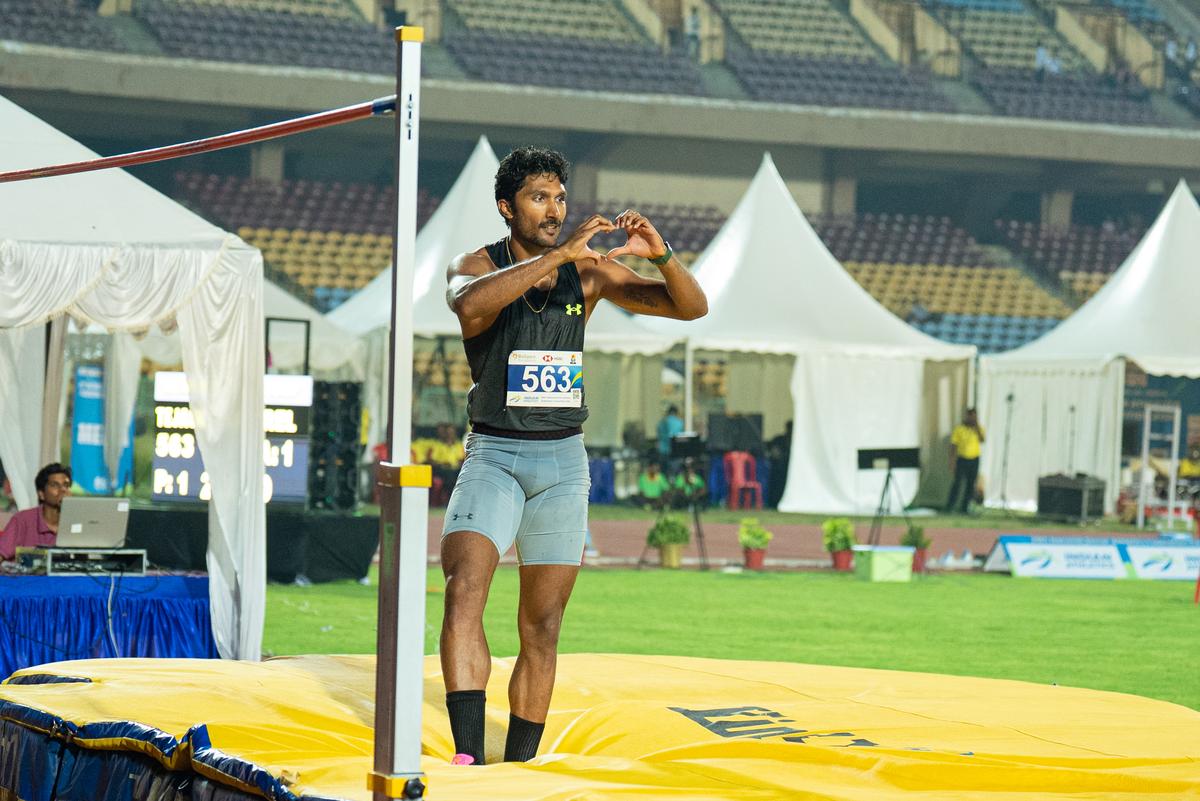
Tejaswin registered his decathlon Personal Best in the high jump event.
| Photo Credit:
RITU RAJ KONWAR
Tejaswin registered his decathlon Personal Best in the high jump event.
| Photo Credit:
RITU RAJ KONWAR
I’ve done this enough to know how to pace myself. I delayed my warm-up, took a couple of jumps around at a pretty low height of about 1.80m–1.85m, checked my marks and then just sat down. You want to stay switched on without burning energy. If you’re mentally engaged for three or four hours before your turn, your bulb fuses and you can’t perform when it matters.
I was feeling really good that evening. Then there were delays — the 400m rounds started, and I had to wait for their races to get done. Then, later, the stadium lights went out after I cleared 2.16m. Normally, that could ruin your rhythm. But I felt so good that I honestly believed I could jump in near-darkness.
Was it risky? Sure. But mentally, it was the right call. Even with one floodlight out, I couldn’t really see the top of the bar, but I knew my marks and cleared 2.19m comfortably. Then I made 2.22m, which was the Commonwealth Games qualification height, and thought, why not try 2.25m? I cleared that too.
Part of me feels I missed an opportunity not attempting 2.30m. That would be a decathlon world best. But I still had the 400m ahead and knew I had to recover for day two. Next time, if I’m in that kind of rhythm again, I’ll probably take the risk.
400m — 48.29 (PB)
At this point, I was really happy with day one and felt there was no point holding back in the 400m after such good events.
The conditions were perfect under the floodlights — cool weather, empty stadium, no heat. It felt like a good practice session with people cheering in the background. I told myself, ‘Today is the day. Let’s see what I can run.’
I went out conservatively for the first 200–250m and then started attacking. I finished in 48.22 seconds and still felt pretty normal afterwards. That excited me because it showed how good my fitness was.
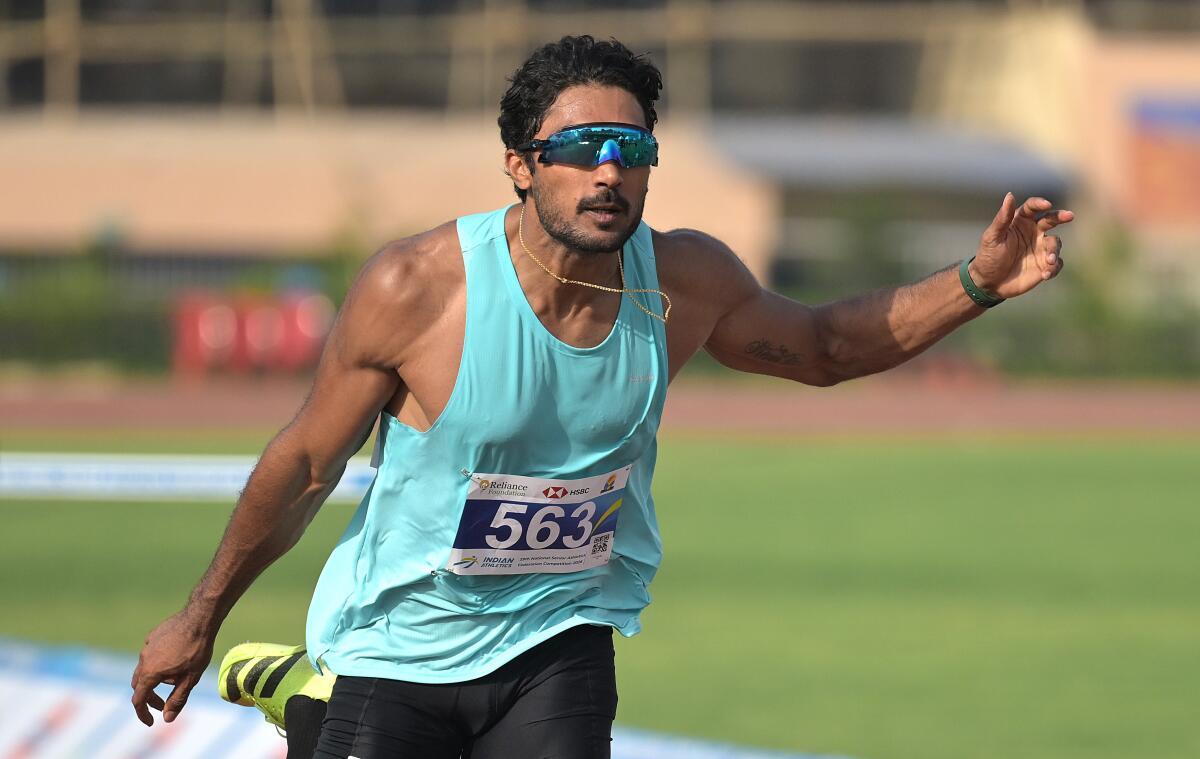
“The three running events in the decathlon all use different energy systems,” says Tejaswin.
| Photo Credit:
RITU RAJ KONWAR
“The three running events in the decathlon all use different energy systems,” says Tejaswin.
| Photo Credit:
RITU RAJ KONWAR
What’s interesting is that the three running events in the decathlon all use different energy systems. The 100m is explosive, the 400m is glycolytic, the 1500m is aerobic. But they overlap.
With a 10.7-second 100m, I think I can eventually run high or mid-47 in the 400m. But as a decathlete, you’re not chasing one brilliant race — you’re chasing the best average you can repeatedly produce.
Rest
At the end of day one, you basically force-feed yourself. Then comes recovery — massage, ice bath, hot shower. The difficult part is shutting your brain off. You want to replay the good moments and think, ‘ Arre yaar, 2.28 bhi ho sakta tha,’ or wonder if a slightly better take-off would have given you 7.70m in the long jump.
That’s a trap I’ve learned to avoid because, before you know it, it’s 2 a.m. and you have to wake up at 4.
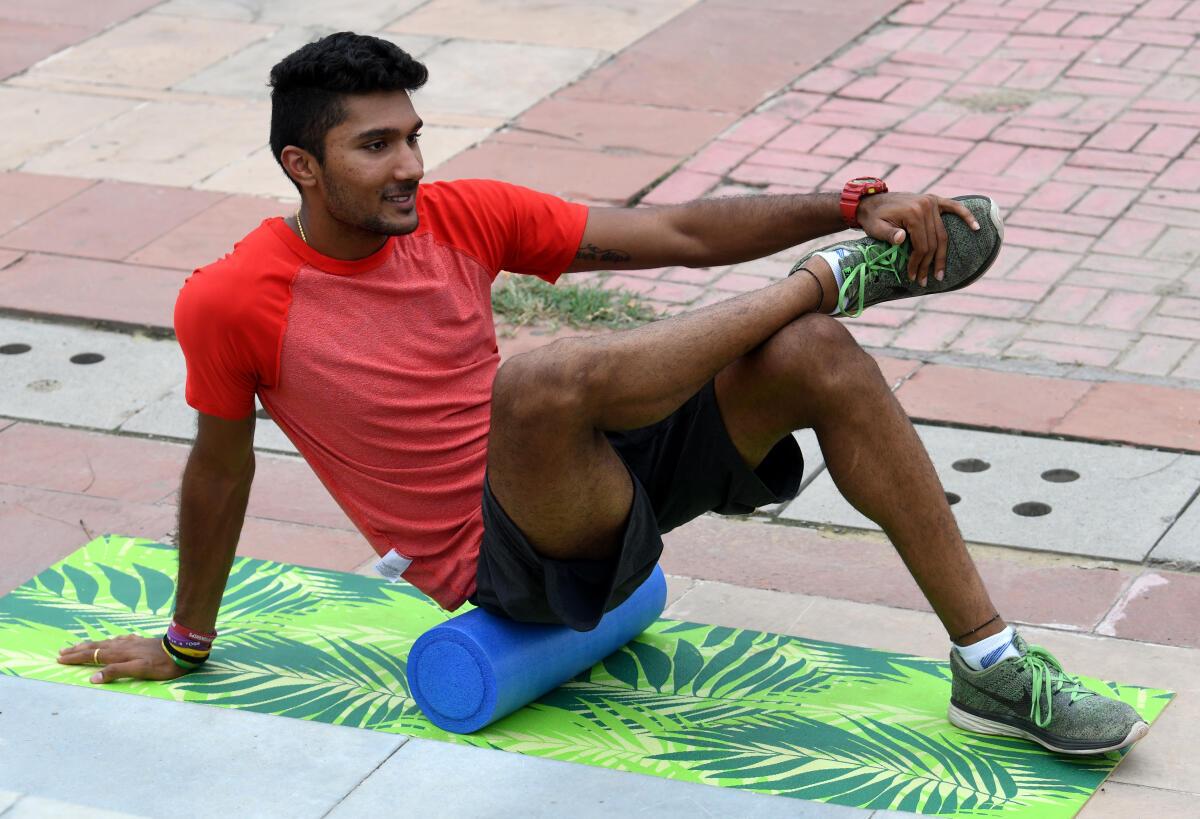
“I don’t think there’s a decathlete in the world who sleeps comfortably after day one,” says Tejaswin.
| Photo Credit:
Sandeep Saxena
“I don’t think there’s a decathlete in the world who sleeps comfortably after day one,” says Tejaswin.
| Photo Credit:
Sandeep Saxena
Sleep is almost impossible. I don’t think there’s a decathlete in the world who sleeps comfortably after day one. That’s why people say day one is for athletes and day two is for decathletes. The real test starts on day two.
110m hurdles — 14.2
I’m good at hurdles, but I also know that after hurdles comes the difficult part of the decathlon for me. So my thinking was simple: maximise points here and create a buffer.
After day one, I knew I couldn’t settle for 7700 points anymore. I had to chase 8000. To stay on pace, I felt I needed around 14.2 seconds.
Of course, there’s also this reality that if I messed up, that was the end of my entire decathlon. But the thing is even if I wanted to be conservative, there’s no way to be.
You can run the 100m or the 400m conservatively. But you cannot conservatively run hurdles. If you hesitate, you hit the hurdles. If you touch the hurdles with your hands, you get disqualified.
And with 4,511 points from day one, there was no point being cautious. Running 14.2 felt like the icing on the cake because suddenly 8000 points felt very real.
Discus throw — 37.90m
Discus, pole vault and javelin are still developing events for me. I’ve only seriously focused on the decathlon for about three years. In practice, I had been getting close to 40m in the discus. But there’s a difference between improving in training and competing. When you actually need that throw, sometimes it doesn’t show up. That’s a normal response of the body trying too hard and going back to making basic technical mistakes. But at least I didn’t foul or hit the net.
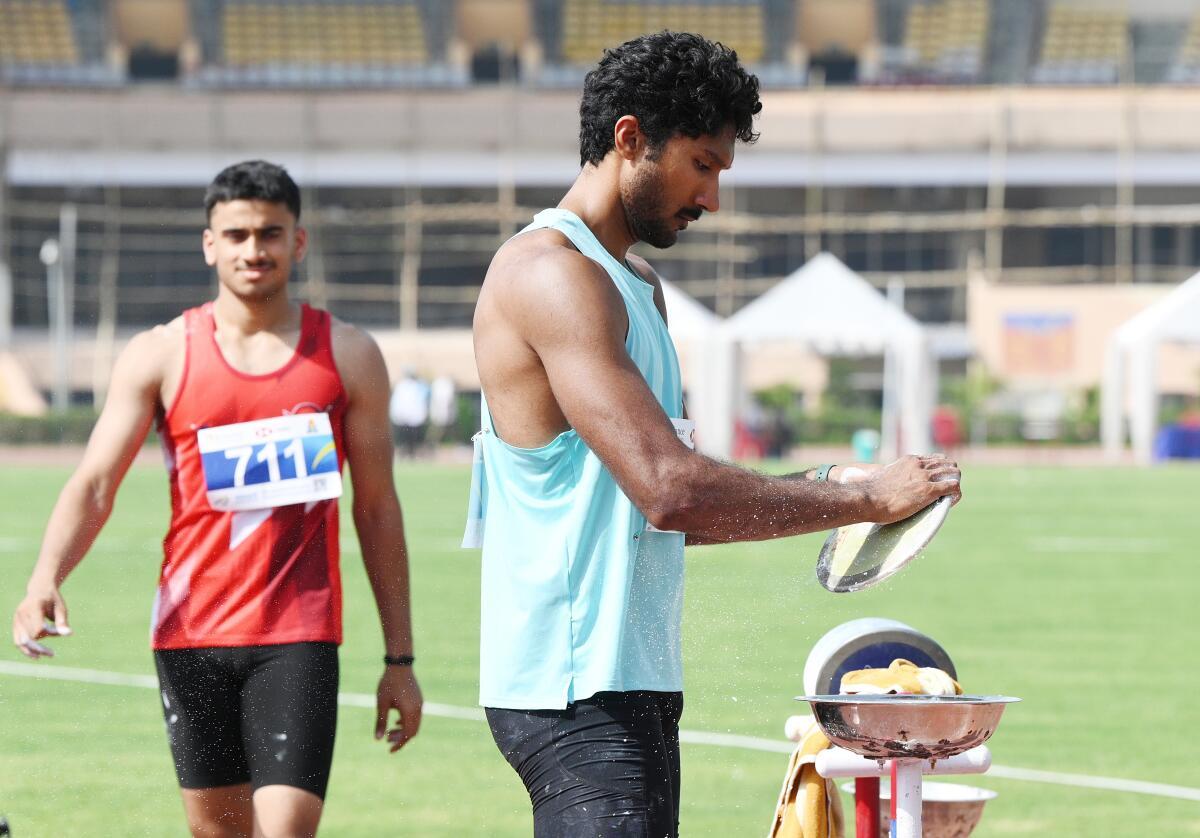
Tejaswin Shankar during the discus throw decathlon event.
| Photo Credit:
RITU RAJ KONWAR
Tejaswin Shankar during the discus throw decathlon event.
| Photo Credit:
RITU RAJ KONWAR
I threw 37.70m, then 37.90m. My target was 40m, so I was disappointed. But when you have one bad event, you allow yourself maybe 30 seconds to feel bad and then move on. You tell yourself: ‘Good job in the last six events. Don’t let one bad event ruin the next three.’ I know there are 200 points sitting there for me in the future.
Pole vault — 4.20m
I had set myself a goal of 4.10m. I’ve jumped higher in the USA, but in Ranchi, I was using old poles already in India, instead of my longer poles from the US, because I didn’t want the hassle of transporting them all the way from the USA to India and then taking them out once again to the Commonwealth Games. Travelling with poles is a logistical headache and I just didn’t want to go through that.
That meant I had to run from a shorter approach—just eight steps—instead of my usual 14—because I can’t put that much energy into the poles I was using. My thinking was practical: salvage a 4.10m jump, meet the qualification standard, then bring in my big poles and jump 4.40m or 4.50m at the Commonwealth Games.
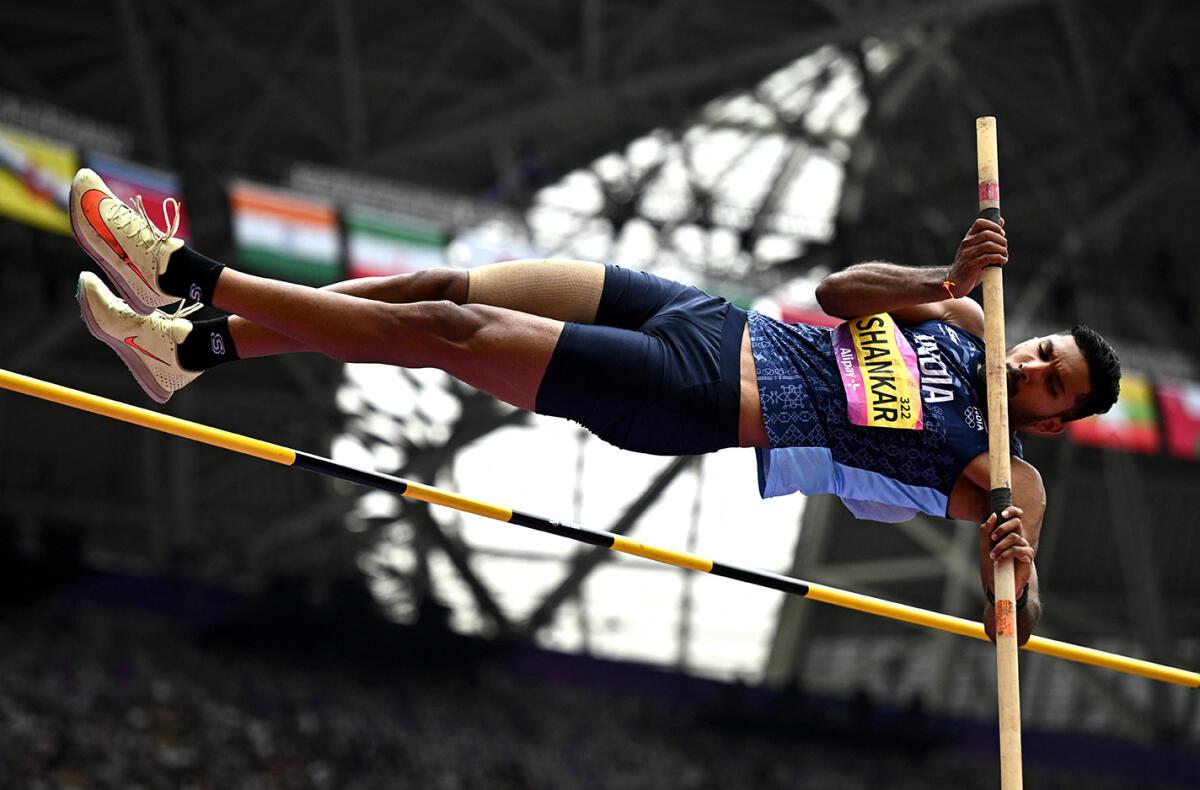
FILE PHOTO: Tejaswin Shankar in action during the decathlon pole vault event at the 2022 Asian Games.
| Photo Credit:
REUTERS
FILE PHOTO: Tejaswin Shankar in action during the decathlon pole vault event at the 2022 Asian Games.
| Photo Credit:
REUTERS
But once I cleared 4.10m comfortably, I thought, why not try 4.20? I did that. Then why not 4.30? That’s where things nearly went wrong.
I switched to the biggest pole I had. But bigger poles need more speed, and I was only running from eight steps. Furthermore, the event had dragged on so long, and that was the hottest part of the two days I’d compete. The pole vault isn’t like the shot put, where I don’t need to stay focused. The pole vault is a very raw event for me, so I have to consciously think about every movement. But after sitting in the heat for hours, my body was shutting down. I came in too slow, I bailed from the jump halfway, but ended up landing flat on my face and cutting my shin.
At that point, I told myself: enough. Don’t ruin the decathlon chasing ego points. There’ll be better opportunities later in the season.
Javelin throw — 47.71m
I came into day two thinking there’s no way I’m not going to score 8000 points, and with a personal best 110m hurdles and a better-than-expected pole vault, I know I’ve all but done enough to get that score. Then the javelin starts and it has a way of teaching you to stay humble.
After resting and eating in the afternoon, I felt really good. I usually feel like crap after the morning session of day two. This time, I felt pretty great. I had no pains, no aches. I was in the best possible mindset. I had put 55m as my goal, and honestly, in warm-up, I felt incredible. My rhythm was good, my body felt great, and I thought a big throw was coming.
My first throw felt solid but landed short of 50m. The feeling and output didn’t match.
I checked the video and realised I was throwing too high. The same thing happened in the second throw. That’s when I started worrying. Even in my first year of decathlon, I’d always crossed 50m. Suddenly, I was thinking, ‘What the hell is happening?’
The problem with javelin is that you can’t muscle it. You have to throw through the point. I rushed things technically and missed a big opportunity.
I was furious after the event. I smashed my weight belt into the ground like [Rafael] Nadal breaking a racquet. I ended up ripping it completely. Twenty seconds later, it was done. You move on.
The 1500m — 4.29.02 (PB)
I call the 1500m the ‘15-minute loo race’ because I’m heading to the toilet every 15 minutes before the race. Usually, I’m terrified of it because after nine events and barely any sleep, it’s brutal. But this time, I felt strangely calm. I wasn’t treating it as something to survive. I was dialled in.
My wife Siddhi and sister Avantika pulled out the calculator and said I needed 4:37 for 8000 points. I knew what I had to do but I also knew I hadn’t run less than 4.50.00 this season.
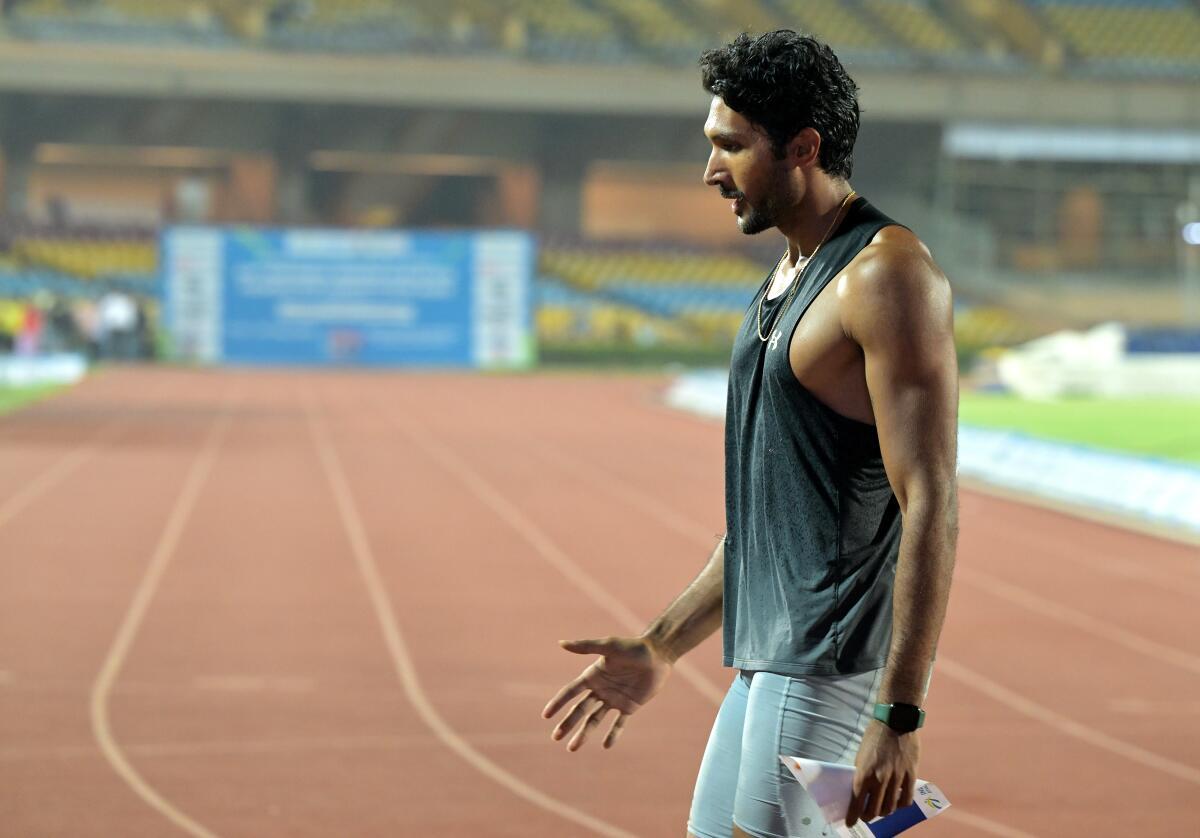
Tejaswin felt strangely calm ahead of the 1500m, the final event of the decathlon.
| Photo Credit:
RITU RAJ KONWAR
Tejaswin felt strangely calm ahead of the 1500m, the final event of the decathlon.
| Photo Credit:
RITU RAJ KONWAR
I went back to the hotel, calmed down, showered and mentally rehearsed the race. When I came back, the atmosphere in the stadium felt electric. I watched the men’s 100m final — suddenly 10.09 flashed up. Then came the 400m final and 44.98. The energy was infectious.
I had a clear plan. First lap around 71–72 seconds, around 3:00 at 1km. I had a stopwatch in my hand, and I also had my wife and sister stationed at different points around the track telling me what my splits were like. I also had my strength and conditioning expert Wayne Lombard around the 1400m – the final straight of the race.
When I crossed the 1400m mark, Wayne shouted ‘4.06, 4.07’. That’s when I realised I was comfortably ahead of an 8,000-point pace. Unless I collapsed in the last 50 metres, I was going to do it. So, I thought — why not try for sub-4:30?
8057 points
The moment I knew I’d crossed 8000 points, it felt like a weight had lifted. At the start of the year, I’d missed out on a 6000-point score in the indoor heptathlon at the Asian Indoor Championships. My wife would often tease me and say that when I came under pressure I gave up, which is why I missed out on 6000 points.
Later, my coach had called me mentally weak after my 7947-point decathlon in the US because I hadn’t pushed through to 8000. “What kind of guy gets so close to 8000 and doesn’t push through and get it?” he had told me.
That stayed with me. So, when I ran that final stretch, I wanted to prove something — to myself more than anyone else. That’s when I realised: ‘Yes, I belong in this 8000-point club.’
Decathlon after the decathlon
You can’t sleep after something like that because you’re too excited. Everyone else was exhausted, but I still wanted to see every photo, every video and replay every moment. For me, the decathlon wasn’t over after 10 events. I had another decathlon left — dissecting the decathlon. I was up until 3 a.m. going through my results. Wondering what I could have done, seeing what other decathletes were doing at the Commonwealth and Asian level.
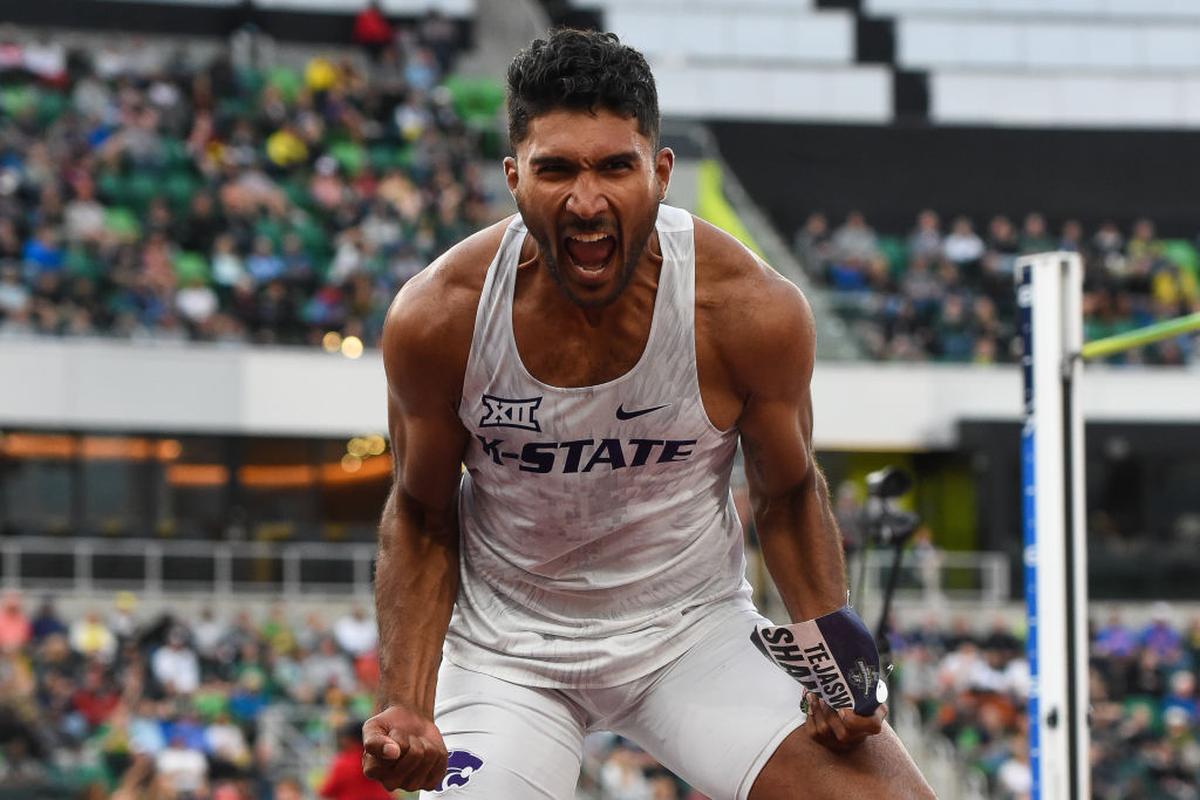
FILE PHOTO: Tejaswin’s next goal is hitting the 8200-point mark in the decathlon.
| Photo Credit:
Getty Images
FILE PHOTO: Tejaswin’s next goal is hitting the 8200-point mark in the decathlon.
| Photo Credit:
Getty Images
Before every competition, I make goals for every event and a total score target. For Ranchi, I’d put down 8,006 points. I exceeded my targets in the 100m, long jump, high jump, pole vault and 1500m. In six out of 10 events, I outperformed expectations.
The biggest lesson was recalibrating my ceiling. I had put 4:40 as my target in the 1500m and ended up running 4:29. That changes what I think is realistic. That said, it would be naïve to think the graph only goes up. Ranchi gave me great conditions. Commonwealth Games won’t necessarily be like that. But becoming an 8000-point athlete changes things. Suddenly, people know this is a stacked competition.
The next goal is 8200. But if I’m talking Olympic level, I know 8500 is where the real elite guys are.
I think I’m already at about 85 per cent of my maximum. The next jump will come slowly. But what excites me is imagining what the score looks like when the javelin goes from 47m to 60m, or the pole vault moves from 4.20m to 4.60m or 4.80m. That’s when day two unlocks itself. That’s when you stop being an 8000-point guy and become an 8500-point guy.
And that’s the journey between now and the 2028 Olympics.
(As told to Jonathan Selvaraj)
Published on May 28, 2026