

[ad_1]
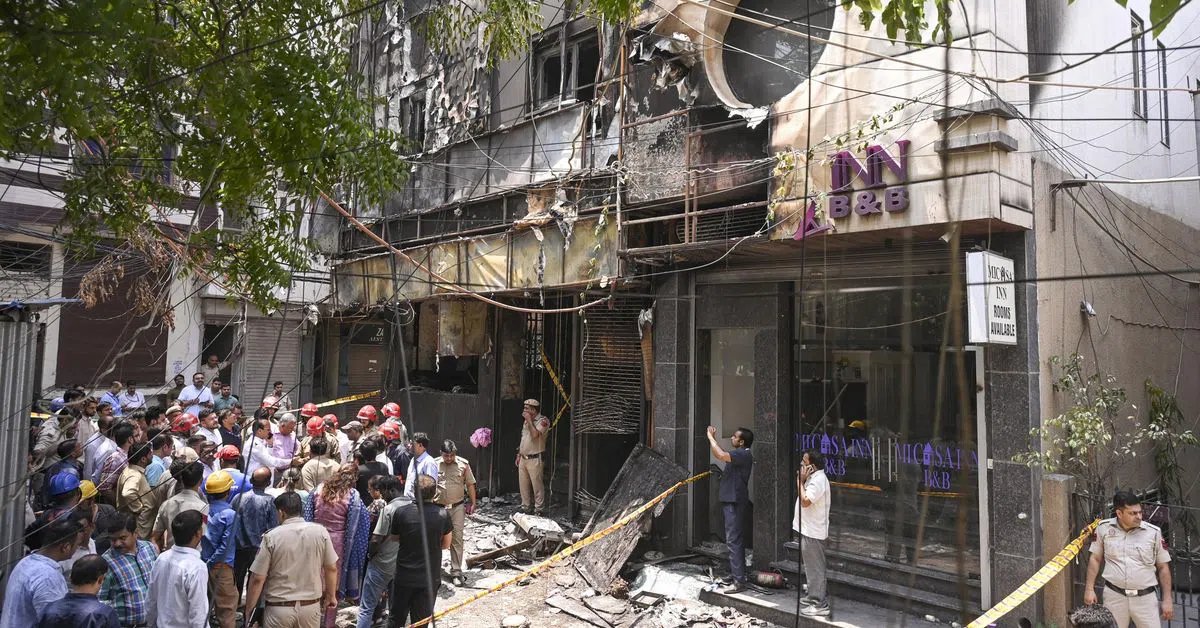
The Delhi government has decided to formally withdraw its Bed and Breakfast (B&B) scheme and conduct a review of all establishments operating under it following the deadly fire at Flourish Stay B&B in Malviya Nagar that claimed 21 lives on Wednesday.
Announcing the decision, Delhi Tourism Minister Kapil Mishra said all establishments licensed under the scheme would be inspected and strict action would be taken against operators found violating licence conditions.
“We are going to officially withdraw the Bed and Breakfast scheme, and all establishments licensed under it will be checked. If any establishment registered under the scheme is found running more than six rooms, its licence will be cancelled,” Mishra said.
What is the B&B scheme?
The B&B scheme is a government licensing framework that allows homeowners and small operators to offer short-stay accommodation, such as homestays, guesthouses and small lodging facilities, after meeting prescribed norms.
Introduced in 2007, the scheme was designed to promote safe and affordable accommodation in Delhi’s residential neighbourhoods. Under the framework, registered establishments are treated as residential properties rather than commercial hospitality businesses.
According to a Financial Express report, the scheme covered more than 2,200 rooms across 432 properties in Delhi as of 2023.
In its latest form, the scheme proposed categorising establishments into Gold and Silver classes based on room size, furnishings, sanitation standards, guest amenities and safety measures. Operators were required to register with the tourism department, maintain guest records and comply with structural, hygiene and safety norms.
What did the 2026 draft policy propose?
Last month, the Delhi government unveiled a draft B&B policy aimed at regulating small-scale accommodation facilities operating from residential properties.
Under the proposal:
-
Only legally constructed residential properties would be eligible for registration -
A B&B facility could have up to eight rooms and a maximum capacity of 16 beds -
At least one room would have to be reserved for guests
Hotels, guest houses, lodges, serviced apartments, resorts, banquet facilities and other commercial hospitality establishments would not qualify for registration. The draft also proposed Gold and Silver classifications based on room specifications, guest amenities, sanitation standards and safety infrastructure.
Safety provisions included mandatory installation of fire extinguishers, smoke or heat detectors, first-aid kits and functional door locks. Higher-category establishments would also be required to install CCTV cameras at entrances and in common areas.
The policy empowered authorities to conduct inspections, including surprise checks, to ensure compliance.
What happened at Flourish Stay B&B?
Flourish Stay held a Silver-category licence issued in 2024 for six rooms, valid until 2027.
However, investigators found that the establishment was allegedly operating at nearly four times its permitted capacity, with around 25 rooms, including some located in the basement. Authorities also found that the property lacked mandatory fire safety clearance.
Following the tragedy, the Delhi government has ordered inspections of all registered B&B establishments and warned of strict action against operators found violating licence norms.
[ad_2]
Source link