

[ad_1]
The draft plan seeks to reshape the NCR over the next 15 years through new urban centres, improved regional connectivity, and a revised development strategy aimed at managing the region’s growing population and economic activity.
Four greenfield Namo cities proposed
Among the most significant proposals is the development of four new greenfield cities, termed “Namo Cities” or “Namo Nodes”, across the NCR. The Centre has proposed assistance of ₹5,000 crore over the next five years for their development.
NCR population likely to surge by 2041
The push for new urban centres stems from expected rise in the NCR’s population over the coming decades. According to official estimates, the region’s population is expected to increase to 147.3 million by 2041 from 78.6 million at present, requiring planners to accommodate nearly 70 million more residents over the next 15 years.
A large share of this growth is expected to be concentrated in urban areas, particularly in major cities across the NCR. The Regional Plan 2041 is intended to provide a framework for managing this expansion while ensuring adequate infrastructure and services.
NCR boundary to remain unchanged
The NCR Planning Board also decided to retain the existing geographical boundaries of the region. All 32 districts currently included within the NCR will continue to remain part of it.
The decision comes despite Haryana’s earlier proposal to exclude districts such as Karnal, Jind, Panipat, Mahendragarh and Bhiwani from the NCR. The state had argued that environmental restrictions and measures such as the graded response action plan (Grap) were affecting development prospects in these areas. The Centre, however, opted to maintain the existing NCR boundaries.
Vision of a 30-minute NCR
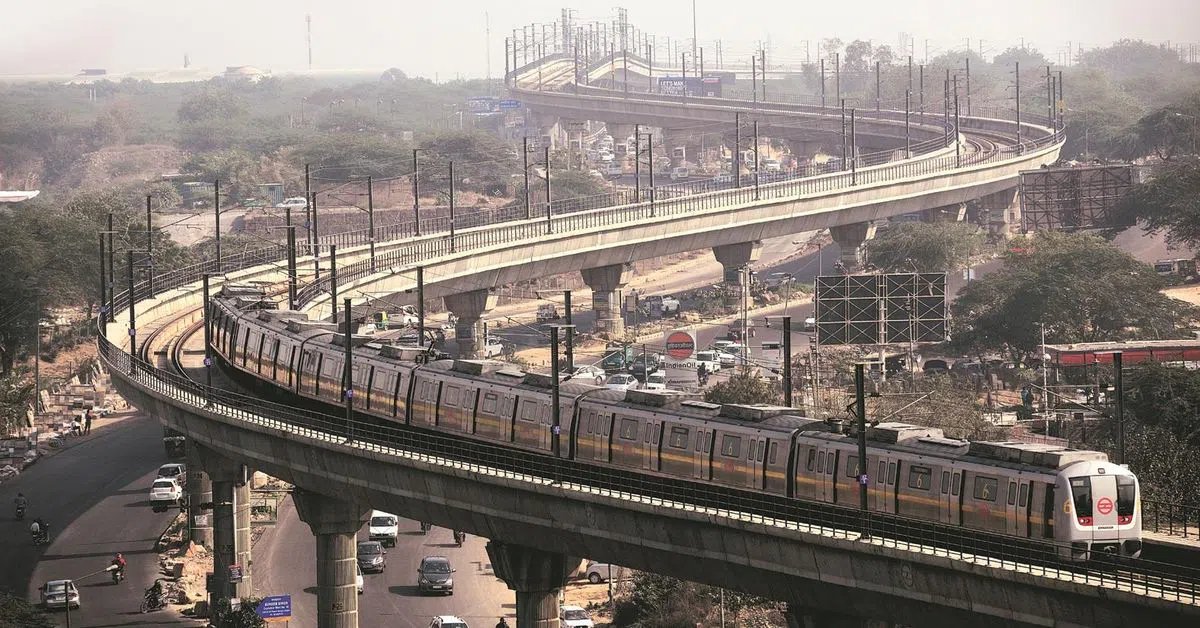
According to The Times of India report, the draft plan also advances the concept of a “30-minute NCR”, under which travel time between major cities in the region, including Delhi, would be reduced to around 30 minutes through a network of high-speed rail systems.
The objective is to create a more integrated regional economy where homes, workplaces and public services are seamlessly connected through efficient transit infrastructure.
Region to be divided into three development zones
Another major proposal is the division of the NCR into three development zones. Under the framework, pollution-control measures and other regulatory restrictions would primarily apply to Delhi and adjoining areas of the Central NCR, while districts located farther from the national capital would be exempt from such restrictions.
The Central NCR (CNCR) is proposed to extend beyond Delhi up to five kilometres outside the outer edge of the expressway ring formed by the Eastern and Western Peripheral Expressways. According to the draft Regional Plan 2041, the CNCR will function as the NCR’s “Golden Ring of Opportunity”, serving as a key growth corridor for future development, reported PTI.
The proposal also recommends that, whenever pollution-related restrictions become necessary, authorities should limit their implementation to the Central NCR so that distant districts do not face avoidable development constraints.
Focus on green cover and cleaner transport
Addressing environmental concerns, Union Minister Manohar Lal said the ‘natural conservation zone’ in the Aravalis would remain untouched. He added that the NCR planning board has decided to increase green cover across the region, reported PTI.
The minister also noted that Delhi and Haryana are yet to submit surveys of their respective natural conservation zones.
On pollution control, the Centre announced that its vehicle replacement programme will be known as the Program for Accelerated Renewal and Incentivization of Vehicle Assets for Reducing Transport Air-Pollution and Network Emission (PARIVARTAN).
The time-bound fleet modernisation scheme aims to reduce vehicular pollution across the NCR by encouraging the replacement of BS-IV and older buses and trucks with BS-VI-compliant vehicles, CNG-powered vehicles and electric vehicles.
Counter-magnet cities to reduce migration pressure
The draft plan has also identified nine Counter Magnet Areas (CMAs) across six neighbouring states to promote economic development outside the core NCR and reduce migration towards Delhi and adjoining urban centres.
The identified CMAs are Hisar, Ambala, Kota, Jaipur, Patiala-Rajpura, Kanpur-Lucknow, Bareilly, Gwalior and Dehradun. The strategy aims to create alternative growth centres capable of generating employment and investment opportunities beyond the NCR.
Plan awaits final approval
Despite extensive deliberations, the Regional Plan 2041 could not be approved at the NCR Planning Board meeting as participating states failed to reach a consensus on all aspects of the proposal.
To finalise the plan, a sub-committee comprising senior officials from the Centre and the governments of Haryana, Uttar Pradesh, Rajasthan and Delhi has been constituted. The panel has been tasked with submitting its final report by August 15.
Speaking after the meeting, Manohar Lal said all aspects of the Regional Plan 2041 were discussed in detail. He added that another meeting would be held after two months, following which the plan would be finalised. (With inputs from PTI)
[ad_2]
Source link