

[ad_1]
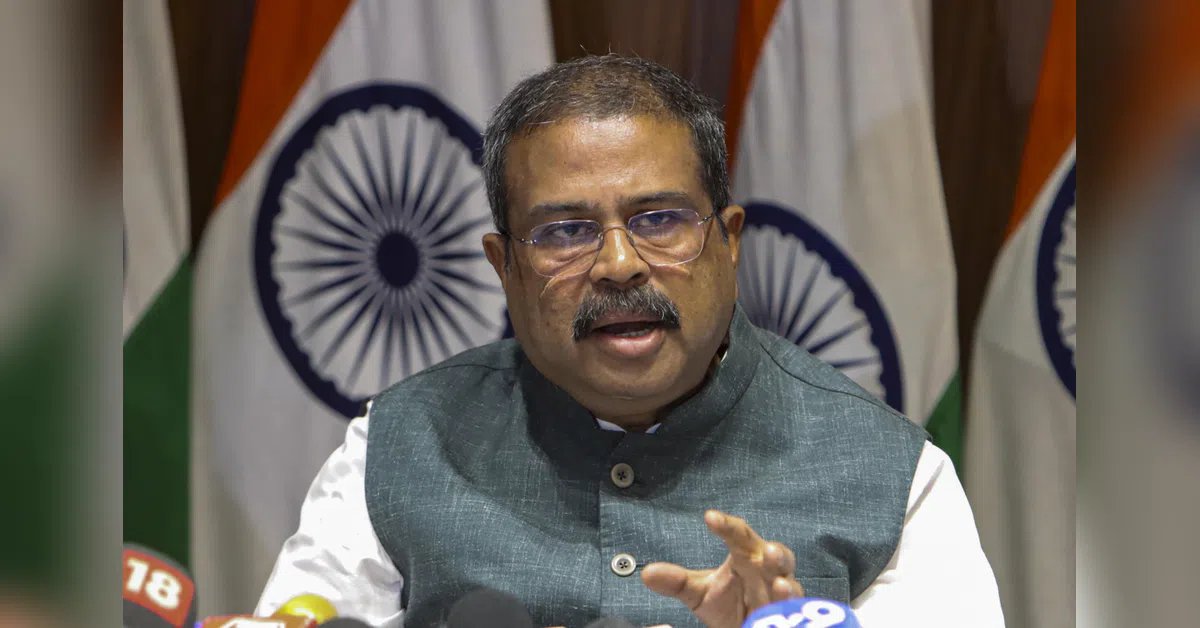
When Education Minister Dharmendra Pradhan announced that the government had sought Indian Air Force’s assistance to transport question papers for the National Eligibility-cum-Entrance Examination (Undergraduate), or Neet (UG), re-examination to be held on June 21, he said the objective was to ensure timely delivery of the papers and restore confidence in a process marred by controversy.
Pradhan acknowledged that while examination papers are ordinarily transported through the postal department’s network, given the limited time before the re-test and concerns over security, the government had approached the air force for help.
The decision has revived debate over the role of the armed forces in civilian functions and the circumstances under which military resources should be deployed outside their primary mission.
Air Vice Marshal Manmohan Bahadur (retired) said that military assistance to civil administration should be extended only when other options are unavailable. “The use of the armed forces in aid to civil administration should always be the last resort,” he said, stating that other means could have been used for the purpose.
Aid to civil authorities
India’s armed forces have long supported civilian authorities during floods, earthquakes, cyclones, evacuations, and other emergencies.
The Joint Doctrine of the Indian Armed Forces recognises Humanitarian Assistance and Disaster Relief and aid to civil authorities as legitimate military roles. At the same time, it states that operational readiness must remain paramount and that the military’s primary responsibility is national defence.
Military involvement in civilian crises rarely attracts controversy when civilian resources are overwhelmed or unavailable. A commentary published in the Journal of Defence Studies in 2012 by the Manohar Parrikar Institute of Defence Studies and Analysis, a New Delhi-based think tank focused on international relations and strategic affairs, writes about the army’s response during the 2008 Kosi floods in Bihar. It argues that the armed forces often become the “last hope” during major disasters because of their organisational capacity, training and ability to mobilise quickly.
However, questions arise when military resources are used for tasks unrelated to humanitarian emergencies.
In 2010, army engineers built a replacement footbridge near a Commonwealth Games venue in New Delhi after the original structure collapsed. In 2016, the deployment of army engineering resources during the Art of Living World Culture Festival in Delhi triggered debate over the use of military assets for activities unrelated to disaster response or urgent security requirements.
Though different from disaster response or public events, the Neet operation raises the same question: Where should the boundary between civilian responsibility and military assistance be drawn?
The readiness question
Bahadur argued that the key question was whether military assets should be employed when civilian alternatives already existed. “In this case, the large civil airline fleet and state government assets are available and can be requisitioned for the task,” he said.
Air Vice Marshal Suryakant Chafekar (retired) framed the issue as one of resource allocation. “There should be a clear understanding that the basic job of defence forces is security of the nation,” he said. “There is a very clear-cut understanding that whatever resources we have, it has to be optimal utilisation of resources.”
According to Chafekar, the concern was less about a single mission than the cumulative demands placed on military aircraft, which operate within fixed maintenance, training and operational schedules.
He noted that transport aircraft and helicopter fleets already sustain supply lines to remote and high-altitude military deployments. “Even during peace times, the air force is required to maintain our forces in the Himalayan region,” he said.
“These hours need to be preserved because you have to keep training for that one day when you will have to do the activity,” said Chafekar. He added that military planning revolves around preparing for contingencies. “Defence forces’ job in peace time is to keep their weapons sharpened,” he said.
And then there is the issue of pilot shortage. A 2024 performance audit by the Comptroller and Auditor General on pilot training in the Indian Air Force highlighted these shortages, besides delays in trainer aircraft induction and constraints in the training ecosystem. The audit found that the shortage of pilots had increased from 486 to 596 between 2016 and 2021.
The trust factor
The armed forces are often viewed as institutions capable of executing sensitive tasks with discipline and reliability. Chafekar, however, questioned why similar confidence could not be placed in civilian agencies. “Why should there be a situation where your faith or trust is only in the defence forces?” he asked.
He said repeated reliance on military institutions can raise questions about the capacity and credibility of civilian systems. The Neet episode is the latest such case.
The writer is a 2026 batch Business Standard-Rahul Khullar intern
[ad_2]
Source link