


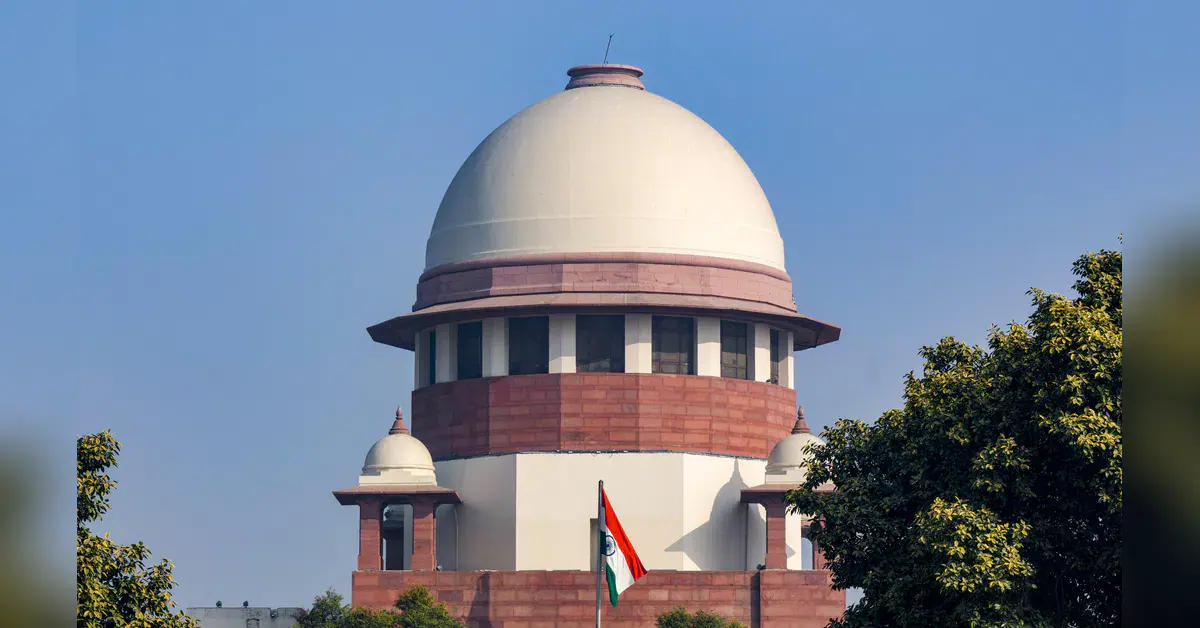
The Supreme Court on Tuesday directed the Reserve Bank of India (RBI) to put in place, within four weeks, a standard operating procedure (SOP) for banks to deal with cyber fraud cases and mule accounts.
The SOP will provide for temporary debit holds on suspected accounts, include a grievance redressal mechanism, a system for the restoration of defrauded money, and measures to create public awareness of these facilities.
In its directions asking the Centre, the respective states and other authorities to strengthen measures against the rising cases of digital arrest scams, a Bench led by Chief Justice of India Justice Surya Kant, along with Justice Joymalya Bagchi and Justice V Mohana, passed the directions while hearing suo motu proceedings on cyber fraud involving ‘digital arrests’.
The court observed that though the steps taken so far had yielded encouraging results, the existing system required wider implementation, quicker action and sustained monitoring.
The apex court also directed the establishment of an inter-departmental committee to examine a framework for victim compensation and shared liability.
The inter-departmental committee has been directed to issue advisories to governments and departments for large-scale public awareness campaigns to prevent digital arrest scams, promote the use of grievance and money restoration mechanisms, and implement the Centre’s standard operating procedure for the custody and restoration of defrauded funds.
It will also coordinate with banks to improve fraud prevention, facilitate the recovery of stolen money, and support investigations.
Referring to a status report filed by the Indian Cyber Crime Coordination Centre (I4C), the three-judge Bench recorded that ₹18.05 crore had been restored to victims in 36,290 cases through the participation of 57 banks and all states and Union Territories.
It also took note of the Central Bureau of Investigation’s progress in probing organised cyber fraud networks. The agency has registered cases relating to digital arrest scams, traced victims through transactions routed via 67 first-layer bank accounts, and conducted searches at 93 locations across 16 states.
The court further recorded that an inter-departmental committee had asked the CBI to examine whether the monetary threshold for taking over cyber fraud investigations should be lowered and whether multiple cases involving the same organised network could be clubbed together to meet the existing threshold.
The top court further directed that the registrars general of all High Courts should inform courts and adjudicating authorities handling bank account freezing matters about the grievance mechanism so that affected persons may first seek relief through that process.
Further, all states and Union Territories should operationalise the State Cyber Crime Coordination Centres within four weeks and implement the e-Zero FIR system in consultation with the I4C, with assistance from the Ministry of Home Affairs.
Authorities have also been asked to ensure the prompt disposal of cases involving frozen bank accounts arising from cyber fraud.
Recognising the need for greater protection for victims, the court asked the committee to examine the feasibility of introducing a shared liability regime and a compensation framework for victims of digital arrest scams.
In addition, Legal Services Committees across the country have also been directed to organise awareness programmes on cyber fraud prevention, cyber security and the remedies available for recovering defrauded amounts.
Separately, the Ministry of Electronics and Information Technology, the Department of Telecommunications and the I4C have been asked to study the feasibility of introducing time-based restrictions on telecom services for audio and video calls as a safeguard against cyber fraud. They have been directed to place a note before the court on the proposal, its utility and possible alternatives. The matter will be taken up again in September.