

[ad_1]
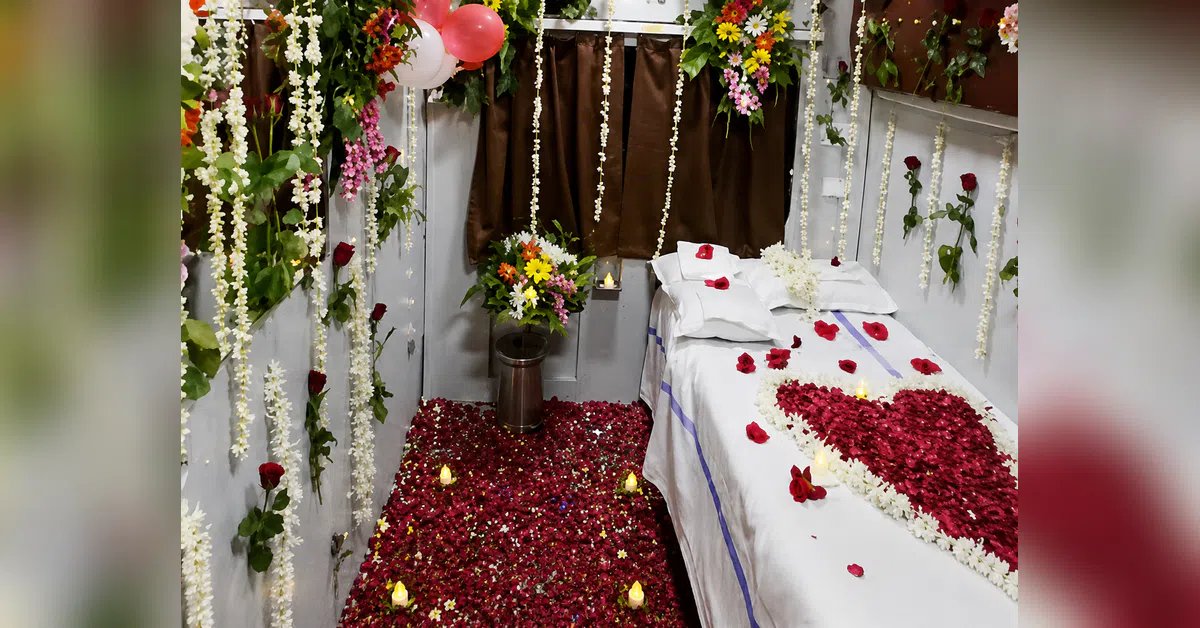
What began as a romantic gesture for a newlywed couple aboard an Indian Railways train has ended in disciplinary action after a First AC cabin was transformed into what social media users dubbed a “honeymoon suite”. Although the decorations featuring balloons and flowers won praise across social media, railway authorities said the makeover violated security protocols because it involved unauthorised access to the coach.
What happened?
Videos circulating on social media showed the cabin decorated with red and white balloons, floral arrangements, heart-shaped decorations, rose petals spread across the berth, and an “I Love You” message on the wall. The makeover quickly went viral and sparked a debate over whether such decorations were permitted inside a public train, especially after it emerged that an unauthorised person had gained access to a reserved First AC coach.
Railways calls it a ‘serious lapse’
In a statement posted on X, the South Central Railway (SCR) said the decorator’s entry into the coach was unauthorised and amounted to a “serious lapse” because it breached the railway’s security and operational protocols. SCR also clarified that Indian Railways does not permit unauthorised persons to enter reserved coaches or offer decoration services inside train compartments.
SCR added that the concerned Ticket Checker had been placed under suspension with immediate effect and that a detailed departmental inquiry had been ordered. It added that appropriate action would be taken once the inquiry is completed.
Decorator also faces action
Besides initiating disciplinary proceedings against the railway staff member, officials also booked the decorator under relevant provisions of the Railway Act for unauthorised entry, travelling without a valid ticket, and trespassing. The issue, according to officials, is not the celebration itself but the unauthorised access to a secure coach and the breach of established railway procedures.
The inquiry will examine how the decorator was allowed to board the train and access the First AC compartment despite existing security procedures.
[ad_2]
Source link