

[ad_1]
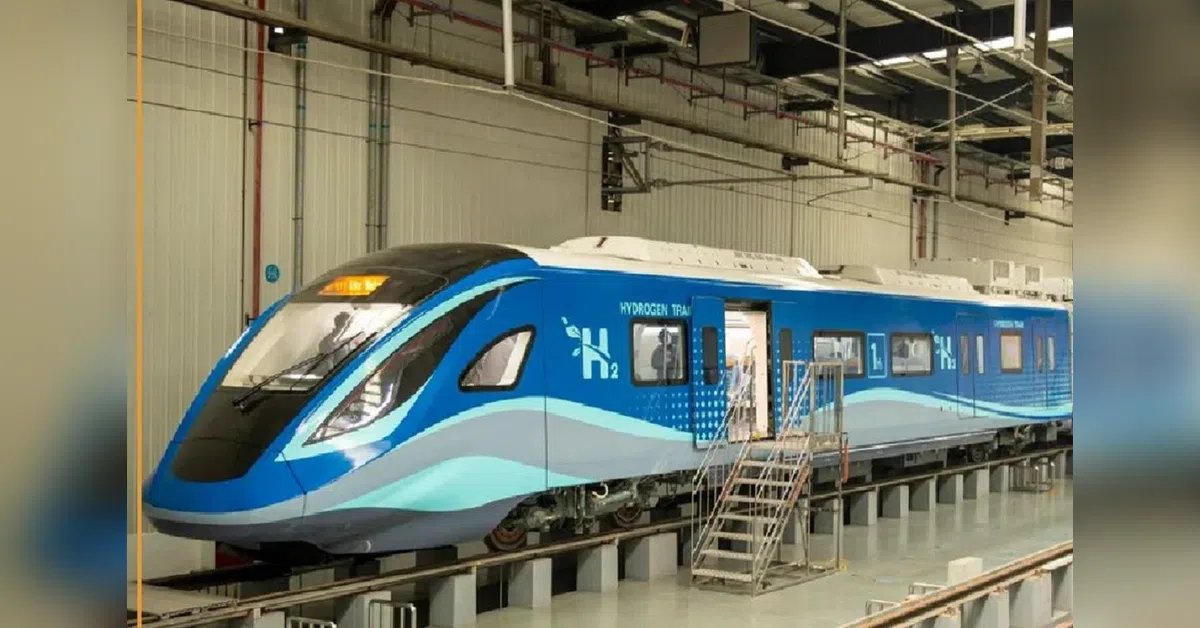
The train will make two round-trip daily between Jind and Sonipat, covering a total distance of 356 km. Each one-way journey spans 89 km. It has 682 seats and a total passenger capacity of around 2,600.
This marks a significant milestone for Indian Railways, introducing hydrogen fuel cell technology to the country’s railway network and placing India among a small group of nations exploring cleaner alternatives to diesel-powered trains.
What makes this train different?
Unlike conventional diesel trains, the new train is powered by a 1,200 kW hydrogen fuel cell propulsion system. Instead of burning fossil fuels, hydrogen fuel cells generate electricity through a chemical reaction between hydrogen and oxygen. As a result, the only direct emission is water vapour, making the technology significantly cleaner than diesel traction. This makes it a better alternative for routes that are not yet fully electrified while also reducing dependence on fossil fuels.
Key advantages include:
-
Zero tailpipe carbon emissions because only water vapour is released -
Lower dependence on fossil fuels -
Reduced air pollution compared with diesel locomotives -
Potential pathway towards cleaner transport without requiring full railway electrification
Unlike conventional trains, the hydrogen service is supported by dedicated hydrogen production, storage, and refuelling infrastructure. Indian Railways has also installed specialised safety systems, including hydrogen leak and flame detectors, which will be regularly monitored to ensure safe operations.
A step towards greener railways
Although the first service will initially operate on a limited section, it is expected to provide valuable operational experience that could shape future hydrogen-powered projects across the country. If the technology proves reliable and commercially viable, hydrogen trains could become another tool in India’s transition towards cleaner public transport alongside railway electrification.
With this initiative, India joins a small group of countries, including Germany, Japan, China, and the United States, that are exploring hydrogen fuel cell technology for rail transport.
[ad_2]
Source link