

[ad_1]
But what exactly is this proposed force? And is it the first time India is creating a civilian volunteer force for national security?
India already has Civil Defence volunteers
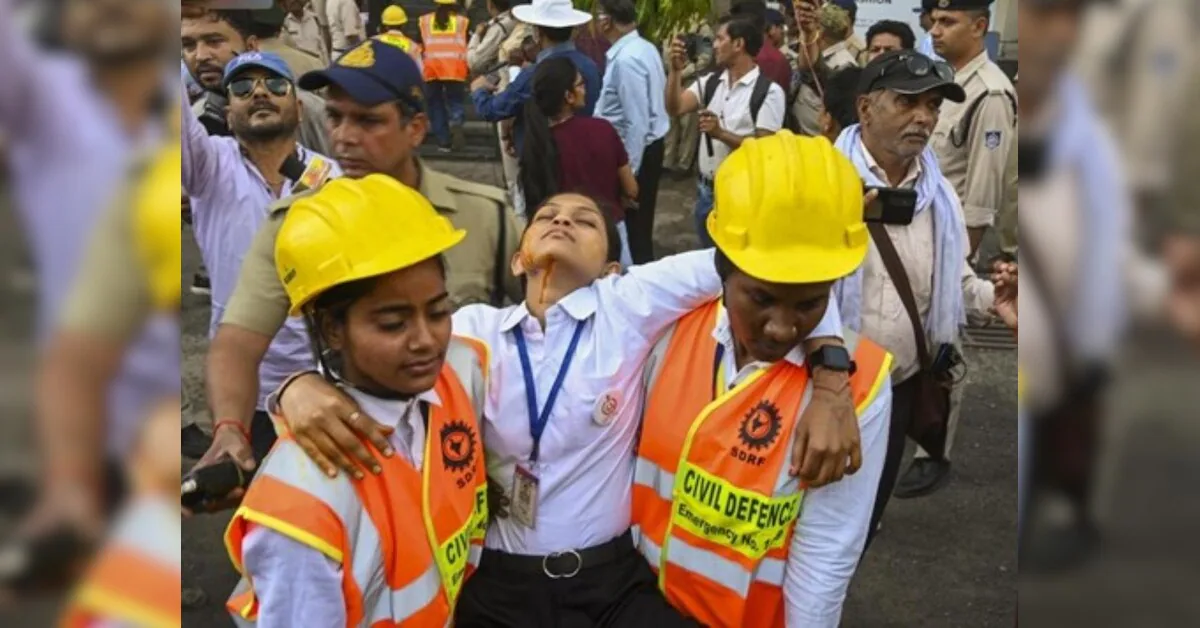
The proposed force is not India’s first civilian volunteer organisation. In fact, India already has a statutory Civil Defence Corps under the Civil Defence Act, 1968.
The law provides for the constitution of Civil Defence Corps and the appointment of civilian volunteers who can be called upon for training or civil defence duties. The Civil Defence Rules, 1968 cover measures including evacuation, protection of vital installations, fire prevention, public awareness and precautions against hostile attacks.
What could the volunteers do?
The traditional Civil Defence role includes helping authorities manage evacuations, protect essential services, deal with fires and communicate emergency instructions to the public.
A modernised network could potentially expand this to areas such as first aid, search and rescue, emergency communications, evacuation management, shelter operations and disaster response.
However, these should be seen as possible functions rather than confirmed features of PM Modi’s proposed force until the government provides more details.
The experience of Operation Sindoor offers a glimpse of how such a network could work.
Following the military operation and subsequent tensions with Pakistan in May 2025, civil defence volunteers were deployed in Jammu and Kashmir. The government said 2,818 volunteers were involved in health, fire and emergency services, livestock management and the supply of essential items.
The Centre also ordered civil defence mock drills in 244 districts on May 7, 2025. The exercises tested air-raid sirens, blackouts, evacuation, firefighting, search and rescue, casualty evacuation and emergency medical arrangements.
How is it different from NCC?
India already has several organisations that involve citizens or volunteers in national service, but their purposes are different.
The National Cadet Corps (NCC) is primarily a youth organisation. Established under the NCC Act, 1948, it provides students with training aimed at developing discipline, leadership and a spirit of service.
NCC cadets can participate in community service and disaster-relief activities, but NCC is not an emergency-response force. Its emphasis is on youth development, training and character-building.
Civil Defence, on the other hand, is specifically designed to protect civilians and maintain preparedness during emergencies.
What about Home Guards and Territorial Army?
The Home Guards were first raised in 1946 as a voluntary organisation to assist the police. After the 1962 India-China war, the Centre encouraged states and Union Territories to develop a more uniform Home Guards structure.
Home Guards can assist the police and support authorities during emergencies such as floods, fires, earthquakes and cyclones. They can also perform Civil Defence duties.
The distinction is that Home Guards primarily function as an auxiliary to the police, while Civil Defence is focused on civilian protection and emergency preparedness. Also, Home Guards are a paid volunteer force, but only an honorarium or wages for the days they are called upon for duty.
The Territorial Army is another example of civilians voluntarily undertaking national-security responsibilities, but it is fundamentally different from Civil Defence.
Territorial Army personnel are civilians in their normal occupations but receive military training and can be called up for military service. They form part of the military reserve structure and can support the Regular Army when required. The TA personnel also do not get a fixed monthly salary; however, they are paid for the duration of training and when deployed at the same grade of military service pay and allowances as an officer of the same rank.
Civil Defence volunteers, by contrast, are not soldiers, nor are they the exact equivalent of Home Guards.
Will the new volunteers carry weapons?
There is no indication in Modi’s announcement that the proposed Civil Defence volunteers will be armed.
Civil Defence is intended to protect civilians, assist emergency services and maintain essential functions during a crisis. It is not another armed force.
The US offers an interesting historical contrast. The Second Amendment to the US Constitution refers to a “well regulated Militia” while protecting the right to keep and bear arms. The militia reference reflected the early American system of citizen military forces. The provision has subsequently become central to the country’s constitutional debate over individual gun rights.
[ad_2]
Source link