


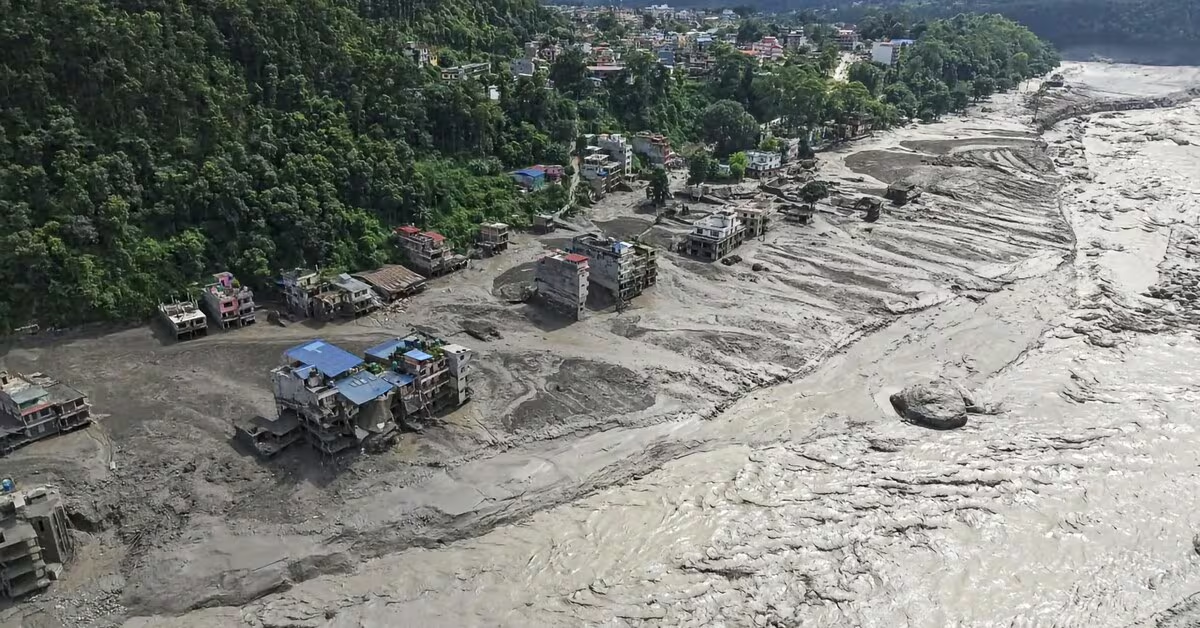
The water level of the Gandak river, which was in spate after the flash floods in Nepal a day ago, was showing a receding trend on Thursday, bringing respite to the residents of low-lying areas in northern parts of Bihar, an official said.
The discharge from the Gandak Barrage at Valmikinagar in West Champaran, the northernmost district of the state that shares a border with the neighbouring country, also declined with the receding water level in the river system, he said.
Bihar was put on high alert on Wednesday as floodwaters from Nepal entered the Gandak river and reached the barrage, prompting the authorities to open all 36 gates to control the surge.
The water discharge from Valmikinagar barrage declined from 1.50 lakh cusecs at 11 pm on Wednesday to 1.04 lakh cusecs on Thursday morning.
“The water discharge from the Gandak barrage at Valmikinagar peaked at 1.50 lakh cusecs at 11 pm on Wednesday, after which the water level began receding,” the Water Resources Department said in a statement on Thursday.
A receding trend in the Gandak river was noticed, an official said.
“But due to rainfall in Nepal’s Devghat area late at night, the water level started rising again,” he said.
No adverse impact on the embankments has been reported so far, while the Water Resources Department is continuously monitoring the situation and remains on alert, the official said.
The Ganga river’s water level is also showing a declining trend, though a marginal rise of 1-2 cm may be recorded at some locations, another official said.
“The department is closely monitoring the situation and has kept all necessary flood-protection measures in place,” he said.
Chief Minister Samrat Choudhary held a meeting with Chief Secretary Pratyaya Amrit and other top officials on Wednesday to review the situation.
All concerned have been directed to remain on high alert, take all necessary measures promptly, and maintain continuous vigil over the situation, the official said.
“The highest discharge from the barrage recorded this year was 2.24 lakh cusecs on July 14, 2026, while 5.625 lakh cusecs of water discharge was recorded on September 28, 2024. Therefore, the situation is expected to remain normal,” he said.
All teams are on alert at the barrage, along the embankments and in the control room, he said.
“The department officials have been directed to ensure all preparations in view of a possible emergency, maintain continuous vigilance and monitoring, stock essential materials, and ensure regular inspection of embankments,” he said.
The district administrations are issuing timely alerts through public address systems in sensitive areas, the official added.
The Nepal Police said that the death toll rose to 162 in the flash flood on the Bhotekoshi River that wreaked havoc across three districts on Wednesday.
The flash floods were caused after an avalanche blocked the flow of the Lhende tributary of the Bhotekoshi river and first hit Timure, near Nepal’s border with China, at Rasuwagadhi.