


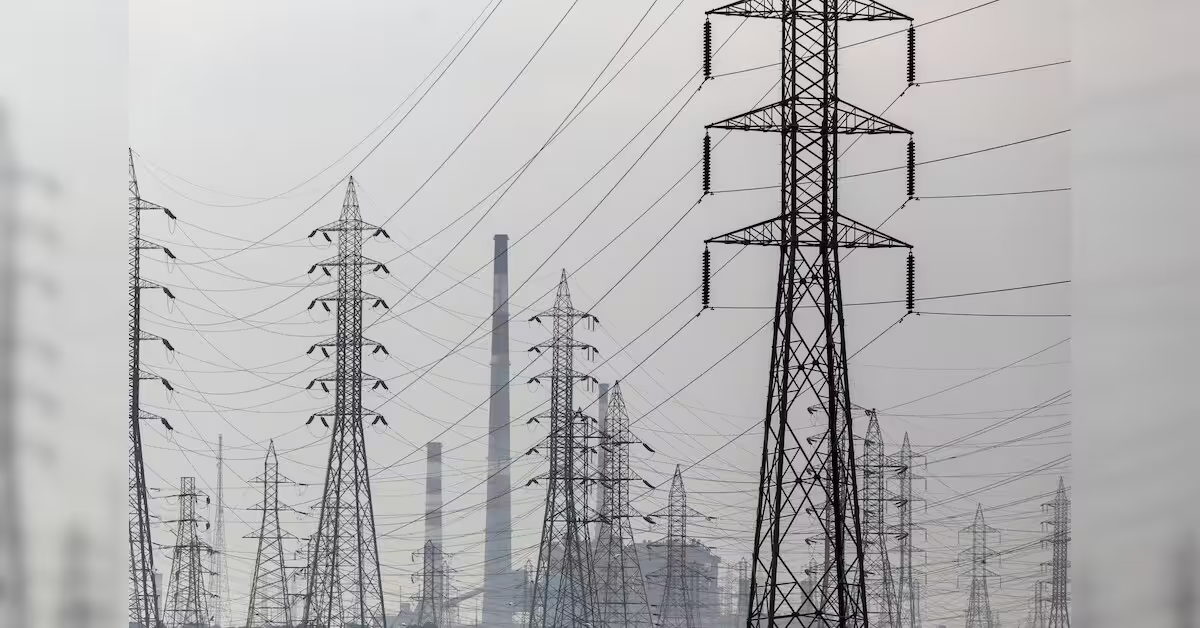
India should focus on grid-enhancement technologies, dynamic congestion management, besides testing and cybersecurity to fix the stress on its power grids, a Ficci-Nangia white paper said on Monday.
With over half of India’s installed capacity now non-fossil, the paper said that power grid stability directly affects investment confidence in India’s energy transition.
With peak electricity demand reaching a record 256 GW in April 2026, the grid is being asked to do more, with less of the natural inertia and system strength that conventional generation used to provide, the paper observed.
The Ficci-Nangia white paper identified eight areas where the power grid is under stress — frequency and inertia; voltage and system strength; power quality and protection; oscillations; forecasting and congestion; resilience and black-start; modelling capability; and cyber-physical security.
Nangia Group Managing Partner Suraj Nangia said India added nearly 140 GW of generation capacity in under five years, from around 382 GW in April 2021 to over 520 GW by January 2026, and crossed the milestone of 50 per cent cumulative installed capacity from non-fossil sources in June 2025.
The white paper makes the case that the “flexibility, transmission and institutional capacity supporting the grid must now scale at the same pace as generation capacity itself,” Nangia said.
The grid was originally designed around large coal, gas and hydro power stations. Non-fossil power sources like solar and wind plants work differently, thus requiring the grid to carry far more load to keep meeting rising demand.
The white paper highlights 14 priority action areas across four key levers: Technical, Regulatory/Policy, Market/Commercial, and Institutional/Capability.
The paper recommended building system strength by way of grid-enhancing technologies and dynamic congestion management. On the policy side, it called for market and contractual alignment with standards, testing and cybersecurity.