

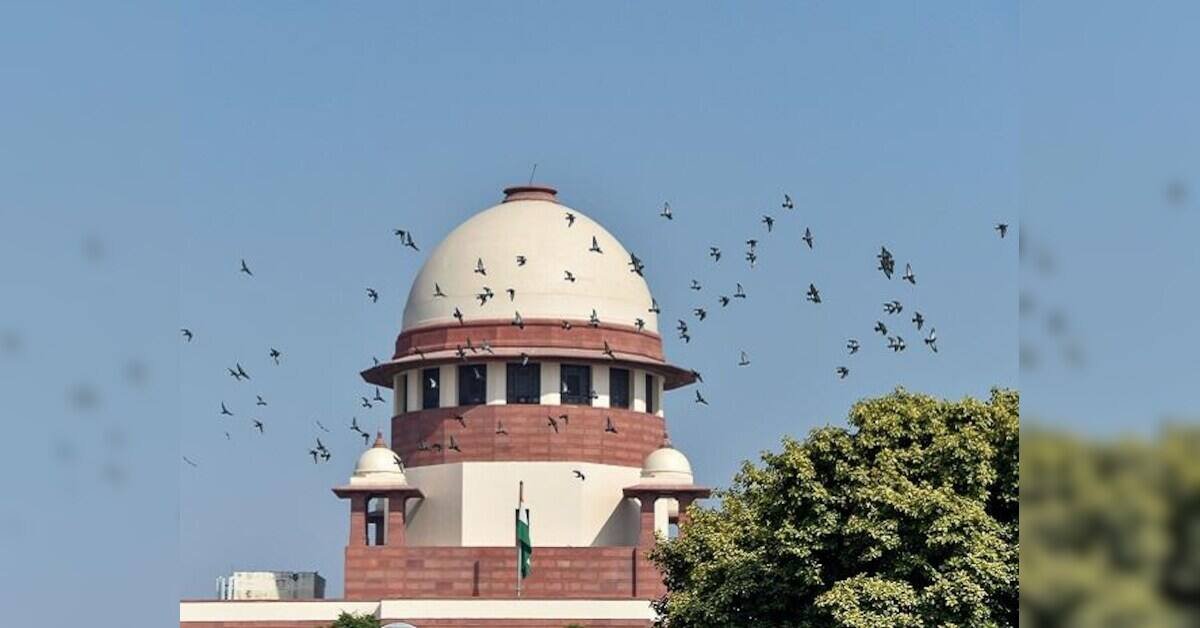
The Supreme Court on Friday directed the Centre and Delhi authorities to ensure that train and Metro services are not completely suspended ahead of Saturday’s protests against Chief Election Commissioner Gyanesh Kumar, saying security measures must not deprive commuters of public transport.
A Bench comprising Chief Justice of India Surya Kant and Justices Joymalya Bagchi and V Mohana said services could be regulated to address security concerns, but a blanket shutdown would cause undue hardship to the public.
The court directed authorities to publicise transport restrictions through advisories, newspapers and websites. It also asked officials to issue a traffic advisory and review road closures and barricading to facilitate movement wherever possible.
The directions came while hearing petitions, including one filed by Communist Party of India (Marxist) general secretary MA Baby, challenging restrictions ahead of the October 10 demonstrations announced by the activist group Cockroach Janta Party (CJP) and opposition parties.
During the hearing, the Chief Justice told Solicitor General Tushar Mehta, appearing for the Centre, that the court was concerned about the impact on ordinary commuters, including employees, students and senior citizens travelling to Delhi from Gurugram, Greater Noida and other parts of the National Capital Region.
“Regulation cannot mean complete prohibition,” the Bench observed, adding that authorities could restrict movement or reduce service frequency but should not bring public transport to a complete halt.
Senior advocate Kapil Sibal told the court that trains scheduled to arrive at New Delhi and Hazrat Nizamuddin railway stations between 4 am and 2 pm on October 10 had been suspended. He questioned the cancellation of services that would affect passengers travelling to the capital for reasons unrelated to the protests.
Justice Bagchi also questioned the proposed closure of several Metro stations from Friday night until further orders, observing that reducing frequency could constitute regulation, whereas shutting stations entirely would be an extreme measure.
Mehta said the restrictions were prompted by security concerns following violence during an earlier attempt by CJP protesters to march towards Parliament on July 20. He disputed the petitioners’ contention that Delhi had effectively been shut down and said internet restrictions were limited to sensitive areas around Rashtrapati Bhavan and Raisina Road, subject to review based on security assessments.
Citing alleged instances of harassment and assault of women police personnel during previous protests, the Solicitor General defended the need for preventive measures.
The Bench said authorities were entitled to maintain law and order, but their actions had to be proportionate. The state’s responsibility extended to protecting ordinary citizens and ensuring they were not left without transport, it said.
The court clarified that it was examining only the restrictions on transport services and would not consider, at this stage, allegations that police personnel had visited mosques and advised people against joining the protests.
Following the court’s observations, Mehta assured the Bench that he would ask the authorities to reconsider a complete suspension of services and allow trains and Metro operations in a regulated manner.
The court also asked the Centre to consider identifying an alternative venue in Delhi with adequate facilities for peaceful and lawful protests.