

[ad_1]
One pre-BS-VI heavy-duty vehicle can emit several times more pollution than a BS-VI vehicle.
Why focus on trucks and buses?
The government’s rationale stems from the outsized role heavy commercial vehicles play in transport-related pollution.
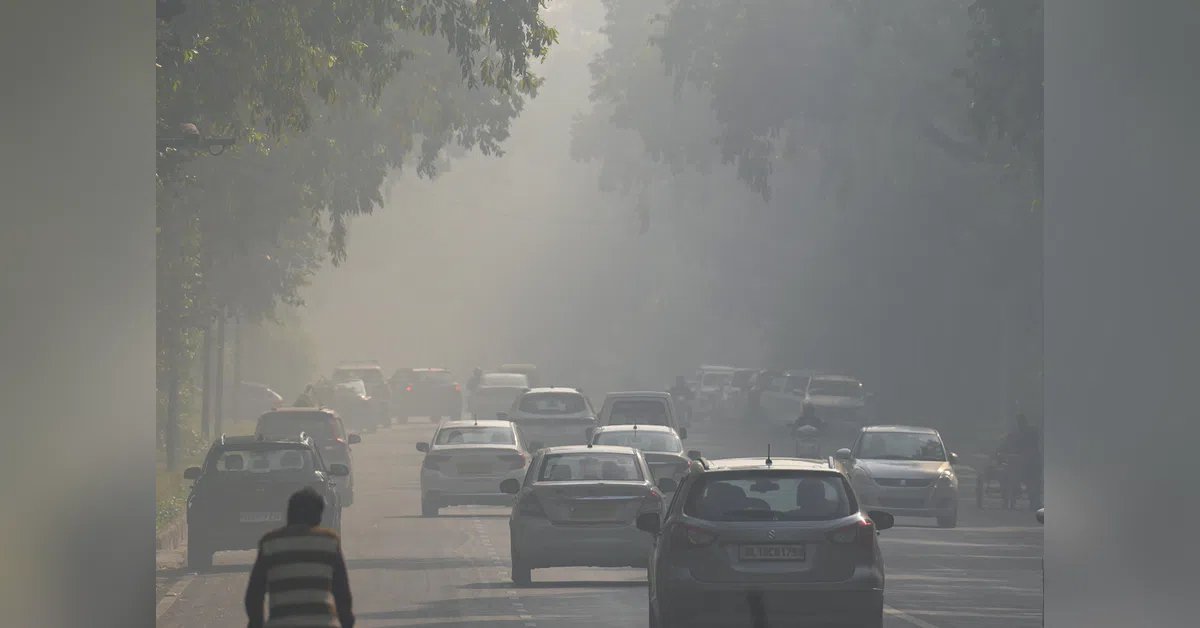
According to the Cabinet note, the transport sector contributes about 14 per cent of PM2.5 emissions and 63 per cent of nitrogen oxide (NOx) emissions in Delhi-NCR. Within the sector, trucks and buses account for 36 per cent of PM2.5 emissions despite constituting only about 3 per cent of the vehicle fleet.
Anumita Roychowdhury, executive director at the Centre for Science and Environment, said targeting older commercial vehicles could yield substantial benefits because of their disproportionately high emissions.
“This scheme to swap legacy trucks and buses in Delhi-NCR along with fiscal support is an important step forward to improve regional air quality. Studies have shown that even though heavy-duty vehicles make up just 3 per cent of the vehicle fleet in NCR, they are responsible for a staggering 36 per cent of transport-related particulate emissions and toxic gases,” she said.
Roychowdhury added that older diesel trucks emit several times more pollution than modern vehicles. “Replacing them with BS-VI and ideally more with electric vehicles can cut toxic public exposure at the source,” she said.
How much difference can the scheme make?
Experts say the policy could meaningfully reduce emissions from the transport sector, but its impact on overall air quality is likely to be more modest.
Shubham Thakur, a climate and sustainability expert, said replacing nearly 200,000 older commercial vehicles could reduce emissions of NOx and black carbon – both major pollutants associated with diesel vehicles.
“If a large majority of the targeted fleet is replaced with BS-VI vehicles, transport-sector PM emissions could fall by roughly 20-40 per cent, while transport-sector NOx emissions could decline by around 30-50 per cent,” he said.
However, he added that transport is only one contributor to Delhi-NCR’s pollution burden.
“Road transport contributes only part of Delhi-NCR’s pollution burden. Winter smog is also driven by stubble burning, industry, dust, biomass burning and adverse weather. There has to be a multi-front war against pollution rather than stand-alone steps,” Thakur said.
His assessment aligns with findings from several source-apportionment studies, which have shown that the relative contribution of pollution sources in Delhi varies by season, with transport, dust, industry and biomass burning all playing important roles.
Will winter smog disappear?
Probably not.
Experts caution that while the scheme could lower the baseline level of pollution, it is unlikely to eliminate severe winter episodes that are influenced heavily by meteorological conditions and regional pollution sources.
“The scheme may lower the pollution baseline and reduce peak levels somewhat, but it is unlikely to prevent ‘severe’ AQI episodes by itself,” Thakur said.
That view showcases a longstanding debate around Delhi’s clean-air strategy. Over the years, authorities have introduced measures ranging from the odd-even road rationing programme to tighter emission standards, restrictions on older diesel vehicles and the rollout of BS-VI fuel.
While these interventions have helped curb emissions from specific sectors, experts have consistently argued that no single measure can address the region’s complex pollution problem.
The implementation challenge
Beyond environmental gains, the success of the scheme will depend on whether vehicle owners find it financially viable to replace ageing fleets.
Vaibhav Pratap Singh, executive director at the Climate and Sustainability Initiative (CSI), said the timing may work in the scheme’s favour because many BS-IV vehicles are approaching the end of their first ownership cycle.
“The scheme comes at an opportune time for truck owners operating BS-IV or older vehicles, many of which were last sold in 2020 and are likely nearing the end of their first ownership cycle,” Singh said.
He added that financing support could be critical given the higher cost of newer vehicles.
“Given the higher costs associated with BS-VI vehicles, particularly those with longer chassis requirements, interest subvention can help keep the transition financially viable,” he said.
At the same time, Singh suggested that credit-guarantee mechanisms could further strengthen adoption by encouraging banks and non-banking finance companies to expand lending for electric trucks and buses.
A useful step, not a silver bullet
The emerging expert consensus is that the truck scrappage programme ranks among the more consequential vehicle-focused interventions attempted in Delhi-NCR because it targets a small but highly polluting segment of the fleet.
Yet the policy’s ultimate success may be measured less by the number of vehicles replaced and more by whether it forms part of a broader strategy that simultaneously tackles dust, industrial emissions, biomass burning and other major pollution sources.
Replacing old trucks and buses may make Delhi-NCR’s air cleaner. But experts say it is unlikely to clean it on its own.
[ad_2]
Source link