

[ad_1]
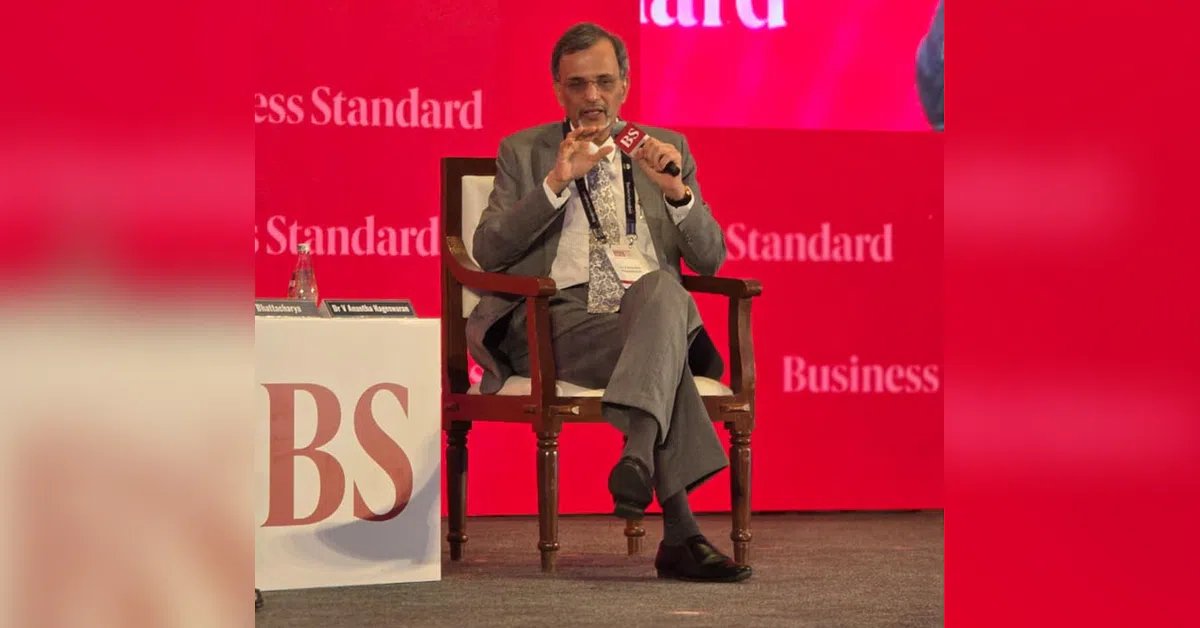
Speaking on the ANI podcast, Nageswaran said the era of MBA education is over. “The globalising world gave a certain advantage to software, computer science and MBA education, but that era is over,” he said.
Instead, he stressed the importance of trade skills and human-centric abilities that require physical presence, judgment and interpersonal interaction.
Nageswaran said many students continue to follow the traditional career route—graduation, higher studies or preparation for competitive exams such as UPSC—without adequately assessing whether these qualifications will translate into future employment opportunities.
According to the CEA, employability in the future will depend less on credentials and more on skills that technology cannot easily replace. He argued that rapid advances in AI are forcing workers to reassess which capabilities will remain valuable over the long term.
Vocational trades need greater respect
According to the CEA, India has traditionally undervalued vocational trades such as welding, plumbing, carpentry and electrical work. Countries like Switzerland, Germany, Japan, South Korea and China, on the other hand, give greater respect to such skill-based professions. Such professions, he said, continue to offer strong employment potential and are less vulnerable to automation than many white-collar roles.
The CEA said changing societal attitudes toward such professions will be crucial if India is to build a workforce suited to the demands of the future economy.
AI, jobs and India’s demographic challenge
Nageswaran’s comments align with his broader warnings about the impact of AI on employment. In recent months, he has repeatedly argued that India’s priority should be creating jobs that are resilient to technological disruption while ensuring AI complements, rather than replaces, human labour.
He has also highlighted the scale of India’s employment challenge, noting that the country needs to create millions of jobs annually to absorb new entrants into the workforce. In that context, vocational and technical skills could play a critical role in addressing both unemployment and unemployability.
What the message means for students
The CEA’s remarks do not suggest that engineering, computer science or MBA degrees have become irrelevant. Rather, they reflect a growing belief that formal qualifications alone are no longer enough.
As AI automates routine tasks and global economic conditions evolve, workers may increasingly need a combination of technical expertise, practical trade skills, adaptability and human-centered capabilities to remain competitive. The central message from Nageswaran is that future career security will depend less on the degree a person holds and more on the skills they can continuously build and apply.
[ad_2]
Source link