

[ad_1]
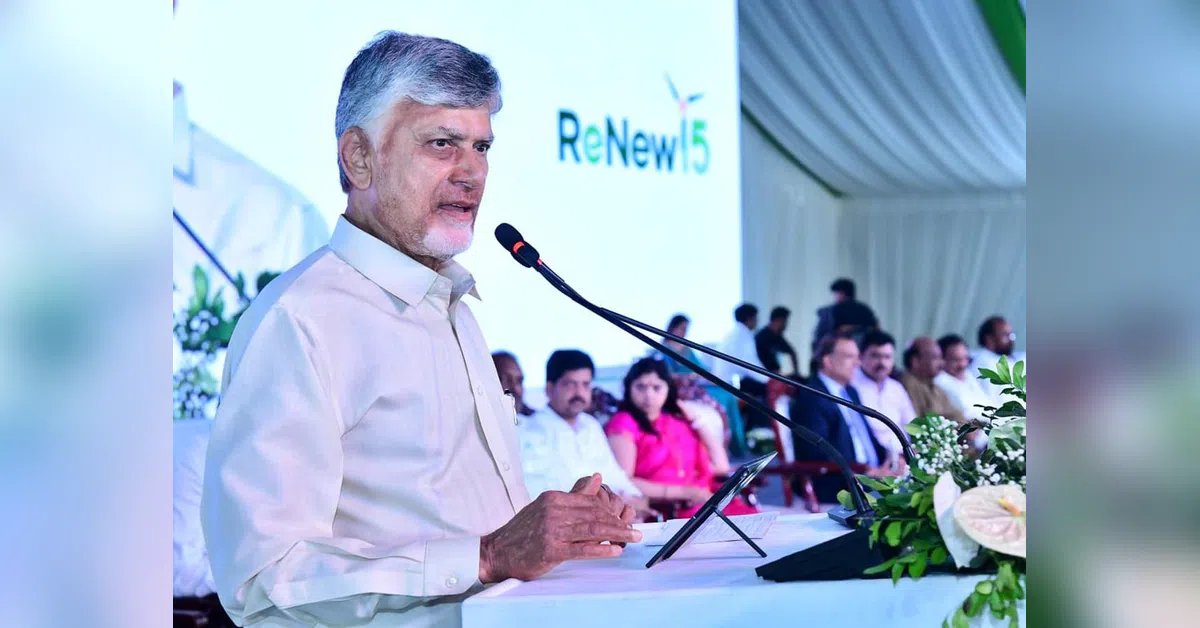
In an interview with The Economic Times, Naidu said the Bill will be brought back with a provision guaranteeing a 50 per cent proportional increase in Lok Sabha seats for all states, rather than redistributing seats purely on the basis of population.
“The NDA government will bring the Delimitation Bill and introduce women’s reservation soon. It is the need of the hour if we want to introduce reservation for women in politics. This has my full support,” he told The Economic Times.
Why did the Delimitation Bill face Opposition?
On April 16, 2026, the Union government introduced three linked Bills in the Lok Sabha to operationalise women’s reservation and redraw the electoral map before the 2029 general elections. These were the Constitution (One Hundred and Thirty-First Amendment) Bill, 2026, the Delimitation Bill, 2026, and the Union Territories Laws (Amendment) Bill, 2026.
The Constitution (One Hundred and Thirty-First Amendment) Amendment Bill was the core legislation. It sought to clear the way for one-third reservation for women in the Lok Sabha and state assemblies from 2029, while also raising the maximum strength of the Lok Sabha from 550 to 850 members. It also sought to change the existing framework under which women’s reservation, enacted through the Nari Shakti Vandan Adhiniyam in 2023, would come into effect only after delimitation based on the first Census conducted after that law’s commencement, which is currently underway.
The Delimitation Bill, 2026 proposed a fresh delimitation exercise to redraw parliamentary and Assembly constituencies and readjust seats. The proposal became contentious because the exercise was expected to rely on the 2011 Census, the latest published Census at the time, rather than wait for the 2027 Census process to be completed. Opposition parties argued that this could alter the balance of representation among states, especially by reducing the relative weight of southern states and others that had performed better on population control.
The Union Territories Laws (Amendment) Bill, 2026 sought to bring electoral arrangements in Union Territories such as Delhi, Puducherry and Jammu and Kashmir in line with the proposed delimitation and women’s reservation framework.
The Bills faced united Opposition resistance in the House, with rivals alleging that the BJP was trying to push through an “unfair” delimitation exercise under the cover of implementing women’s reservation. The Opposition said it supported women’s reservation in principle but opposed linking it to a population-based delimitation exercise that could shift political power towards more populous northern states.
The legislations were introduced just before Assembly elections in Tamil Nadu and West Bengal — two opposition-ruled states where delimitation had already become a major political issue.
The Constitution amendment Bill was defeated in the Lok Sabha on April 17, receiving 298 votes in favour and 230 against. Since a constitutional amendment requires a two-thirds majority of members present and voting, the Bill fell short of the 352 votes needed. After its defeat, the two related Bills on delimitation and Union Territories were withdrawn by the government.
What has changed now?
This is where Naidu’s mention of “changed political circumstances” in Tamil Nadu and West Bengal matters. Two key opponents of the Bills — Dravida Munnetra Kazhagam (DMK) and Trinamool Congress (TMC) — lost elections in Tamil Nadu and West Bengal, respectively.
Moreover, TMC faced an internal rebellion after the poll defeat, with 20 MPs jumping ship and merging with a relatively unknown Nationalist Citizens Party of India (NCPI).
The DMK, which had staunchly opposed the Delimitation Bill, has walked out of the INDIA bloc after its long-time ally the Congress joined hands with Vijay’s TVK to form the government in Tamil Nadu. With the assurance of a 50 per cent proportional increase in seats in the bill and other issues being addressed, the party may reconsider its decision to vote against the Bill.
Changed mathematics in Parliament
The parliamentary arithmetic appears significantly more favourable to the NDA than during earlier attempts at pushing through major constitutional reforms.
In Rajya Sabha, the NDA currently has 148 MPs out of the total 245. It is expected to add three members through the current round of Rajya Sabha elections, including independent-backed victories in Jharkhand and Mizoram. In addition, the resignation of three TMC MPs could help the NDA bag three more seats, which would take its tally to 154. However, it would still fall short of the two-thirds mark of 164 in the Upper House.
The picture is more complicated in the Lok Sabha. In 2024, the NDA bagged 293 seats out of the total 543. The two-thirds majority mark is 362 in the Lower House. There are currently three constituencies with vacant seats — Assam’s Nagaon, West Bengal’s Basirhat and Meghalaya’s Shillong. If the NDA wins all three seats, its count could rise to 296. The tally could further rise to 316 if with 20 more TMC rebel MPs supporting it.
While this still falls short of the two-thirds mark, it would substantially narrow the gap and strengthen the government’s ability to build issue-based support for a constitutional amendment such as delimitation.
Taken together, a stronger position in the Rajya Sabha, potential gains in the Lok Sabha, and a delimitation formula that addresses concerns of southern states could make the political pathway for Delimitation Bill considerably smoother than before.
[ad_2]
Source link