


[ad_1]
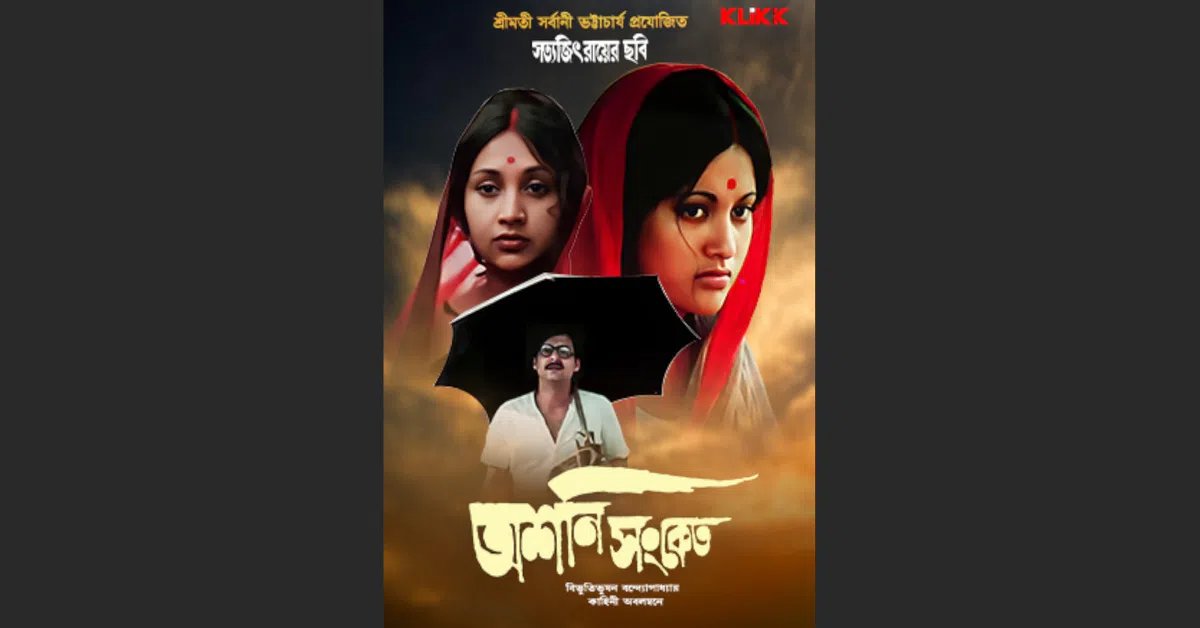
Early in the 1973 Bengali film ‘Ashani Sanket’ (Distant Thunder), directed by Satyajit Ray, Moti (Chitra Banerjee), a village girl, comes to visit the film’s protagonist, Gangacharan (Soumitra Chatterjee), and his wife, Angana (Bobita). Through their conversation, it is revealed that Moti was Angana’s neighbour in the village where they lived previously. Despite their cordial relations, Angana warns Moti not to touch her feet, since the latter is a Dalit and the former a Brahmin. “I’ll have to bathe again,” she says. Towards the end of the film, Moti returns to Angana’s home again, but this time, she is weak and emaciated, having starved for many days because of a famine.
Angana makes her some food, but Moti dies before eating it; Gangacharan confirms the death by checking her pulse, touching her in the process. As Moti’s body lies under a tree, Gangacharan and Angana wonder what they should do. “The dogs and jackals will tear her apart,” says Angana; Gangacharan decides to discard caste taboos and perform the last rites himself. “Ray wants to symbolise the disintegration of caste barriers by the degree to which people are willing to touch and help each other,” writes British journalist Andrew Robinson in the chapter on the film in his 1989 book ‘Satyajit Ray: The Inner Eye’. The devastation of the famine leads to the erosion of caste barriers, bringing out the humanity in the character.
Cammock’s claims are substantiated by a robust and growing body of academic work on the 1943 Bengal famine. Nobel Prize-winning economist Amartya Sen, in his 1981 book ‘Poverty and Famines: An Essay on Entitlement and Deprivation ’, wrote that “Bengal was producing the largest rice crop in history in 1943”, but wartime collapse of supply chains, profiteering and an indifferent British Raj were the causes of the famine. Indian-American physicist and journalist Madhushree Mukherjee, in her 2010 book, ‘Churchill’s Secret War: The British Empire and the Ravaging of India During World War II’, shows, through archival research, how the British followed a “scorched-earth” policy in Bengal, seizing and destroying rice, leading to the famine. As conditions worsened in Bengal through early 1943, Churchill refused to allow famine relief into the province.
Ray depicts the rising price of rice in Bengal through a quick montage of numbers, starting at ₹20 a tonne and rising well past ₹60. Hunger forces the villagers to eat snails and forage in the woodlands on the outskirts for wild fruits and vegetables. (My grandmother, who was a pre-teen girl in 1943, recalls how residents in her village in Chittagong did indeed collect snails from ponds and cook them with wild leaves.) Besides their physical vulnerability, the characters are also rendered morally vulnerable by the disaster. Angana’s neighbour, Chutki (Sandhya Roy), accepts sexual overtures from Jadu (Noni Ganguly) in exchange for rice. Incidents of violence and looting become increasingly common in the village.
Ray sets up a counterpoint to human suffering by shooting the film in vivid colours. A contemporary reviewer for The New York Times wrote: “The course of terrible events seems that much more vivid in landscapes of relentless beauty.” Robinson writes that some of Ray’s audience in Bengal felt he had aestheticized the human tragedy, but the filmmaker told him that he wanted to demonstrate the lack of any relationship between the moods of Nature and those of Man. “People are dying even though there is a good rice crop.” Ray underscores nature’s indifference, intensifying humanity’s tragic, isolated suffering throughout.
More than five decades after its release, ‘Ashani Sanket’ remains a powerful rebuttal to attempts to obscure the Bengal famine’s colonial origins. At a time when works such as Helen Cammock’s ‘Persistence’ face campaigns of censorship for implicating Churchill, Ray’s film stands as a reminder that art can challenge comforting national myths as effectively as historical scholarship. His portrayal of famine as a political catastrophe — not a natural disaster — remains devastatingly relevant. By exposing both the brutality of empire and the fragile resilience of human compassion, ‘Ashani Sanket’ demands that history be confronted rather than sanitised.
Uttaran Das Gupta is an independent writer and journalist
[ad_2]
Source link