

It’s no exaggeration to say there is a manga for almost anything in Japan.
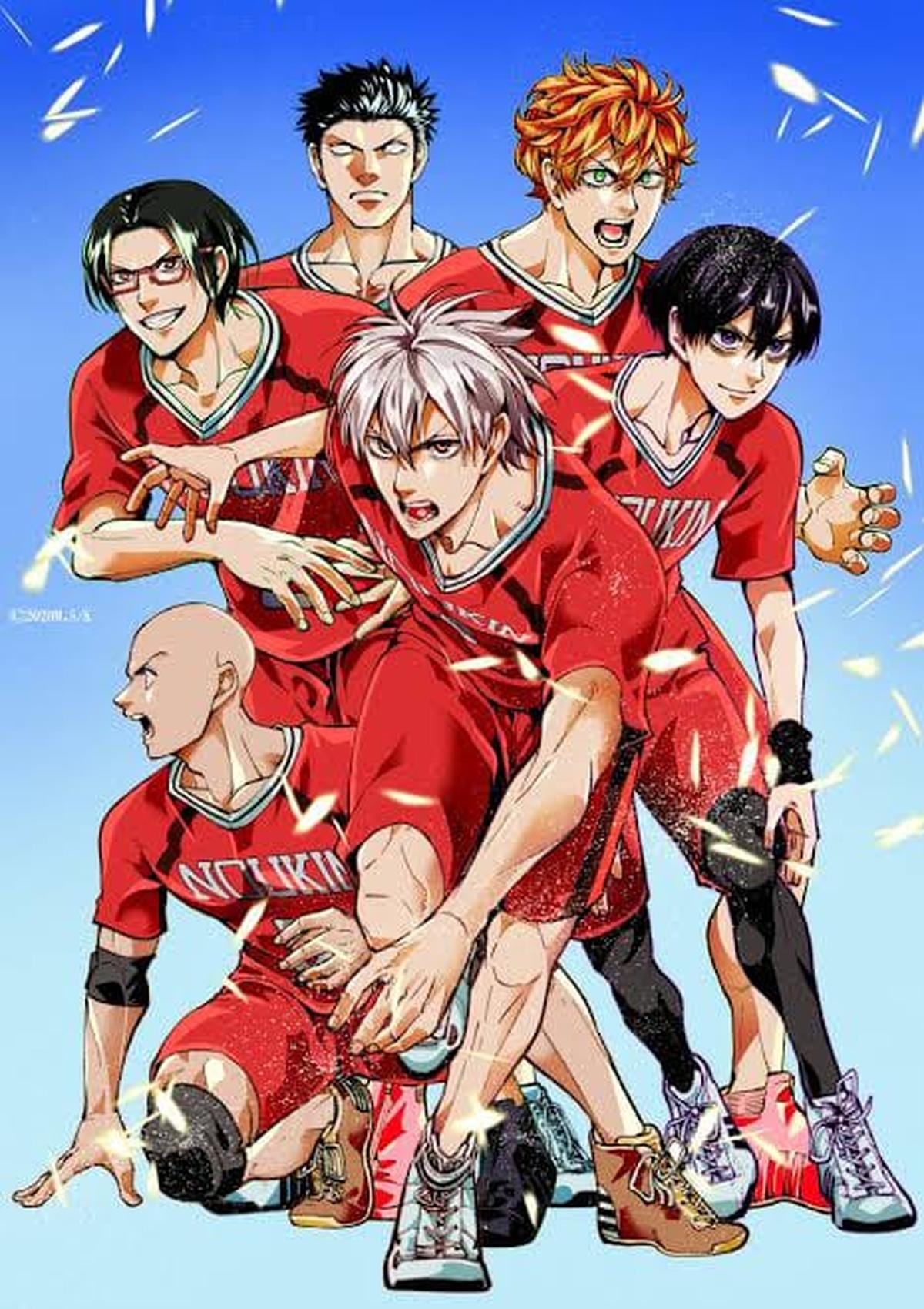
Eighteen-year-old Kosei Kani had begged his parents to drive him from Kasugai city to Nagoya’s Tokai Gymnasium on Saturday evening. He was a fan of Shakunetsu Kabaddi, the manga written by Hajime Musashino that was also adapted into an anime series. It follows a former football player who is drawn into the world of full-contact kabaddi. What begins as a sport he dismisses as a joke gradually reveals itself to be something closer to martial arts.
Shakunetsu Kabaddi, also known as Burning Kabaddi, is a 2021 sports anime series about a former high school soccer star who joins a competitive kabaddi team
| Photo Credit:
Special Arrangement

Shakunetsu Kabaddi, also known as Burning Kabaddi, is a 2021 sports anime series about a former high school soccer star who joins a competitive kabaddi team
| Photo Credit:
Special Arrangement
Kosei had become curious about the real thing.
“I want to see what it really was,” he told Sportstar.
As introductions to a sport go, watching an India-Iran men’s gold-medal match at the Asian Games is a fairly spectacular one. It would be like deciding to learn about basketball by watching the USA’s Olympic Dream Team in a final, or trying to understand football by starting with Barcelona against Real Madrid.
Kosei was not disappointed.
ALSO READ | India medal tally – September 26: Kabaddi teams wins gold; Sawan, Tajinderpal win silver
The final was everything Shakunetsu Kabaddi had promised him: tangled bodies, double-handed takedowns, backheel kicks, glaring, showmanship and the kind of physical confrontation that makes the line between kabaddi and martial arts seem rather thin.
India won 40-34.
But there was much more to the match than the score.
In global kabaddi, there is no bigger prize than the Asian Games gold medal. And there is no more important rivalry than India against Iran.
“This was our game when we had nothing else at the Asian Games,” said Indian coach BC Ramesh. “In the 1990 Asian Games, we had just one gold medal and that came in kabaddi. This is our game. It matters very much how we do in it.”
For much of the sport’s history, India’s dominance was difficult to challenge. But over the past decade and a half, Iran has emerged as the one country capable of making India genuinely uncomfortable.
Over the last four Asian Games editions, the final has become an India-Iran affair. Iran won once, while the Iranians felt they had been hard done by in the previous encounter in Hangzhou.
“There’s only one country in the world that can challenge India, that can even think of beating India, and that is Iran,” said Indian raider Aslam Inamdar.
So this was never going to be just another final.
If the location had been determined purely by the magnitude of the occasion, the final probably deserved a different venue.
Tokai Gymnasium will revert to being a basketball court for a working-class neighbourhood in Nagoya once the Asian Games are over. The spectator seating is only six rows deep.
It is a world away from kabaddi in India.
The Pro Kabaddi League attracts millions of viewers and is second only to cricket’s Indian Premier League in popularity. Its biggest players can become fabulously wealthy. Yet, the very best players in the league still clamour to play at the Asian Games, just as the very best American basketball players once fought to be part of the Dream Team.
Here, all of that ultra-elite, high-stakes sport was squeezed into a small-town gym hall, against a soundtrack of Punjabi pop.
A stadium emcee tried his best to explain to the Japanese spectators what was happening in the middle. He was not always successful.
ALSO READ | The runner no one expected wins India’s first Asian Games marathon medal in 44 years
He didn’t need to be.
“I still don’t understand what is happening, but I’m appreciating the atmosphere,” said Hiramatsu Hisamoto, who was watching his first kabaddi match.
Indeed, you did not need to understand everything happening on the mat to know that it was exciting.
The spectators were a microcosm of Asia — and of the many different ways people had arrived at this strange little corner of the Asian Games. A couple of girls in headscarves screamed their support for Iran. There were Pakistanis cheering for Iran, while a few Nepalis completed the “Bharat Mata Ki…” chant with a loud “Jai!”
On the mat, there was plenty of glaring, showmanship, slapping of thighs, and pointing towards the opposition bench. After the first half, it was Iran who led 18-17.
But just when it seemed like Iran held the edge, India fought back. The Iranian defence cracked. Their raiders seemed to get caught with every raid. As India emerged on top, the taunting began.
On Iran’s final raid, made by Mohammadreza Shadloui, who competes for Gujarat Giants in the PKL, India captain Sunil stood in front with a grin on his face, knowing India had sealed the win, gesturing with his hands as if to say, “You’re talking too much.”
“When Iran travelled to Pakistan before the Asian Games to prepare, Shadloui said the gold medal would be theirs. I just wanted to remind him that they were playing India and the gold medal is India’s,” Sunil said after the final.
When the final whistle blew, players from both nations embraced. Somewhere in the stands was Kosei, watching the sport he had first discovered on the pages of a manga. “I think I’d like to play this game myself,” he said.
Published on Sep 26, 2026