


[ad_1]
On Friday, a day before the opening ceremony of the Asian Games in Nagoya, India’s national flag was officially raised alongside those of the other nations competing in the continental tournament at Garden Pier on the shores of Ise Bay in southern Japan. This practice is an age-old tradition of these continental games.
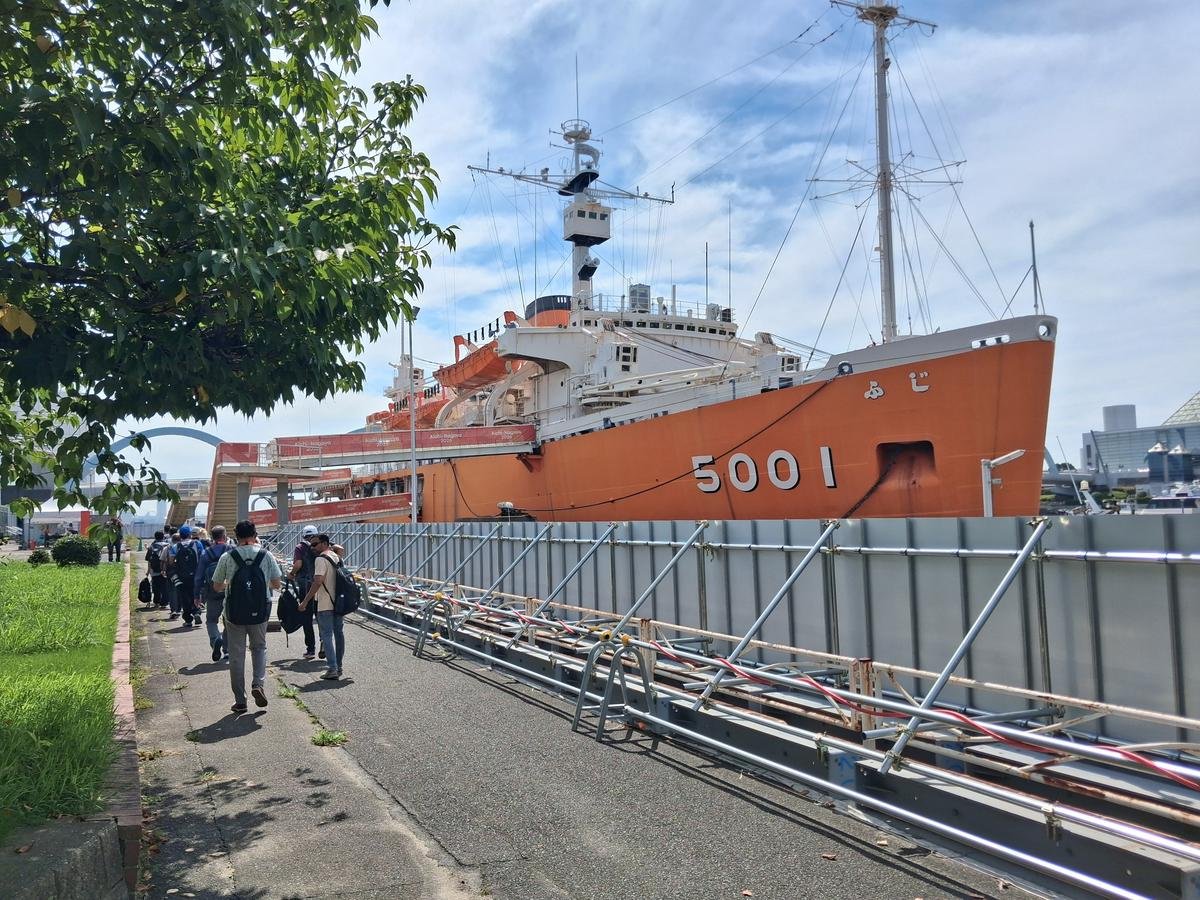
But there’s more than a bit of history here already. Moored alongside the pier is the icebreaker ship Fuji, which carried out Japan’s Antarctic expeditions from 1965 and is now on display as a museum vessel.
A little further inland, right next to where the Indian flag was raised, stands a larger-than-life bronze statue, now blue with patina, of two Sakhalin Huskies named Taro and Jiro. The two were among a group of 15 dogs that accompanied Japan’s first Antarctic expedition, carried out by Fuji’s predecessor, Soya, in 1958.
When severe weather conditions forced the crew to evacuate their base on East Ongul Island, the dogs were left behind, chained and with only a few days’ supply of food. No one expected them to survive. However, when another expedition returned almost a year later, Taro and Jiro were found alive. They had broken free from their chains and survived the Antarctic winter.
Their story became a national sensation, and the pair came to symbolise endurance and survival against the odds. Statues of the dogs can be found in several places in Japan, but one of the famous ones is here in Nagoya, beside the Fuji.
Japan’s icebreaker ship, Fuji, is moored alongside the Garden Pier on the shores of Ise Bay in southern Japan.
| Photo Credit:
Jonathan Selvaraj

Japan’s icebreaker ship, Fuji, is moored alongside the Garden Pier on the shores of Ise Bay in southern Japan.
| Photo Credit:
Jonathan Selvaraj
Cut to the present day, there is an altogether less heroic version of being left to fend for oneself playing out elsewhere in Nagoya this week.
Inauspicious start
The last few days have seen visuals you wouldn’t normally associate with a major sporting event in Japan: scenes of chaos and dysfunction.
Multiple videos and photographs of athletes arriving from across Asia and then stuck at Nagoya airport waiting for accommodation have done the rounds on social media. Some have complained of waiting for hours for transport from the airport to their rooms. There were also instances of male and female athletes mistakenly put up in the same rooms. Later, when incessant rains hit Nagoya, a Korean basketball player posted a photograph of a soaked floor with the caption: “Save me!”
“Disaster in the making,” read some of the online chatter. “If India had done something like this, we’d never hear the end of it,” said others.
ALSO READ | Room crunch had left 30-35 Indian athletes in a spot: Chef de Mission Sahdev Yadav
Much of the gripe has centred on the nature of the accommodation itself. The Aichi-Nagoya Asian Games are the first without a designated Games Village. Instead, around 3,000 athletes and coaches have been put up in temporary container-style housing at the pier. Another 4,000 are bunked up in the Costa Serena, a cruise ship docked at Kinjofuto Pier, some 10 kilometres away. The rest have been booked into hotels across Aichi Prefecture and Tokyo, closer to where events are being held.

The Costa Serena, a ship docked at Kinjofuto Pier, accomodates around 4,000 athletes and coaches.
| Photo Credit:
Jonathan Selvaraj
The Costa Serena, a ship docked at Kinjofuto Pier, accomodates around 4,000 athletes and coaches.
| Photo Credit:
Jonathan Selvaraj
There’s of course no denying that athletes have been affected.
“Mismanagement is there,” admits Sahdev Yadav, the Chef de Mission of the Indian contingent. “There was a delay in getting the accreditation cards made for people in the cruise ship. There were also some issues in the transport,” Yadav said.
Making matters worse was the fact that, at least initially, volunteers weren’t familiar with all the procedures for admitting athletes, said deputy Chef de Mission and former international shooter Anjali Bhagwat.
“Initially, we were not sure about the processes and the volunteers weren’t aware either. It was taking several hours to make the passes that allowed athletes to travel to the cruise ship or their hotels. But eventually we got that down to a few minutes. All this took a couple of days to settle down. Athletes in the sports disciplines that arrived first, like wushu and shooting, faced problems because of this,” Bhagwat said.
Yadav said the Indian team ended up booking 18 hotel rooms on its own and planned to book another 10, just to be safe. “We had to book because they (organisers) said they had a shortage of rooms and more athletes had come than they expected. But that’s not the case. The number of players who had been invoiced, only that many players are here. When they cut their names, we booked our own hotels,” he said.
Lack of a Games village
But while Yadav insisted that India had not sent more athletes than had been invited, it’s clear that organisers weren’t expecting nearly as many overall to turn up. The local organising committee maintains that the accommodation issue arose because they were expecting 15,000 athletes and officials for the Games, only for the numbers to increase. Last week, the Local Organising Committee in Nagoya admitted that at least 17,000 athletes and officials were likely to come.
These numbers aren’t outsized by themselves. China hosted about the same in the Hangzhou edition three years ago. But while China had the resources to conduct the event within a small radius and host all athletes and coaches in a dedicated Village, Japan has tried to keep the budget manageable by avoiding the construction of a designated residential facility.

A day before the opening ceremony of the Asian Games in Nagoya, India’s national flag was officially raised alongside those of the other nations competing in the continental tournament.
| Photo Credit:
Jonathan Selvaraj
A day before the opening ceremony of the Asian Games in Nagoya, India’s national flag was officially raised alongside those of the other nations competing in the continental tournament.
| Photo Credit:
Jonathan Selvaraj
The decision to dispense with the traditional Village was defended by the Olympic Council of Asia (OCA) on Friday. OCA Director General Husain Al-Musallam said that organisers had to take into account the circumstances of the host country and what would happen to the infrastructure after the Games.
“We wish that we have an athlete village, number one. But, number two, we also have to be flexible,” Al-Musallam said.
He pointed to the post-Games use of Villages at previous editions, including Doha in 2006, where the one there was converted into a medical centre, and Hangzhou, where the accommodation was subsequently sold to the public.
Mohammad Tayyab Ikram, chairman of the Aichi-Nagoya 2026 Asian Games Coordination Committee, said organisers did not want to leave a “white elephant” behind after the Games and described the container accommodation and cruise ship as alternatives developed after discussions with the OCA.
ALSO READ | Asian Games 2026: Manu Bhaker, Tajinderpal Singh Toor named India’s flagbearers for Opening Ceremony
It is possible that the local organising committee might have found it easier to manage a more modestly budgeted Games while avoiding some of the opening-day hiccups if it had not had to accommodate so many athletes and officials. But Al-Musallam said capping the number of entrants was not an option.
“I am a supporter of increasing the number of athletes, not to decrease athletes. If we have to choose between the expense of the Games and the athletes, I will support the athletes,” he said.
Al-Musallam said he expected things to fall into place after the initial troubles, and so far that does appear to be happening. The same sentiment has been expressed by officials, including those from India.
“Everyone has got accommodation. There’s no problem from our end. There was some trouble at the start but these are such big Games and something always happens in these events. Our job isn’t to find fault but to try and ensure that there isn’t any issue for our athletes. We have done that. Now everything is fine. There is no one without accommodation. Transport is fine and the buses are working too. Everyone is going to their training and returning. Everyone is waiting for the Games to begin,” Yadav said.
Yadav says the discussion he wants to focus on now is the team’s performance at the Asian Games. Having crossed the 100-medal mark in Hangzhou, he is hopeful the squad can achieve something similar this time as well.
Perhaps there is some inspiration to be taken from Taro and Jiro themselves. Much like some of the athletes here in Nagoya, they found themselves in an unfortunate situation they would rather not have been in. But they made the most of it and, against all odds, emerged as heroes.
Published on Sep 18, 2026
[ad_2]
Source link