


[ad_1]
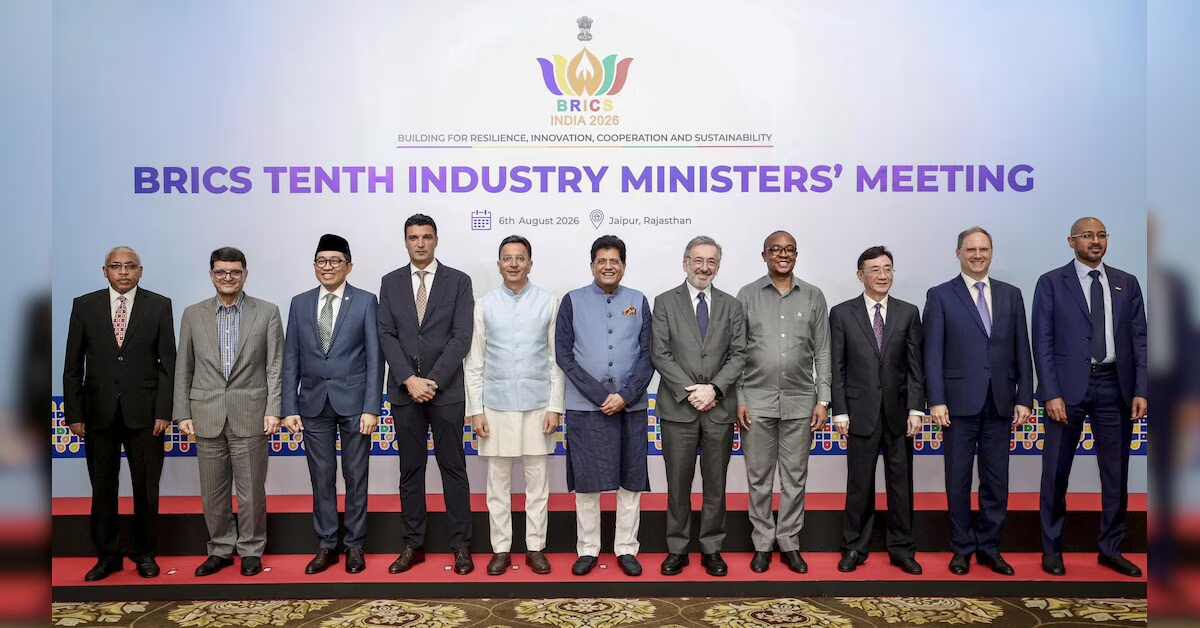
India on Friday secured consensus among BRICS trade ministers on a package of trade outcomes that reaffirmed support for the World Trade Organization (WTO), sought to improve access to trade finance for small businesses and advanced work on resilient global value chains under its 2026 BRICS chairship.
The outcomes were adopted at the 16th BRICS Trade Ministers’ Meeting in Jaipur, chaired by Commerce and Industry Minister Piyush Goyal. Trade ministers from Brazil, China, Russia, South Africa and other BRICS members endorsed a Chair’s Statement and Outcome Document comprising four annexes covering multilateral trade, micro, small and medium enterprises (MSMEs), global value chains and digitally delivered services.
The meeting reiterated support for a rules-based multilateral trading system with the WTO at its core and called for preserving special and differential treatment (S&DT) for developing countries. It also backed the restoration of a fully functioning, two-tier and binding WTO dispute-settlement system while recognising the need for policy space for developing economies to safeguard food and livelihood security.
Addressing the meeting, Goyal said BRICS countries accounted for a rising share of the global economy and underlined India’s priorities during its chairship, including strengthening the multilateral trading system, building resilient and diversified global value chains, promoting the internationalisation of MSMEs, improving their access to trade finance and facilitating the seamless flow of digitally delivered services across borders.
A key outcome was the adoption of the Jaipur Consensus, under which members agreed to study a BRICS invoice-discounting mechanism to help bridge the estimated $2.5 trillion global trade-finance gap affecting smaller businesses. Ministers also adopted guiding principles for credit-assessment frameworks for export-oriented MSMEs, aimed at enabling lenders to assess firms based on cash flows rather than collateral. These measures form part of a broader work plan on the internationalisation of MSMEs.
The ministers also adopted a Global Value Chains (GVC) Action Plan for 2026-30, which envisages initiatives such as a BRICS Technical Council, BRICS Connect, a joint study on GVCs and the possibility of creating strategic supply-chain and investment-promotion platforms, including in pharmaceuticals and food security.
In addition, the meeting adopted principles to facilitate safe and secure digitally delivered services across borders and noted progress towards finalising the Strategy for BRICS Economic Partnership 2030. The strategy, covering areas such as trade, services, the digital economy, investment, financial cooperation and sustainable development, will be submitted to BRICS leaders for endorsement.
[ad_2]
Source link