

[ad_1]
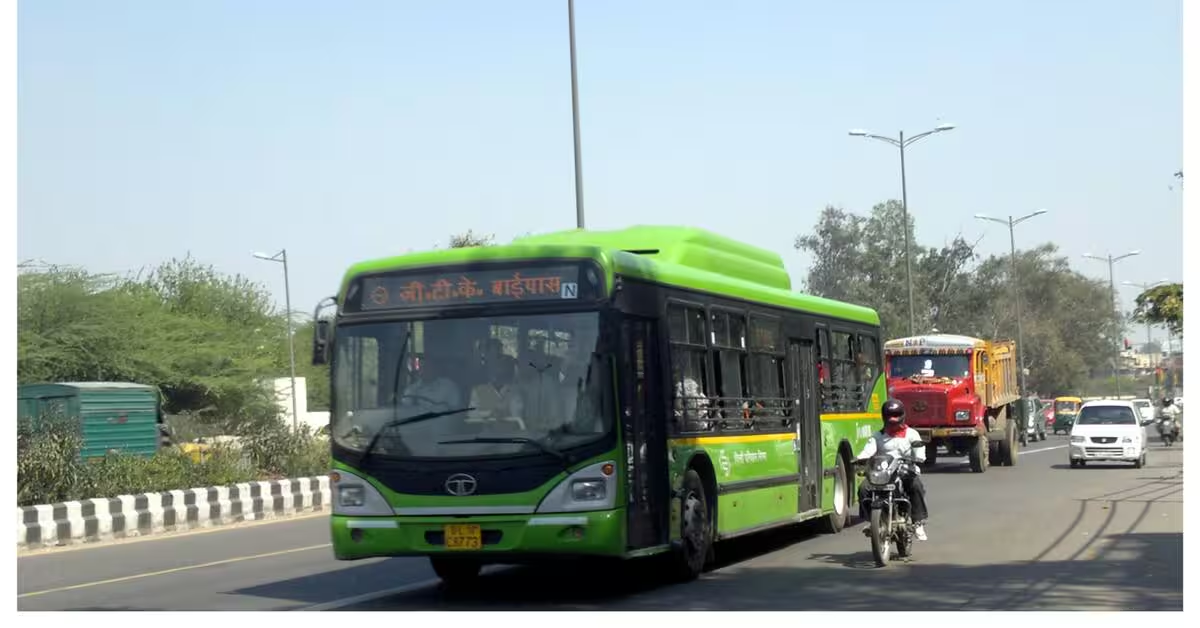
A strike by drivers employed through private agencies for the Delhi Transport Corporation (DTC) disrupted bus services across Delhi on Wednesday, leaving commuters stranded for hours.
The protest, which entered its second day, is over demands for higher wages, better medical and social security benefits, insurance, annual bonuses and proper overtime payments. According to a report by NDTV, the disruption affected multiple depots and routes, with drivers vowing to continue their demonstration.
Buses remain parked at major DTC depots
Buses were not dispatched from several major depots, including Burari, Nangloi, Rewla Khanpur, GTK, Nehru Place and Shadipur. In some areas, buses were halted mid-route and passengers were asked to deboard, forcing them to seek alternative transport such as the Metro, autos or app-based cabs.
The disruption significantly impacted students, office-goers and daily wage workers, the report said. Some commuters reported long waiting times and overcrowding at Metro stations and bus stops.
The DTC Karmachari Ekta Union had announced that the strike would continue into Wednesday, extending the commute disruptions for city residents. While the Delhi government and transport department have yet to make a public statement on the issue, the union says it is open to dialogue if its core demands on wages, medical cover and social security are addressed.
What are drivers demanding?
The drivers on strike are employed by private operators under contract to DTC. Drivers reportedly claimed they were underpaid and lacked social security, medical insurance, paid leave, or an annual bonus.
Union leaders claim that even drivers with 10-15 years of experience are treated as unskilled labourers in terms of pay, while permanent DTC drivers have a higher monthly salary for similar roles. Union representatives have described the demands as genuine, pointing out that drivers and conductors are expected to work for low wages without medical benefits, insurance or even a single weekly holiday. They also highlighted that drivers are not paid when they fall ill, raising concerns about passenger safety if unwell staff are compelled to operate buses.
[ad_2]
Source link