

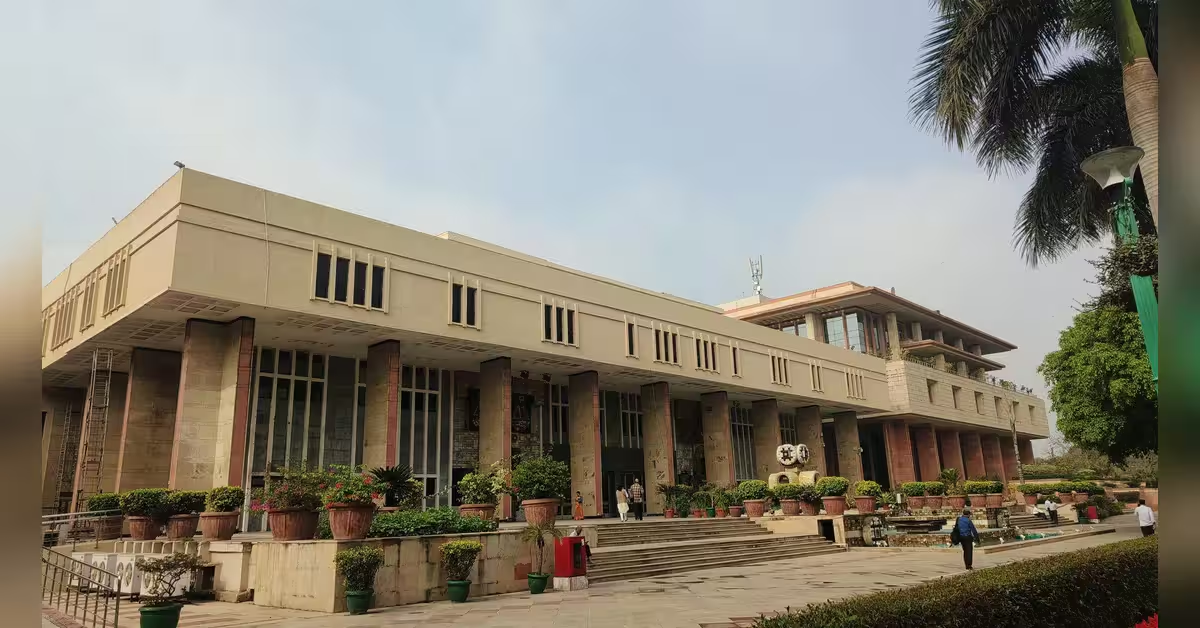
The Delhi High Court has overhauled its framework for designating lawyers as Senior Advocates, replacing the rules notified in March 2024 and removing the committee-based mechanism for the process.
The High Court of Delhi Designation of Senior Advocate Rules, 2026, notified on September 3, have been framed under Section 7 of the Delhi High Court Act, 1966, and Section 16(2) of the Advocates Act, 1961. They replace the rules notified by the High Court in March 2024.
Under the new rules, a permanent secretariat headed by a Registrar-rank officer will administer the exercise, while the final decision on designation will rest directly with the Full Court.
The process will be undertaken at least once a year. The secretariat will invite applications through a notice on the High Court’s website and communicate it to the Delhi High Court Bar Association (DHCBA), giving advocates at least 21 days to apply.
An applicant must ordinarily have at least 10 years of practice, be enrolled with a Bar Council and have mainly practised before the High Court, trial or district courts, or specialised tribunals.
The applicant should also ordinarily be at least 40 years old, although the Full Court can relax the age criterion.
The 10-year practice requirement will not apply to former Delhi Higher Judicial Service officers who have less than 10 years of cumulative experience as judicial officers and/or advocates.
The rules also bar applicants from canvassing for their designation. Any such canvassing will result in disqualification.
The designation process may be initiated by the Full Court on its own or on an application by an eligible advocate. After applications are received, the permanent secretariat will publish the names of the applicants and invite suggestions and views from stakeholders for four weeks.
For lawyers practising before specialised tribunals, trial courts and district courts, the secretariat may also seek inputs from tribunal chairpersons and Principal District and Sessions Judges.
The eligible applications, along with the material gathered during the process, will then be placed before the Full Court with the approval of the Chief Justice.
In deciding whether to confer the designation, the Full Court may consider an advocate’s fairness, courtroom conduct, professional ethics, contribution as a mentor to junior lawyers, pro bono work and standing in the legal profession.
The rules do not require the Full Court to disclose reasons for its decision.
The Full Court will endeavour to decide applications by consensus. If consensus is not possible, a vote may be held, with designation requiring a two-thirds majority of the judges voting. The Full Court may also opt for a secret ballot.
Lawyers whose applications are rejected will have to wait two years before seeking consideration again through the prescribed review or reconsideration mechanism.
The Full Court has also retained the power to recall a Senior Advocate’s designation, subject to giving the concerned lawyer an opportunity to be heard.