

[ad_1]
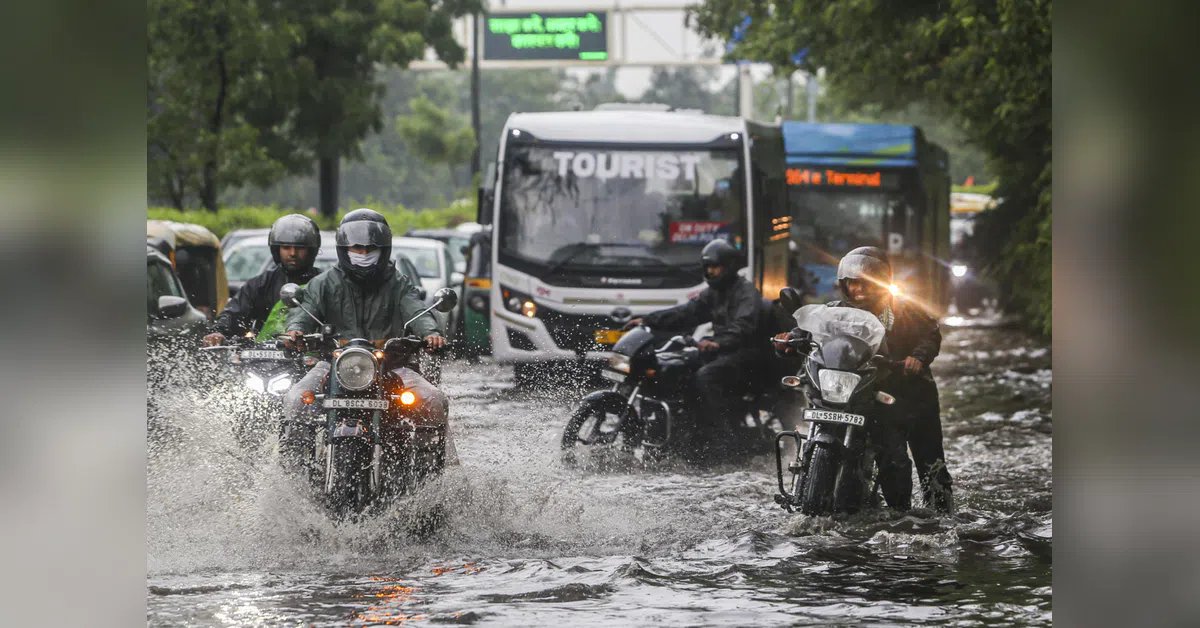
Last week, parts of Gurugram battled waterlogging and several neighbourhoods in south Delhi received heavy showers. However, Rohini and parts of east Delhi reported largely dry conditions and lingering humidity. In some areas, rain lasted for hours, but a few kilometres away, people waited under cloudy skies without a drop.
Weather data suggests these contrasting experiences are not just anecdotal.
But why has rainfall that once appeared more widespread now become increasingly concentrated in pockets?
The rise of localised thunderstorms
According to Mahesh Palawat, vice-president, meteorology and climate change, Skymet Weather, such localised weather activity has become more common over the last five to six years.
Palawat said monsoon rainfall patterns have changed significantly from those seen during the 1980s and 1990s. “In the 80s and 90s, there were sheet clouds. They were stratiform clouds. They spanned across hundreds of kilometres and used to cause continuous drizzle for three to four days. That type of rain pattern has now changed into localised weather activity,” he said.
Palawat explained that widespread rainfall generally occurs when a major weather system such as a low-pressure area, cyclonic circulation or the monsoon trough passes through Delhi and adjoining regions. In the absence of such systems, rainfall tends to depend on smaller thunderclouds that develop locally.
At present, the seasonal monsoon trough is positioned over central India, stretching from Gujarat to Odisha through Madhya Pradesh and Chhattisgarh, while weather systems remain concentrated away from Delhi. Moisture-laden winds over the capital, combined with daytime heating, are creating conditions for thunderstorm development.
“When moisture content is present in the wind and temperature increases during late afternoon or evening, this gives rise to thundery development or thunder clouds. The area coverage of such thunderclouds is very short,” Palawat told Business Stanadard. “Wherever this type of thundercloud develops, that area usually receives intense rainfall for about half an hour. Nearby areas may receive light rainfall, scattered rainfall, or remain dry.”
In simple terms, the rain-producing clouds themselves have become smaller and more concentrated. “These kinds of clouds pop up in small patches,” said Palawat.
Are thunderstorms replacing traditional monsoon rain?
According to Palawat, thunderstorms and convective weather systems are now contributing more to Delhi’s rainfall than the widespread monsoon showers that were once common.
“Earlier, during monsoons, the rainfall used to be continuous and used to cover a widespread area. Now, due to climate change and global warming, the monsoon rain pattern has also been converted to pre-monsoon type activities,” he said.
The latest IMD forecast also points towards this pattern, repeatedly mentioning thunderstorms, lightning and rain at isolated places rather than uniform rainfall across the region.
The role of urban heat islands
Weather systems may explain why rainfall has become patchier, but climate researchers say urbanisation can influence where rain falls within a city.
Janhavi Bhujabal, research consultant at the Climate and Sustainability Initiative (CSI), said the urban heat island effect creates localised pockets of higher temperatures across heavily built-up areas.
“The urban heat island effect in urbanised pockets of Delhi-NCR traps solar radiation and alters the local atmosphere, creating thermal hotspots where temperatures are significantly higher than in surrounding greener areas,” she told Business Standard.
According to Bhujabal, warmer air can hold more moisture, which increases that area’s chance of receiving heavy rainfall. This process is called local convection. While urban heat islands do not directly cause thunderstorms, they can influence local convection, wind flow and rainfall patterns.
Bhujabal added that this phenomenon is not unique to Delhi. A 2024 global study covering more than 1,000 cities found that over 60 per cent of urban areas receive higher rainfall than nearby rural regions, suggesting that urbanisation can influence local rainfall patterns.
The new normal
Experts say residents should expect these sharp differences in rainfall to continue through much of the monsoon season.
According to Palawat, widespread and relatively uniform rainfall is still possible when major weather systems move closer to Delhi. However, on most days, localised thunderstorms are likely to remain the dominant feature.
For Delhi-NCR residents, that means a flooded street, a dry neighbourhood and a humid evening can all exist within the same city at the same time.
“This type of patchiness in rain distribution is going to continue,” Palawat said. “This will be the new normal.”
[ad_2]
Source link