

[ad_1]
The Durand Cup, Asia’s oldest football tournament, has undergone a remarkable transformation in recent years. From its long association with Delhi and Kolkata, the competition has evolved into a multi-state tournament with growing support from fans, state governments and sponsors.
The latest edition has also demonstrated football’s ability to bring communities together, particularly in Manipur, where matches drew enthusiastic crowds despite the state’s challenges.
In an interview with Sportstar, Major General Dinesh Kumar Singh, General Officer Commanding, Bengal Sub Area and Vice Chairman, Durand Cup Organising Committee, discusses the tournament’s revival, the importance of balancing Indian Super League (ISL) clubs with local teams, plans to expand into new regions, and the role of infrastructure and grassroots development in Indian football.
He also explains how the Durand Cup can become a catalyst for nurturing talent and strengthening the sport across the country.
Q: How has the revamped Durand Cup done so far?
A: The Durand Cup has a long legacy, dating back to 1888. Over the years, however, it went through several changes as football’s popularity evolved across the country.
From 1940, it was held in Delhi, but in 2014 it moved to Goa because Delhi was not providing the required spectatorship and traction. After two years in Goa, it returned to Delhi.
In 2019, the Eastern Command of the Army took over its organisation. Since then, the tournament has grown considerably.
I would attribute this growth to three factors: tremendous support from spectators and fans, particularly in the Northeast; strong support from state governments; and increasing sponsorship.
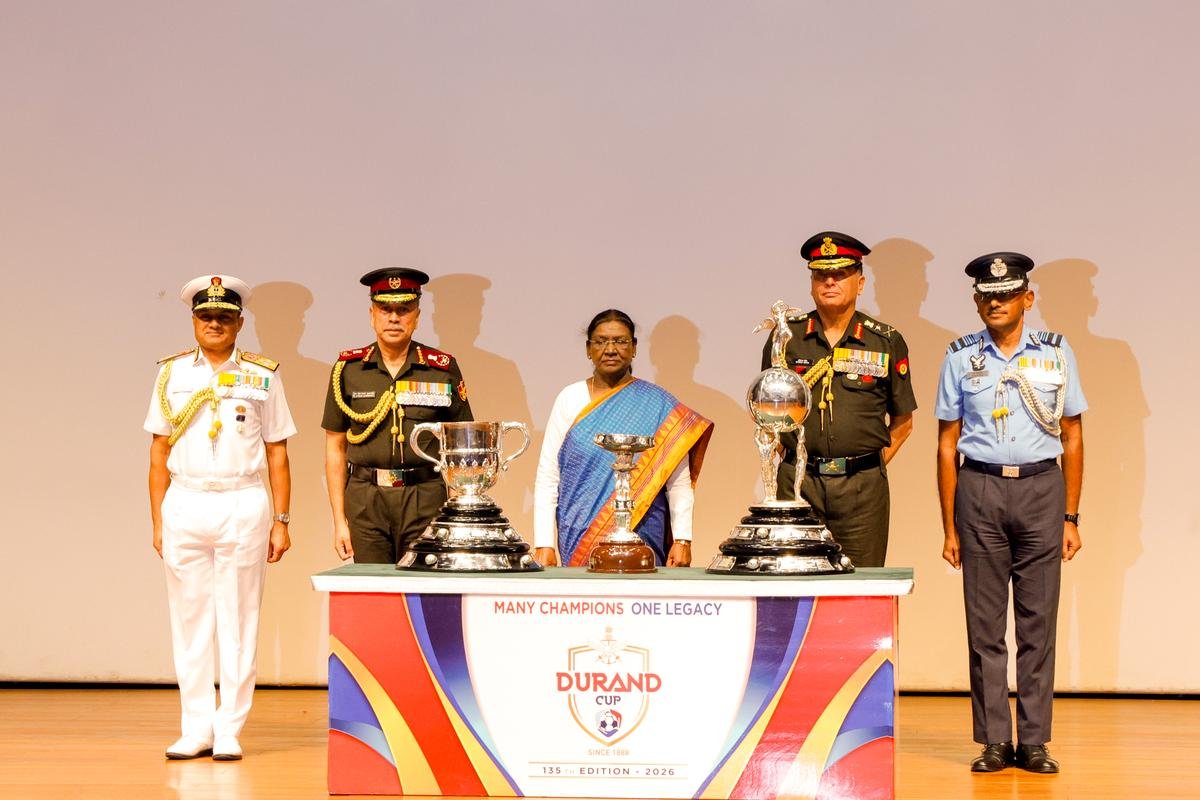
The tournament has expanded from being largely Kolkata-centric to being hosted across five states—Manipur, Meghalaya, Assam, Jharkhand and West Bengal. The Army, Navy and Air Force have also provided tremendous support, along with the President of India.
Q: Given the success, are you looking to expand the tournament further?
A: Yes, certainly. But when we talk about expansion, we are not necessarily looking at increasing the number of participating teams. We would continue with six groups, but in the next edition, we are looking at moving one of the groups outside the Northeast.
We are in discussions with a number of state governments to see where it would be feasible to hold the competition. The format, by and large, will remain the same.
Having said that, there is always scope for making a competition better. Our immediate objective is to improve the quality of the competition, get greater support and bring more spectators to the stadiums. That is what we want to achieve in the foreseeable future.
The Durand Cup, in the last six years, has expanded across the Eastern and Northeastern parts of India, creating opportunities for emerging clubs and young footballers.
| Photo Credit:
Durand Cup Media

The Durand Cup, in the last six years, has expanded across the Eastern and Northeastern parts of India, creating opportunities for emerging clubs and young footballers.
| Photo Credit:
Durand Cup Media
Q: Sport is often described as a leveller and something that brings people together. How did the Manipur leg work out, particularly given the distress and difficulties in the state?
A: As you rightly said, sport brings people together. It creates camaraderie and teamwork, and it does not matter which region, religion or background you come from.
I wish you had been there in Imphal. I went for the opening game, and I have also been following the matches through live coverage. The stadium was sold out. The cheering, accompanied by Mexican waves, continued throughout the game. There was genuine support for football.
There were around 5,000 to 6,000 people waiting outside to get in. Despite the problems in the region, sport – and football in particular – has been a binding factor.
ALSO READ: East Bengal wins Durand Cup 2026 final, beats Mohun Bagan 4-1 in Kolkata derby to lift title after 22 years
We also organised a friendly match between two women’s teams in Imphal as a precursor to the tournament, and that too was played in an almost packed stadium.
So, in whatever small way sport can bring happiness and bring society together, it certainly helps. We intend to continue with this in future editions as well.
Q: A number of ISL teams did not participate this time. Is that linked to the crisis Indian football is going through, particularly with uncertainty over when the ISL season will begin?
A: Traditionally, we have had around eight or nine ISL teams, plus or minus one or two, participating in the Durand Cup. It is the season opener in the AIFF calendar. But we must understand the objective of the Durand Cup. Its aim is to nurture talent, provide opportunities and do whatever we can to improve the standard of football.
If all the ISL teams participate, then what is the difference between the ISL and the Durand Cup? We therefore want a healthy mix of ISL teams, other football league teams and local clubs.

The 2026 edition of the Durand Cup saw fans turn up in huge numbers, including in the final, where East Bengal lifted the trophy after 22 years.
| Photo Credit:
Durand Cup Media
The 2026 edition of the Durand Cup saw fans turn up in huge numbers, including in the final, where East Bengal lifted the trophy after 22 years.
| Photo Credit:
Durand Cup Media
For example, FC Raengdai reached the quarterfinals. From nowhere, they have suddenly come to that level. Imagine the exposure the young players of that club are getting.
This time there were several new entrants, including clubs from Assam, Meghalaya and Manipur. There were around seven or eight new clubs. They got an opportunity to play against some of the best teams, many of which have foreign players.
When a youngster plays alongside and against seasoned Indian players and foreign players, the exposure he gets is extremely valuable. That is why I believe this healthy mix of teams is important.
Q: What about Mizoram? It is another state that contributes a lot of talent; were clubs from there invited?
A: Invitations go to several clubs, but participation also depends on their preparation and circumstances. Unfortunately, Mizoram currently does not have infrastructure approved by the AIFF.
We would certainly like clubs from Mizoram to participate, but the infrastructure has to meet the required FIFA and AIFF standards.
Q: We have seen the Indian Army support sport through initiatives such as the Army Sports Institute in Pune, where top athletes are trained. Is there any possibility of a similar dedicated academy or setup for football?
A: The Army already has a system of sports nodes, where different establishments are assigned responsibility for particular sports. Our Army football team, for instance, is based in Bengaluru, which serves as a football node.
The Army also contributes at the grassroots level through initiatives such as the Sadbhavna schemes. At the school and district levels, tournaments are organised, and wherever equipment is required, it is provided.
We also have the Boys Sports Company system, through which we identify talented youngsters at an early age. If the parents agree, the Army takes responsibility for the child’s education as well as sporting training. This gives the youngster an opportunity to develop his talent in a structured environment while continuing his studies.

Major General Dinesh Kumar Singh underlined that for the Indian Army, the Durand Cup was beyond a tournament. It also aspired to strengthen the grassroots for Indian football.
| Photo Credit:
Durand Cup Media
Major General Dinesh Kumar Singh underlined that for the Indian Army, the Durand Cup was beyond a tournament. It also aspired to strengthen the grassroots for Indian football.
| Photo Credit:
Durand Cup Media
The system has already demonstrated its impact in other sports, including at events such as the Commonwealth Games. So, while we do not currently have a separate, dedicated football academy on the lines of the Army Sports Institute, the existing sports-node and Boys Sports Company systems provide a pathway through which promising footballers can be identified, trained and eventually channelled into the Army football system.
Q: Could this be taken further for football – identifying young players and developing them in a structured environment?
A: As a dedicated football academy, we do not have such a system at present. However, the Boys Sports Company is already functioning and provides a structured pathway for identifying and developing young talent.
Once a talented youngster is identified, he can be brought into the system with the consent of his parents, while the Army takes care of both his education and sporting training. From there, the player can be channelled into the Army football system and get the opportunity to train and compete at a higher level.
The important aspect is that it is not only about developing a footballer. If the youngster is interested in joining the Army, we can also provide him with a career pathway within the armed forces. At the same time, those who demonstrate the potential and desire to pursue football professionally can continue along that route.
So, while a dedicated football academy could certainly take this effort further, the existing system already provides a foundation for identifying young talent, giving them proper training and education, and helping them build a future either in football or in the Army.
Q: Is there anything else you would like to add about the Durand Cup and your plans for the future?
A: There is always scope for improvement. Once the tournament concludes, we will assess what could have been done better.
Our aim is to achieve a practical 10 – 15 per cent improvement each year – in participation, crowd support, infrastructure, administration or the teams’ stay.
We also try to minimise team travel because it increases costs. The tournament operates on a no-profit, no-loss basis and we do not charge participation fees, which helps local clubs take part.
ALSO READ | East Bengal wins Durand Cup 2026 — Full list of winner from 1888 to 2026
I hope several young players from this edition will be noticed by bigger clubs and eventually represent India. But the larger challenge is grassroots development. We need to start with schools and districts, where many children do not even have proper playgrounds. We have discussed this with sports ministers and chief ministers, and there is interest in taking the tournament to smaller towns. However, the necessary infrastructure must first be created.
This year, we moved from Jamshedpur to Ranchi and from Kokrajhar to Guwahati. Taking the tournament to new locations encourages states to invest in infrastructure and creates more opportunities for young players.
Across the Northeast, we rely largely on state infrastructure. It is a synergistic effort involving the armed forces, state governments, sponsors, clubs and, most importantly, supporters.
Q: How do you view the participation of so many states as hosts?
A: We have received tremendous support from all the states and are grateful for it.
West Bengal has traditionally been a football powerhouse, while states such as Nagaland and Mizoram have good football but face infrastructure constraints. Assam has also expressed interest in taking the tournament to more districts, although suitable facilities remain a challenge.

Jamshedpur FC walks out for a Durand Cup match in Ranchi — one of the new venues for this edition of the tournament.
| Photo Credit:
Durand Cup Media
Jamshedpur FC walks out for a Durand Cup match in Ranchi — one of the new venues for this edition of the tournament.
| Photo Credit:
Durand Cup Media
Initially, we were sceptical about Guwahati and Ranchi, but the stadiums have been full. That shows that people are interested in football when the quality of competition and organisation are good.
The Durand Cup is increasingly becoming a platform that brings together states, the armed forces, sponsors, clubs and supporters. That collective effort is driving the tournament’s growth.
Published on Aug 23, 2026
[ad_2]
Source link