


[ad_1]
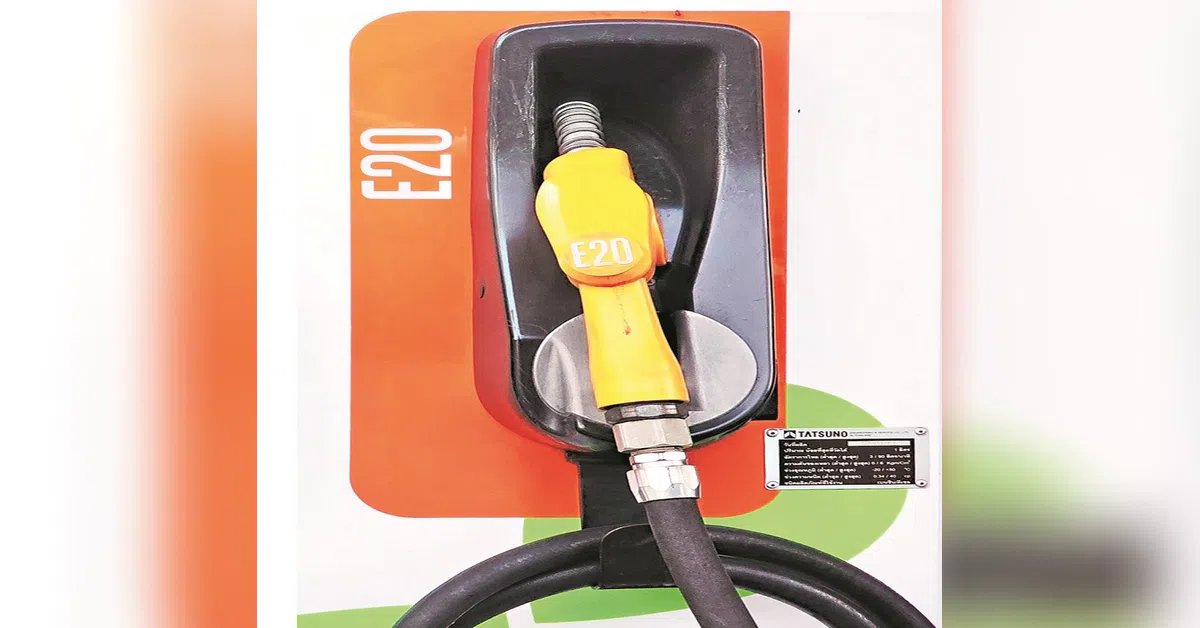
India has achieved its target of supplying 20 per cent ethanol-blended petrol (E20) nationwide, but one question that continues to surface is, if ethanol is mixed with petrol, why hasn’t the fuel become cheaper?
The Ministry of Petroleum and Natural Gas (MoPNG) sought to answer that question on Friday through a detailed set of Frequently Asked Questions (FAQs).
The government’s explanation centres on the price at which ethanol is purchased.
“Today, the Government purchases ethanol at remunerative prices so that Indian farmers are fairly compensated,” the ministry said. It added that maize-based ethanol is currently procured at around ₹71.86 per litre, before accounting for GST, transportation, storage and depot handling costs.
According to the ministry, when international crude oil trades at around $70 a barrel, producing E20 is actually more expensive than producing petrol without ethanol. The economics change only when crude prices rise sharply.
“If crude rises to US$120-130 per barrel, the economics naturally reverse and ethanol becomes even cheaper,” the ministry said.
Govt says E20 is about price stability, not cheaper petrol
The ministry argued that the debate should therefore not be centred on whether E20 should cost less than E10 or pure petrol.
“So, the question should not be, ‘Why isn’t E20 cheaper?’ The real question is, ‘How did India manage to protect consumers from the full impact of volatile global crude prices?’” it said.
Its answer is that nearly one-fifth of every litre of petrol sold in India now consists of domestically produced ethanol, which is bought at an administered price rather than being linked to daily movements in international crude markets.
“Nearly 20 per cent of every litre of petrol sold in India today is domestically produced ethanol. That ethanol is procured at around ₹71 per litre, a price that does not fluctuate every morning with Brent crude, geopolitical conflicts or shipping disruptions,” the ministry said.
The ministry said this has reduced India’s exposure to imported crude oil and helped moderate retail fuel price increases despite volatility in global energy markets.
Govt says India weathered global fuel shocks better
It also cited international fuel price comparisons to support its argument. According to data included in the FAQ, petrol prices in Delhi increased by 5.58 per cent between June 2022 and June 2026, compared with increases of 39.77 per cent in Pakistan, 36.66 per cent in Sri Lanka, 20.35 per cent in Nepal and 42.69 per cent in Bangladesh over the same period.
Diesel prices in Delhi rose 6.23 per cent, while increases in neighbouring countries ranged from around 26 per cent to over 63 per cent.
The ministry also compared fuel prices after the recent West Asia crisis. Between March and June 2026, petrol prices in Delhi increased 7.76 per cent, compared with 50.39 per cent in Pakistan, 44.96 per cent in Sri Lanka, 37.88 per cent in Nepal and 25.88 per cent in Bangladesh.
Govt links E20 to forex savings and energy security
The government said every litre of ethanol blended into petrol reduces crude oil imports, lowers foreign exchange outgo, increases income for farmers and strengthens India’s energy security.
It said the Ethanol Blended Petrol Programme has so far saved more than ₹1.97 trilion in foreign exchange, replaced 316 lakh metric tonnes of crude oil, reduced around 952 lakh metric tonnes of carbon dioxide emissions, and transferred over ₹1.66 trillion to farmers.
The FAQ comes days after the government and automobile manufacturers jointly rejected claims that E20 fuel damages engines or significantly reduces mileage.
During a press conference last week, vehicle manufacturers said years of laboratory testing and field validation had not found evidence that E20 causes engine damage or abnormal wear in compatible vehicles.
[ad_2]
Source link