

[ad_1]
DRC’s is the fastest-spreading Ebola outbreak ever recorded, with 5,794 confirmed cases and 2,786 deaths.
Published On 28 Aug 2026
The fastest-spreading Ebola outbreak in history has reached two new health zones in eastern Democratic Republic of the Congo (DRC), with a total of 60 areas now affected, according to the latest government figures.
The two new zones affected are Biena and Manguredjipa in DRC’s North Kivu province, where the fatality rate is much higher than the overall rate of 48 percent, partly due to delayed response efforts, according to data by the Ministry of Health released on Friday.
Recommended Stories
list of 4 itemsend of list
The ministry said the outbreak in DRC has recorded 5,794 confirmed cases, including 2,786 deaths, and is spreading at an unprecedented speed – faster than efforts to track and slow it.
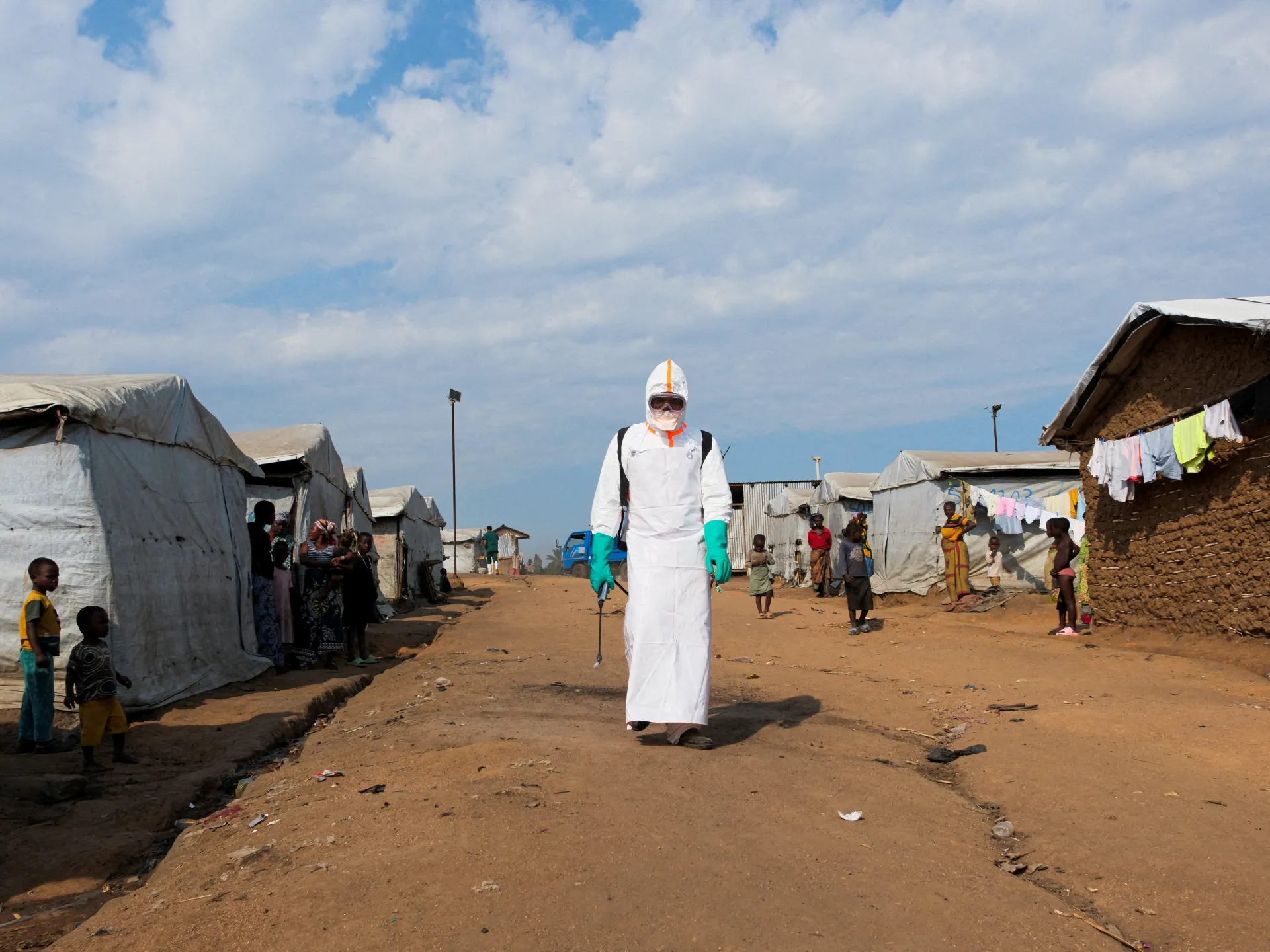
Efforts to contain the outbreak have been hampered by armed conflict in the affected provinces, displacement, attacks on medical personnel and facilities, a mobile working population, and a lack of critical infrastructure.
The outbreak is now on track to surpass the deadliest Ebola epidemic on record – the 2014 to 2016 outbreak in West Africa that killed more than 11,000 people.
Meanwhile, aid group Doctors Without Borders – known by its French acronym MSF – said on Friday it had opened a new treatment centre in Beni in North Kivu in the country’s northeast to enable a faster response in what it said was one of the hardest-hit areas.
Beni has recorded 122 confirmed cases and 87 deaths since the start of the outbreak in mid-May, with an Ebola fatality rate of close to 69 percent, one of the highest in the country, according to the latest government figures.
Aid workers have said that a shortage of bed capacity is one of the factors hampering the response to the outbreak. The new centre “enables the rapid treatment of patients, strengthens contact tracing and supports the health authorities in their efforts to contain the spread of the virus,” MSF said in a statement.
There is no approved vaccine or treatment for this particular strain of Ebola, known as Bundibugyo, which is rarer than the virus type behind most past outbreaks. This means that relief workers are more reliant on traditional methods like tracing contacts and isolating patients to try to control its spread.
MSF currently has 1,400 staff in DRC supporting the response, and operates treatment centres with a total of 400 beds.
“Early diagnosis and treatment as soon as the first symptoms appear significantly increase people’s chances of survival, whilst reducing the risk of transmission within families and communities,” MSF emergency coordinator Albert Stern said.
UN Secretary-General Antonio Guterres warned on Thursday that Ebola is spreading faster than efforts to contain it.
“The Ebola outbreak in the Democratic Republic of the Congo is the fastest-spreading Ebola epidemic ever recorded,” he said in a post on US social media company X. “It’s growing faster and wider than the response to contain it.
“We know how to contain Ebola and save lives. The world must urgently step up action to get it under control.”
[ad_2]
Source link