
The proposed provision could give the elected body greater control over matters such as land, culture, language, forests, the environment and natural resources, The Indian Express reported.
The proposal comes after years of demands from Ladakh’s political groups for greater protection of land, jobs, culture, environment and natural resources. Representatives of the Leh Apex Body and the Kargil Democratic Alliance (KDA) have been holding discussions with the Centre on these issues.
What is Article 371(K)?
Article 371 is a group of special constitutional provisions that provide different safeguards and arrangements for specific states and regions. The Constitution currently has special provisions from Article 371 to Article 371J. There is no Article 371(K) at present. If the Centre and Ladakh’s representatives reach an agreement, a new provision would have to be inserted through a constitutional amendment.
Ladakh Chief Secretary Ashish Kundra said that the proposed provision is intended to provide safeguards for Ladakh’s land, culture, heritage, environment and natural resources, news agency PTI reported.
He said the next meeting between the Centre and Ladakh representatives is scheduled for October, when the government hopes to have an advanced draft of the Constitutional Amendment Bill.
Why does Ladakh want constitutional safeguards?
Ladakh became a Union Territory on October 31, 2019, after the Jammu and Kashmir Reorganisation Act divided the erstwhile state into two Union Territories — Jammu and Kashmir, with a legislature, and Ladakh, without one.
This changed the region’s political structure significantly. Ladakh no longer had an elected state legislature through which local representatives could directly make laws on issues affecting the region.
Since then, political groups in Ladakh have sought greater local representation and protection for the region’s land, culture, employment and natural resources. Among the major demands have been statehood, protection under the Sixth Schedule of the Constitution, safeguards for land and jobs, and greater political representation.
The absence of an elected legislative assembly has been a key part of the debate. Ladakh is currently administered through the Lieutenant Governor and the Union Territory administration.
What could the proposed elected body do?
The Centre is considering a directly elected Union Territory-level body that would be placed above the existing Ladakh Autonomous Hill Development Councils (LAHDCs).
Kundra said representatives of the Leh Apex Body and KDA had agreed that members of the proposed body should be directly elected from constituencies rather than chosen indirectly through the hill councils.
The proposed arrangement would have multiple layers of local governance. Panchayats would remain the basic unit, followed by the LAHDCs, with the new UT-level body above them.
The body could receive legislative, executive and financial powers. However, the exact division of responsibilities between the new body, the LAHDCs, the Lieutenant Governor and the Union government remains under discussion.
How is this different from Sixth Schedule protection?
The Sixth Schedule provides for autonomous district and regional councils in specified tribal areas. These councils have constitutionally defined administrative, legislative and financial powers, including powers related to land revenue and taxation.
Ladakh has been demanding Sixth Schedule protection as one way of securing greater autonomy.
Article 371 provisions, on the other hand, can be specifically designed to address the circumstances of a particular state or territory.
For example, Article 371A gives Nagaland special protection in areas including customary law, social and religious practices, and ownership and transfer of land and its resources. Article 371G provides similar protections to Mizoram in specified areas.
Therefore, simply getting an Article 371-type provision would not automatically give Ladakh statehood or the same powers as a state government. The actual extent of autonomy would depend on the wording of the new provision.
Why is the proposal significant?
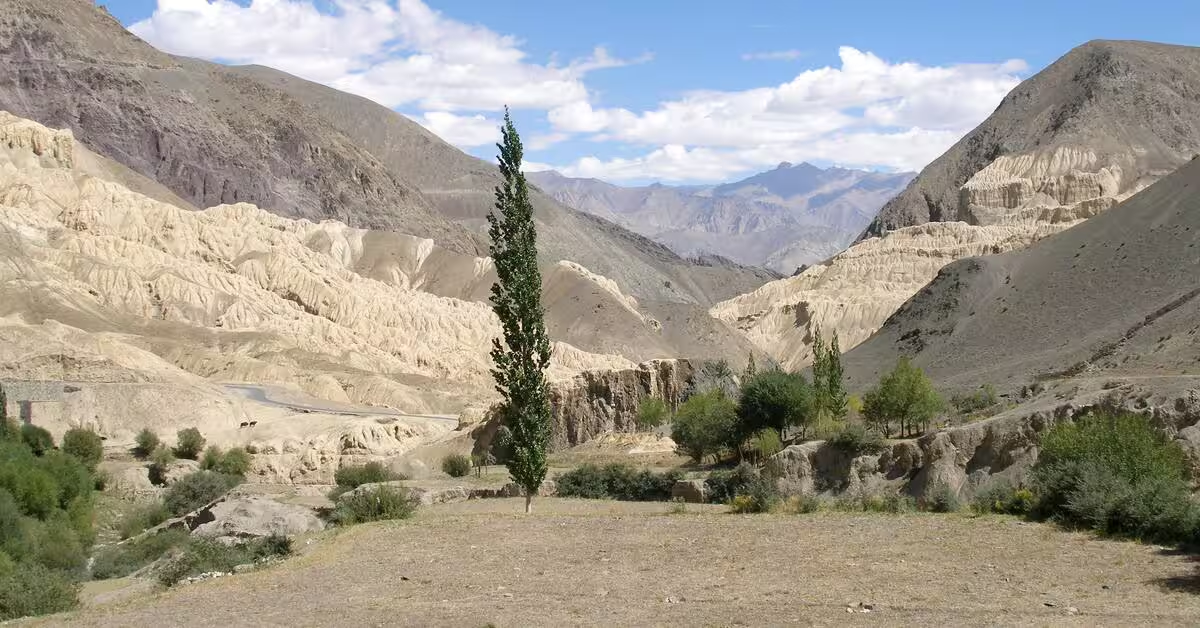
For Ladakh, the issues under discussion are closely linked to everyday governance and the region’s future. Land and employment safeguards are important concerns, while culture and language are central to the region’s identity. Environmental protection and natural resources are also significant because Ladakh is a fragile Himalayan region facing growing development and tourism pressures.
A constitutionally backed elected body with powers over some of these areas could give local representatives a greater role in decisions affecting the region. The proposal could, therefore, provide a middle ground between the current Union Territory arrangement and the demand for full statehood, the news report said.
(With agency inputs)