

[ad_1]
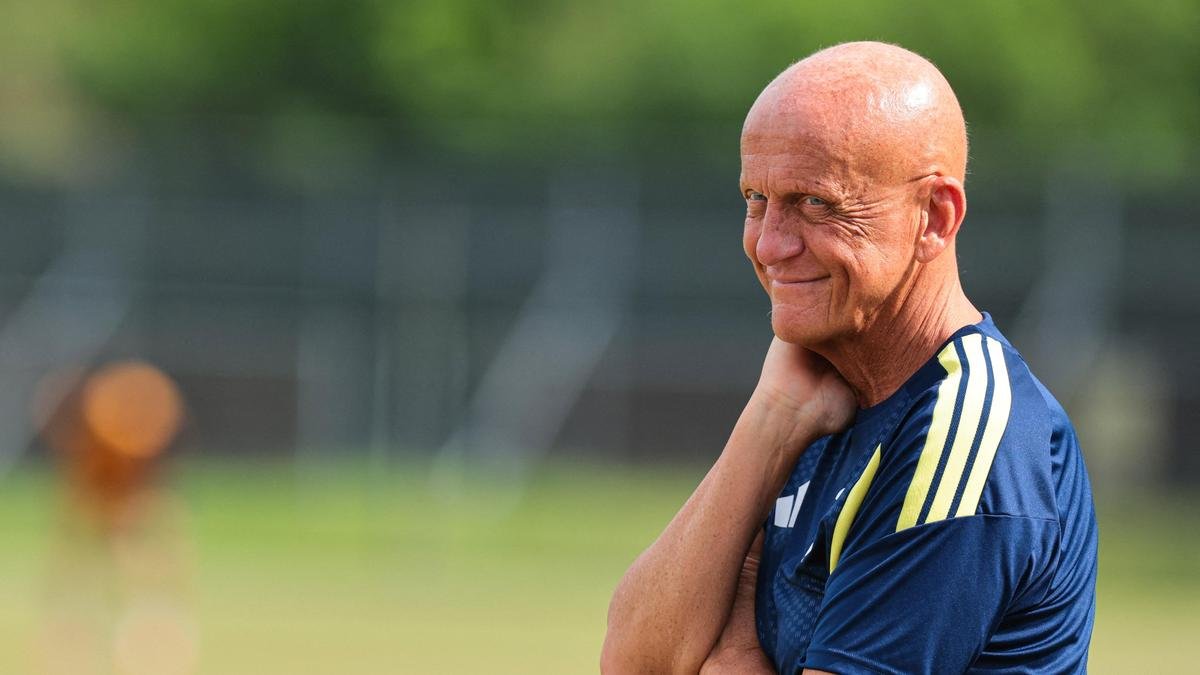
FIFA Chief Refereeing Officer Pierluigi Collina defended the decision-making by the match officials from the controversial Round of 16 clash between Egypt and Argentina.
Much of the contention centred on a goal by Egypt’s Mostafa Zico in the 62nd minute that would have doubled his side’s lead. The goal was disallowed after a VAR review identified a foul by Egypt’s Marwan Attia on Argentine defender Lisandro Martinez in the buildup.
Collina confirmed that the incident was an ‘obvious foul’ that required VAR’s intervention.
“After every goal is scored, the VAR checks the attacking possession phase (APP). If a foul is identified in the build-up and is deemed to have had an impact on the goal, the VAR will recommend an on-field review. There is no defined limit regarding either the distance from goal or the amount of time between the incident and the goal,” said Collina.
“We believe that a foul is a foul. Regardless of whether the foul appears ‘obvious’, if the referee did not see it on the field of play, the VAR can intervene,” he added.
Egypt’s frustration deepened late in the match when its appeals for a penalty after Argentina’s Julián Alvarez’s challenge on Mohamed Salah were waved away, before Argentina went upfield and scored the winner in the 92nd minute.
Collina explained that the Alvarez-Salah incident was normal football contact and can’t be considered a foul.
“If no foul is identified in the build-up to a goal, the VAR will advise the referee accordingly. Stepping on an opponent’s foot is a foul, whereas a defender who touches the ball first and then makes normal football contact has not committed a foul. Again, an example of this came at the end of the same game. The referee and the VAR deemed it normal football contact between Egypt No. 10 Mohamed Salah and Argentina No. 10 Julián Alvarez.”
Collina also asserted the integrity of the the World Cup match officials.
“Of course, constructive discussion about decisions will always be part of football, but unfounded allegations have no place in our sport. Nobody can question the integrity of the FIFA World Cup match officials. When this happens, it may provoke reactions that lead to threats against them and their families. This is not right.
“Equally, nobody can claim that FIFA Refereeing can be influenced by anyone, not even by the FIFA President [Gianni Infantino]. He has always shown his full support for FIFA Team One while trusting us to work with complete independence. Match officials make honest decisions and, just like players and coaches, they always try to do their best.”
Published on Jul 09, 2026
[ad_2]
Source link