

[ad_1]
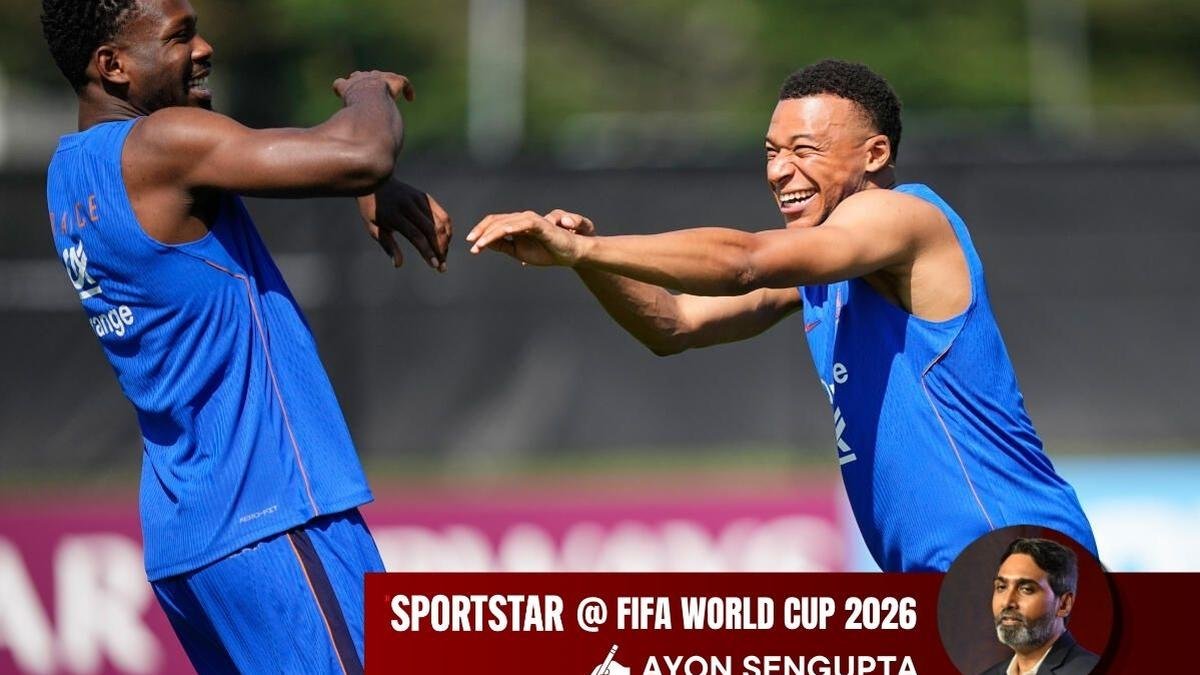
Twenty-four years is a long time in football. Yet when France and Senegal meet at the MetLife Stadium on Tuesday, the events of a June evening in Seoul will inevitably return to the conversation.
The fixture carries echoes of one of the World Cup’s most famous upsets, when Senegal, in 2002, marked its tournament debut by defeating defending champion France.
Since then, France, under Didier Deschamps, has established itself as one of international football’s established superpowers, winning the World Cup in 2018 and reaching the final again four years later, while Senegal has grown from an emerging force into one of Africa’s most consistent sides.
Deschamps’ side has gradually evolved from the pragmatism that delivered the 2018 triumph into a team equally comfortable controlling games through possession. The midfield, expected to revolve around Aurelien Tchouameni, will seek to give France’s attackers the freedom to drift between the lines. The challenge against Senegal will be to move the ball quickly to stretch a compact defensive shape and create the one-versus-one situations in which its forwards usually thrive.
At the heart of that threat will be Kylian Mbappe, operating from the left or drifting centrally to use his pace to create problems that few defenders can solve.
But Senegal is unlikely to spend the afternoon merely absorbing pressure. Its midfield is built around intensity, ball recoveries and vertical runs, while its attack thrives on directness rather than prolonged spells of possession.
That approach could be especially effective against a French backline that can be exposed when Theo Hernandez and Jules Kounde surge forward, leaving Nicolas Jackson with opportunities to exploit the space left behind.
The shadows of 2002 will inevitably follow this fixture. But France will insist that this is a different era and a different team, Senegal, meanwhile, will be keen to prove once again that reputations matter very little in football.
Published on Jun 15, 2026
[ad_2]
Source link