

[ad_1]
Ali Khamenei, who was 86, became supreme leader in 1989 after the death of the Islamic Republic’s founding father, Ayatollah Ruhollah Khomeini.
He maintained a firm grip on Iran’s politics and its armed forces, and suppressed domestic challenges, sometimes violently. He also took consistently hard-line stances on external matters, including Iran’s confrontation with the US and Israel.
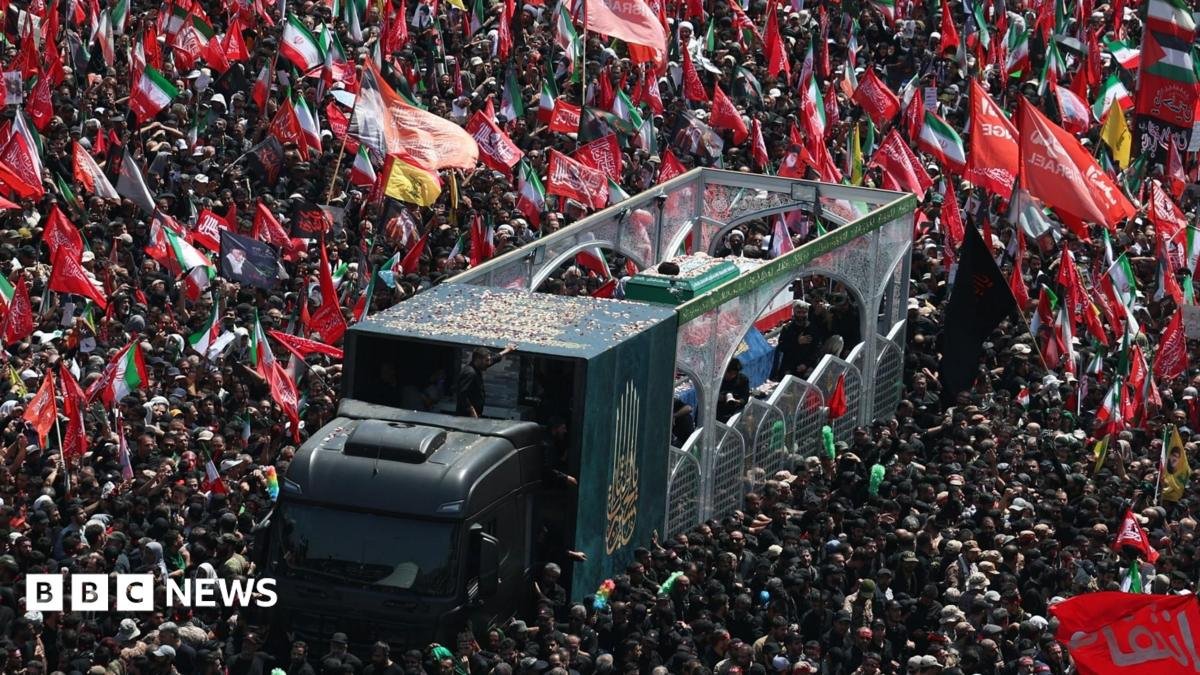
Iran’s ruling establishment wants the funeral ceremonies for him to send a message of strength following the war as well as the mass protests that swept across the country in January, when thousands of people were killed in a crackdown by security forces.
Qom Friday prayer leader Ayatollah Mohammad Saidi declared last week that large turnouts “will, in effect, be another referendum for the Islamic Republic”.
The ceremonies are taking place less than three weeks after Iran and the US signed a preliminary agreement to end the war and reopen the crucial Strait of Hormuz waterway, through which 20% of global oil and gas shipments pass.
The two countries also gave themselves two months to reach a final deal that covers Iran’s nuclear programme, US sanctions and a permanent truce.
Mediator Qatar said Iranian and US negotiators made “positive progress” at indirect talks in Doha last week following a four-day exchange of strikes and that their next meeting would be scheduled after the conclusion of the ceremonies for Khamenei.
On Tuesday, there will be another funeral procession and prayers in the central city of Qom, the centre of Iran’s Shia Muslim clerical establishment, where Khamenei’s body was flown by helicopter on Monday evening.
The ceremonies will then move to the Iraqi shrine cities of Karbala and Najaf on Wednesday.
They will end on Thursday, when Khamenei will be buried at the Imam Reza shrine in his home city of Mashhad, in north-eastern Iran.
[ad_2]
Source link