

[ad_1]
Iceland has voted against resuming talks on joining the European Union 13 years after they were broken off.
Public broadcaster RUV reported that 52.8% of the more than 225,000 people who voted had rejected the government’s proposal, while 47.2% had backed it. Some 12,600 votes separated them.
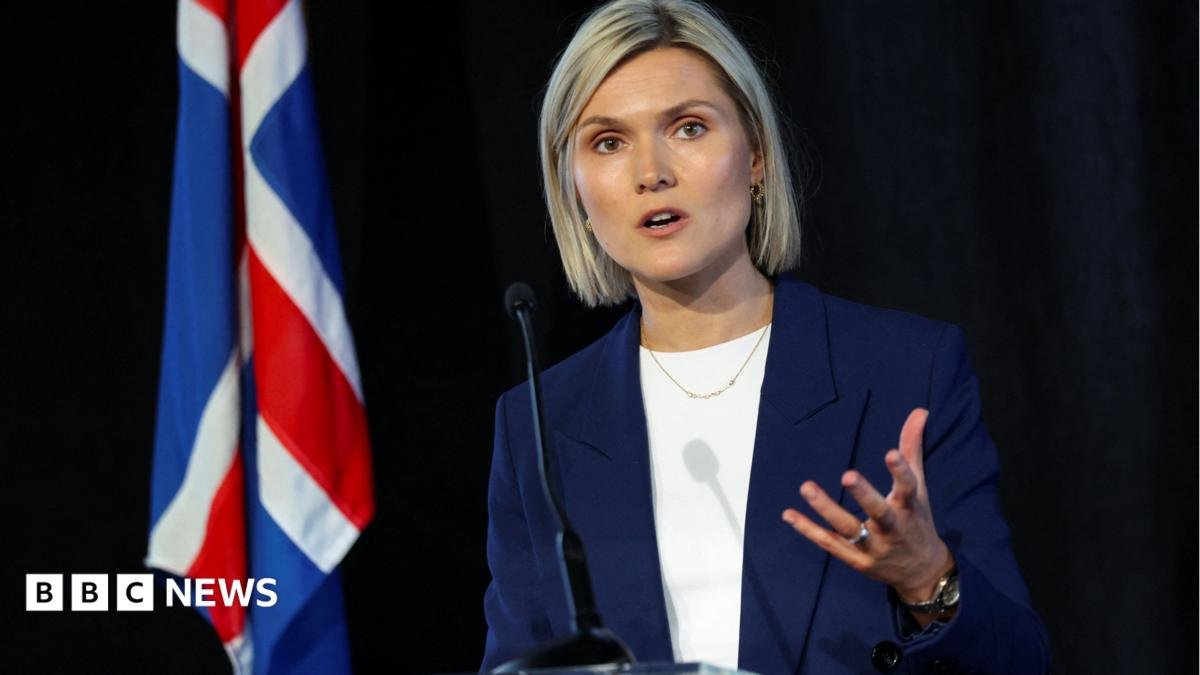
Prime Minister Kristrún Frostadóttir’s centre-left government promised to hold a referendum by 2027, but brought it forward because of international tensions, including US President Donald Trump’s threats against Greenland.
However, debate in this island nation of almost 400,000 people centred more on its fishing industry rather than security concerns.
With some 270,000 people eligible to vote, RUV reported the turnout of 82.5% was the highest in any Icelandic election since 2009.
Already part of the EU’s single market and Schengen border-free zone, full EU membership would bring Iceland into the customs union and eventually the eurozone currency union.
Iceland began its application to join the EU in 2009 in the aftermath of the 2008 financial crisis and the collapse of Iceland’s banking system.
Its application was already well advanced when a eurosceptic government came to power in 2013 and put those talks on hold.
Fishing rights were the biggest obstacle to Icelandic accession then – as they remain today.
Iceland fought successfully to protect its fisheries from foreign fishermen during the Cod Wars with the UK in the 1970s, and the country’s fish and marine industries still account for almost 40% of its exports.
Many No voters feared EU membership would mean ceding some control of these lucrative fishing grounds under the bloc’s policies, which control how much a member state can catch.
The referendum campaign fuelled debate about Iceland’s place in the world, Kristrún said after casting her ballot in the capital on Saturday.
She told a news conference on Sunday afternoon that the issue of EU membership would not be revisited while her government was in office.
One of her ministers denied that the result had been a setback for the government, pointing to the high turnout for the vote.
[ad_2]
Source link