


[ad_1]
The move is aimed at reducing dependence on foreign technology while strengthening cybersecurity, energy security and the resilience of India’s power infrastructure.
Why SCADA systems matter
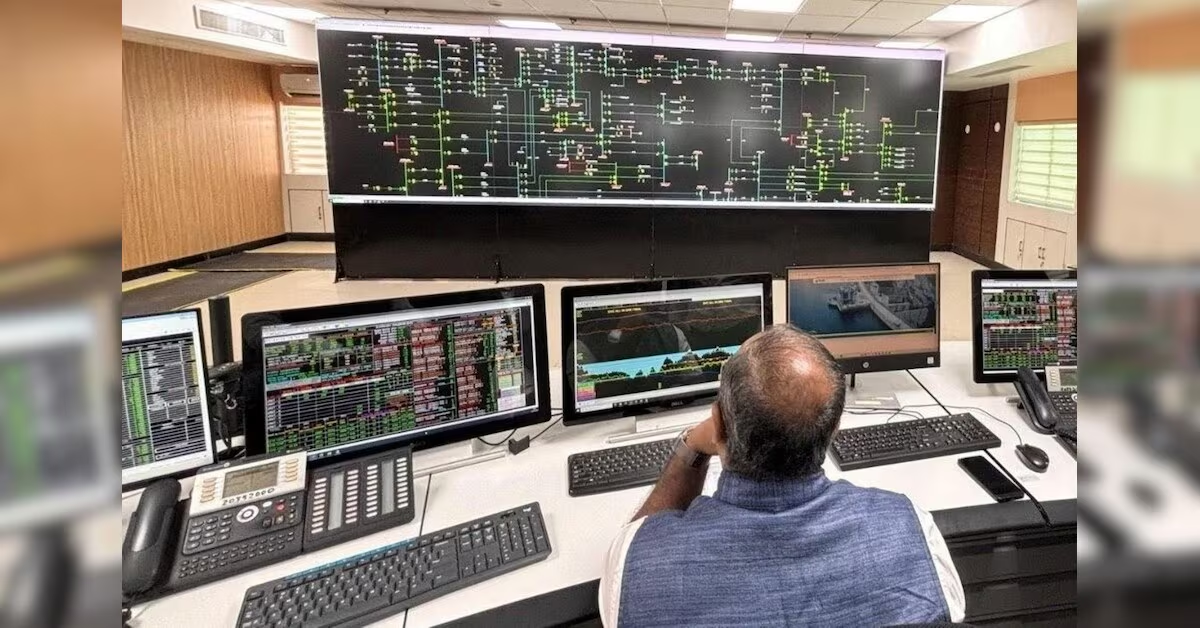
SCADA systems act as the control layer of the power grid. They allow operators to monitor generation, transmission and substations in real time and remotely control critical equipment when required.
However, India’s grid-level SCADA systems currently have less than 20 per cent local content, despite a government requirement of at least 50 per cent local domestic content. Indian vendors often rely on foreign licences and major components, while carrying out assembly, configuration, maintenance and support locally.
The CEA has flagged this dependence as a potential risk because foreign technology can create vulnerabilities around software updates, cybersecurity support, supply chains and access to proprietary systems. Moreover, disruptions to global trade routes amid the ongoing unrest in West Asia have highlighted the risks of relying on overseas suppliers for critical infrastructure, as shipping delays, higher freight costs and supply-chain uncertainty can affect the availability of imported equipment and components.
Three-year roadmap for indigenous SCADA
The CEA-constituted committee on SCADA indigenisation has proposed a phased development programme for 2026-27 to 2028-29, covering the localisation of both software and hardware components.
The roadmap breaks SCADA indigenisation into software and hardware development, with the more basic systems to be developed and tested before advanced functions are introduced. The plan includes:
-
38 software modules covering the different functions needed to monitor and manage the power grid -
25 hardware components, including servers, workstations and storage systems, which are required to run the SCADA network -
2026-27 onwards: Development of the core SCADA and communication systems that allow grid operators to monitor equipment and exchange data -
As the programme progresses: Development of advanced tools that help operators assess the condition of the grid, manage power generation, plan electricity flows and identify potential security risks -
By 2028-29: Development of more specialised functions, including tools for planning outages and monitoring the transmission network
National SCADA Mission proposed
The report also recommends government-backed testing and pilot projects at load dispatch centres so that indigenous systems can be validated under real operating conditions before wider deployment.
Cybersecurity adds urgency
[ad_2]
Source link