

[ad_1]
The colour-shifting Aston Martin looked picture perfect in the Barcelona sun.
Copper smoothly flowed into green as it swept through Turn 9, the corner that bears Fernando Alonso’s name, with a grandstand full of Asturian flags and green caps watching every lap of the home hero.
On lap 38, the AMR26 rolled past the grandstand and then, to the fans’ utter dismay, Alonso coasted to a stop in front of his own tribute, climbed out, and waved to those who had come to see him race at Barcelona one last time.
Hours later, Aston Martin did something Formula 1 teams almost never do: it issued a public apology to supporters for a “nightmare” Barcelona.
Two weeks earlier, at the Monaco Grand Prix, the same car had already shown how broken this super project is. Lance Stroll said the gearbox would “completely lose sync” at the Loews Hairpin, forcing both drivers to re-synchronise the gears every lap at the slowest point on the track.
Alonso warned that “random downshifts” on corner entry would cause “stupid” crashes around the walls and called the 2026 cars “probably the worst generation” he has ever driven there.
The front end refused to turn, regardless of the combinations Aston Martin’s race engineers tried. The hybrid system also made engine braking so inconsistent that it sometimes resulted in strong slowing, sometimes a push, and sometimes no braking at all. Monaco gave Aston Martin its first point of 2026, a lonely 10th place, and made it clear how deep its problems ran.
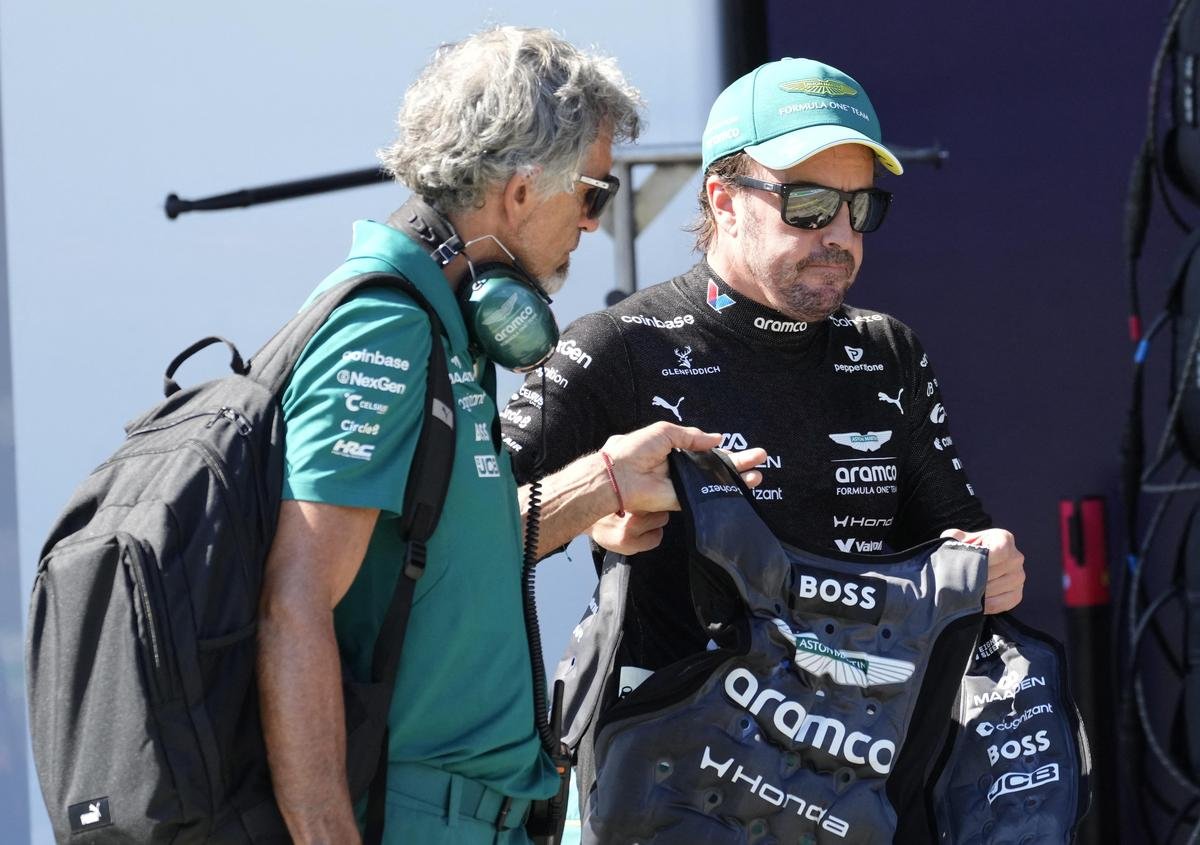
Fernando Alonso called the 2026 cars “probably the worst generation” he has ever driven there.
| Photo Credit:
Reuters

Fernando Alonso called the 2026 cars “probably the worst generation” he has ever driven there.
| Photo Credit:
Reuters
Right from pre-season testing in Bahrain, the AMR26 was in trouble. On the final day, the car was stuck in the garage with engine-related problems, so the team never completed a full programme or established a proper baseline.
The opening races of the season brought double retirements, sending a simple early message: the car could not be trusted even to reach the chequered flag.
In Miami, the gearbox began losing downshifts at lower speeds, the first sign of the glitch that would later spiral out of proportion in Monaco. Between Monaco and Spain came more anonymous weekends and very few improvements.
By the time Aston Martin reached Barcelona, it warned fans to expect a “reality check”. The team spoke of unseen progress but admitted the gap to the midfield was almost impossible to close.
Barcelona then delivered the image that summed up the season: Stroll out after five laps with another gearbox failure, Alonso starting from the pit lane after power-unit changes, and the car stopping again on lap 38 in front of his own grandstand.
Read More:Hamilton claims first F1 win with Ferrari at Barcelona-Catalunya GP
Before the Austrian Grand Prix, Alonso explained that he has not yet decided his future and will think about 2027 “around” the summer break. He said he still feels fast and loves racing, but that he needs to “enjoy the category” and the feeling of driving this power unit and these regulations. He also reminded everyone that there are many options to race outside of Formula One.
On track, the reality facing the Spaniard’s fans was harsh. After qualifying, Alonso called his Q1 lap “a good lap” and said it’s “not what we want, but not too far,” trying to focus on small steps from practice to qualifying even as the team remains at the back.
He explained a pit-lane speeding penalty by pointing to yet another gremlin: the front wheel-speed sensor sometimes gets too hot and reads the wrong speed. It is a small detail, but it fits the pattern. This was a car that could not even be relied on to report its own speed correctly.
After finishing a distant P18, Alonso summed up the state of play in six words: “We know where we are.” He said Aston Martin will “embrace the challenge” every weekend and try to take what it can from races like Spielberg, but there was no attempt to pretend the team was anywhere but at the back.
In another interview, Alonso showed a human side to the team’s struggle, saying: ‘It’s difficult to motivate the 1000 people to work and to find performance when every weekend you seem further behind. But we stay united, everyone is working flat out.’ That number, 1000 people, gives a clear sense of the scale of Lawrence Stroll’s massive project, and also the weight of its current failure.

Aston Martin hired Adrian Newey, signed a works deal with Honda, built a new factory at Silverstone, and put a two-time world champion in the car.
| Photo Credit:
REUTERS
Aston Martin hired Adrian Newey, signed a works deal with Honda, built a new factory at Silverstone, and put a two-time world champion in the car.
| Photo Credit:
REUTERS
It is not just a few engineers or a small team. It is a huge operation that feels as though it is losing ground with every race.
Underneath this sits the same core technical narrative. Early on, the Honda engine’s vibrations were strong enough to damage batteries and numb the drivers’ hands, and even now, the way it charges through braking and lift-off makes engine braking inconsistent. The chassis’ design around that engine has a chronic front-end weakness and cannot be balanced properly.
The team’s culture was also shaken by a “clean out” of experienced staff, leaving it to re-learn its own history just as the 2026 rules hit. Martin Brundle warns they will not really improve before 2027, and even Aston Martin talks about not seeing “light at the end of the tunnel.”
Aston Martin did almost everything a modern, ambitious team would do. It hired Adrian Newey, signed a works deal with Honda, built a new factory at Silverstone, and put a two-time world champion in the car.
On paper, this looked like the next big super-team. In practice, 2026 has produced a car that left Alonso P18 at the Red Bull Ring in Austria under extreme heat and handed him a pit-lane speeding penalty because of a faulty wheel-speed sensor. He finished three laps down after two tyre stops, while Stroll retired with an issue on lap 45.
This is not just a slow or difficult season. It is a year spent trying to honour a project that keeps slipping behind, one race and one corner at a time.
Published on Jul 03, 2026
[ad_2]
Source link